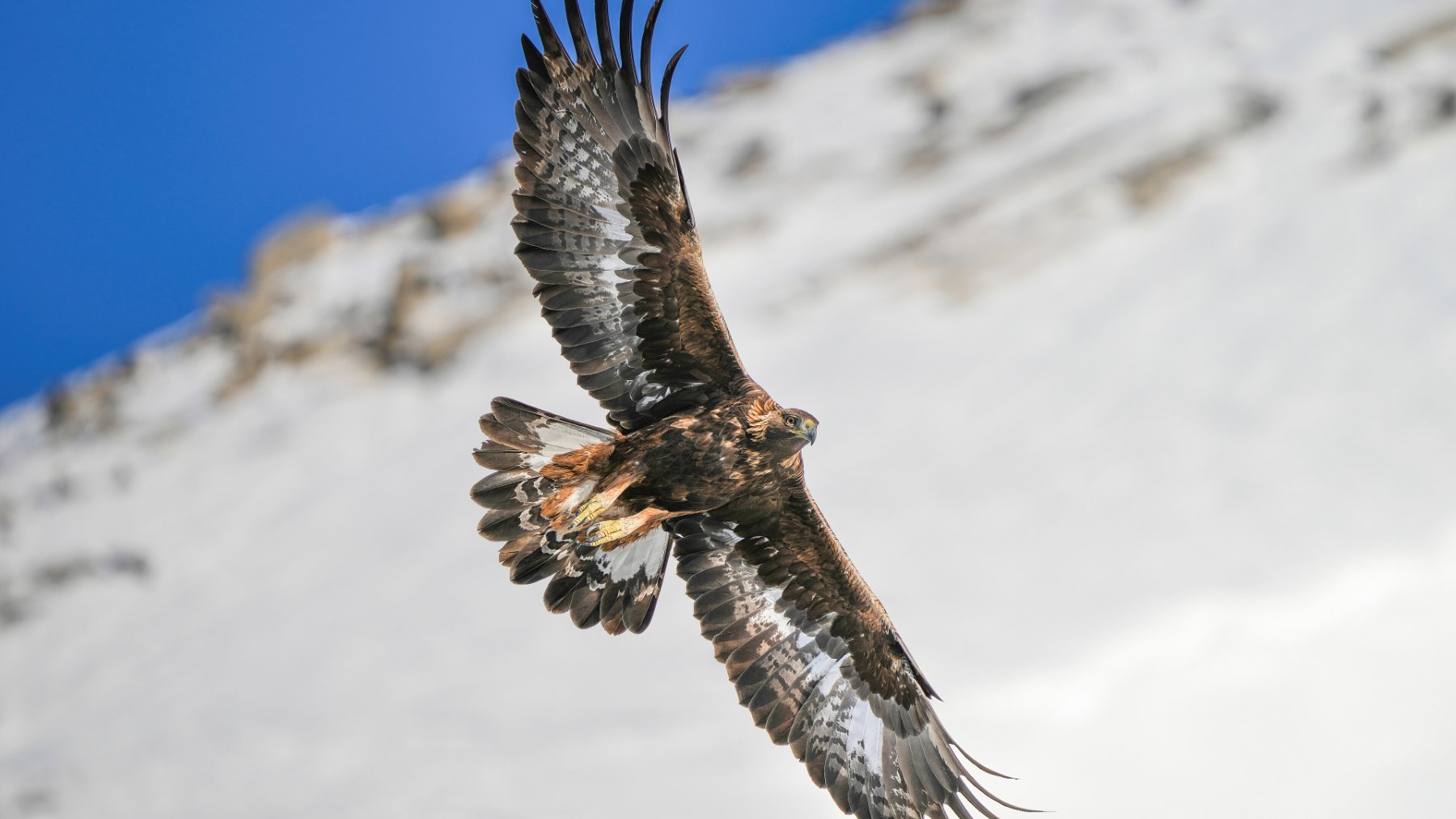
At Wyoming’s Top of the World wind farm, an approaching eagle can trigger an automatic turbine slowdown. A camera-and-AI system called IdentiFlight watches for the birds across the 110-turbine facility, helping address a wildlife hazard without shutting down the entire operation.
The system began taking control of turbines in 2018, and a 2021 study estimated an 82% reduction in eagle fatalities relative to a nearby comparison site. That result is encouraging, but it is not a guarantee of safety, and later research has challenged how confidently the reduction can be measured.
A clean-energy project with a wildlife problem
Top of the World began operating in 2010 in Converse County, Wyoming. The 200-megawatt project sits in sagebrush country used by golden eagles, with bald eagles also documented in the area.
The conflict was not simply an unforeseen surprise. According to the Justice Department, Duke Energy Renewables received wildlife-risk warnings before bird deaths at Top of the World and the nearby Campbell Hill project led to federal charges.
In 2013, Duke pleaded guilty under the Migratory Bird Treaty Act and was ordered to pay $1 million in fines, restitution and community service. The case involved 14 golden eagles and 149 other protected birds found across the two projects, not at Top of the World alone.
How cameras give eagles the right of way
So how do you spot trouble before a bird reaches the blades? IdentiFlight uses wide-view cameras to locate flying objects, then a high-resolution camera system tracks their position and movement. Software classifies the bird and assesses whether its path creates a collision risk.
The manufacturer lists 47 camera stations at Top of the World. Rather than halting the whole wind farm whenever an eagle appears, the system targets individual turbines that pose a threat, limiting unnecessary interruptions to electricity production.
As with a ceiling fan, switching off does not mean the blades instantly stop. The 2021 study reported stopping times of 20 seconds to more than a minute, depending on the turbine model, which makes early detection essential.
What the 82% reduction actually means
Before automation, human observers watched for eagles and requested turbine shutdowns. Automated control began in August 2018 and covered the whole site by August 2019. The before-and-after comparison therefore tested an upgrade to an existing protection program, not a switch from doing nothing.
Researchers compared Top of the World with Campbell Hill, which served as the control site. Their original analysis estimated that fatalities at Top of the World fell by 63%, while those at the comparison site rose by 113%. Accounting for both changes produced the widely quoted 82% reduction.
An updated analysis published in 2022 added more data and estimated an 85% reduction. The estimate came with a wide 95% uncertainty interval, from 12% to 100%, underscoring how difficult it is to pin down the exact benefit.
Why scientists disagree about the size of the benefit
In 2023, researchers Manuela Huso and Daniel Dalthorp challenged the original analysis. They argued that it understated uncertainty and did not adequately account for annual variation, among other problems. They also questioned the strength of conclusions drawn from one treatment site and limited post-installation monitoring.
Their reanalysis estimated a 50% reduction, but the uncertainty was wide enough to include no improvement or even an increase in fatalities. That does not establish that the cameras fail. It means those data, analyzed their way, did not convincingly establish the claimed effect.
The original team disputed those choices and defended its conclusions in a published response, also pointing to the expanded 2022 analysis. For readers, the distinction matters. A promising wildlife-protection tool is not the same thing as a settled percentage that applies to every wind farm.
Cleaner power still needs safer locations
“It is important to note that while this technology significantly reduced eagle collisions, it did not completely eliminate them,” U.S. Geological Survey scientist Todd Katzner said in the 2021 announcement. He also recommended combining the technology with other measures, including avoiding high-risk sites.
At Top of the World, the conservation plan also calls for removing animal carcasses that could draw scavenging eagles toward turbines. Cameras address one immediate danger, but habitat, food sources and turbine placement still shape the risk. For operators, the practical test is whether safeguards keep reducing deaths while avoiding unnecessary losses of electricity production.
The practical lesson is to treat automated shutdowns as one layer of protection, not permission to build anywhere.
The research team’s 2023 response was published in the Journal of Applied Ecology on Wiley Online Library.