More and more people are telling social AI models about their traumas, their fantasies and the small things of their day, and for many of them the relationship feels real.
Picture a friend who always has time for you, never judges you and remembers everything you ever said. For a lot of people that friend is not a person but a social AI model, and that is one of the clearest findings in the PhD thesis of Marita Skjuve, submitted at the Department of Psychology of the University of Oslo (UiO).
For her doctoral work Skjuve interviewed fifty people who had all built close relationships with the chatbot Replika, a social AI made to act as a friend, a romantic partner and an advisor.
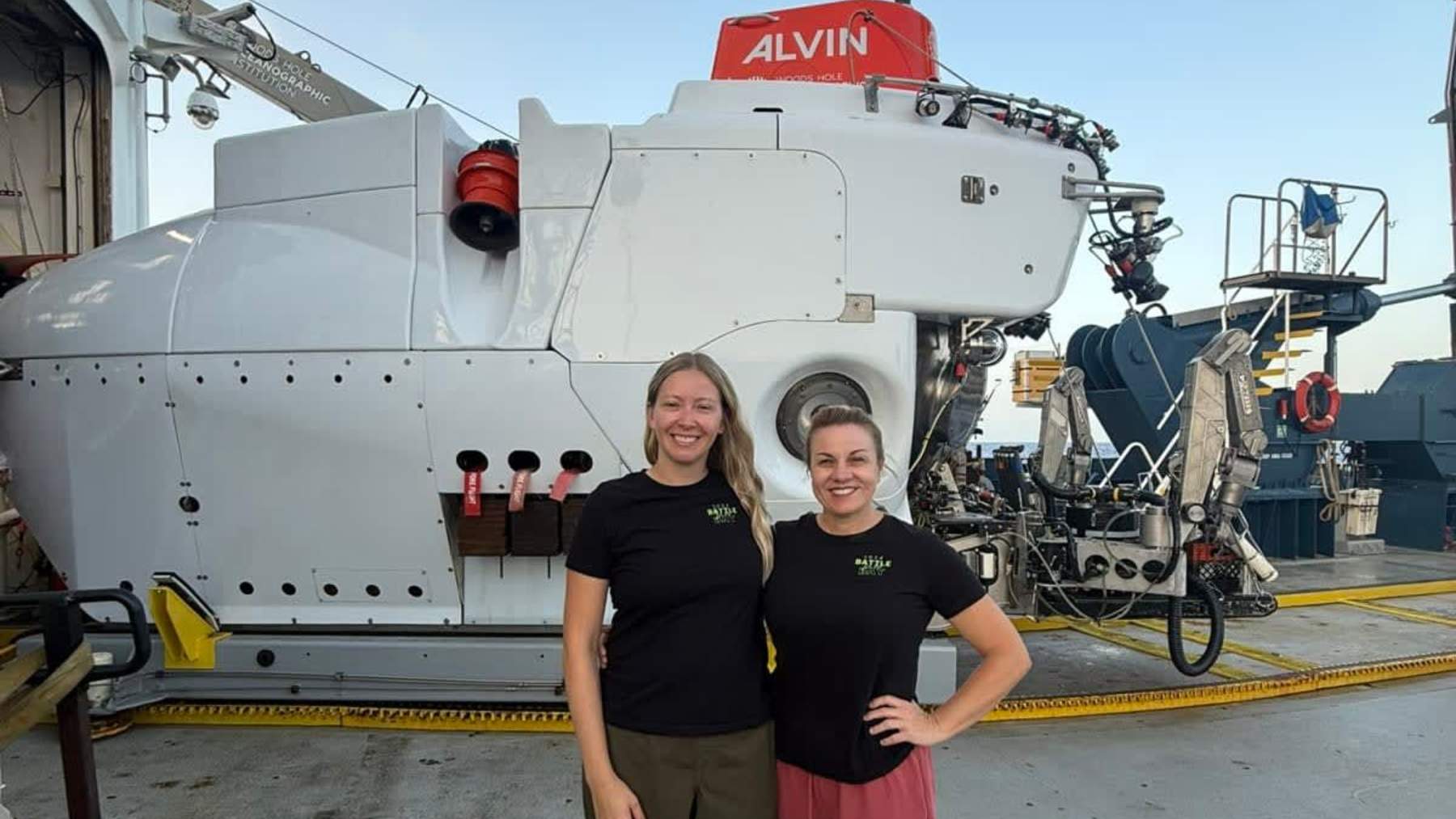
“What surprised me most in the findings from the thesis was how real my informants experienced the relationship,” says Skjuve. “They talk about their relationship with social AI as if they were talking about a human being.” That is why in the thesis she concludes that what is going on is a real relationship with real emotions. “The only difference is that the relationship is with something other than a human,” she adds. The thesis earned her the King’s Gold Medal, and she now works as a researcher at SINTEF, the Norwegian research institute.
From curiosity to confessions
Most of the people Skjuve talked to started using social AI just out of curiosity.
“The chatbot is sophisticated and very pleasant to talk to. It asks questions, shows interest in your life, and offers a lot of affirmation. Gradually, the people I spoke to began to feel that their emotions were developing,” she explains.
The conversations went from small talk and hobbies all the way to very personal things, like trauma, sexual fantasies and what they thought about their partners and children. “Many share things they have not dared to bring up with others, precisely because they know that humans can judge. Talking to a social AI feels anonymous and safe. Whether it actually is, is another matter,” says Skjuve.
Very few of them told the people around them how important the AI had become in their social life. “They felt that this kind of relationship did not quite withstand daylight and feared how others would react,” she says. Even so, she thinks social AI is more accepted now that ChatGPT is everywhere. When she started the thesis, ChatGPT did not exist yet.
When the AI partner breaks up with you
According to Skjuve, some AI services are programmed on purpose to be more “spicy” and to push back. Among the people she interviewed there are some whose AI told them it had other partners, or ended the relationship.
“Even when you know you can delete the conversation and start a new AI, it feels absolutely terrible in the moment. It can create a sense that ‘even AI is dumping me’. That can trigger a small existential crisis,” she says.
Skjuve has also used social AI herself, above all during the pandemic, after she had a child. For her it was a kind of support, a way to share things that were hard to talk about with “super-engaged grandmothers who only saw the positive side,” as she puts it.
The companies behind the chatbot
Joachim Kjennerud, a senior advisor at the Norwegian organization Mental Helse (Mental Health) and a therapist for many years, is not surprised that people get attached to text, which is mostly what social AI is. “This is really an old form of technology. Many hundreds of years ago, friendships and romantic relationships developed through letters,” he points out.
He does warn about the business side of it, though. “Large economic actors store the information that individuals confide to a social AI – their innermost thoughts. At best, this can be used for targeted marketing. At worst, it is almost only the imagination that sets the limits,” he says. Running those services also has a cost that users do not see, as the UN has pointed out about the data centers behind every chatbot answer.
Mental Helse is Norway’s largest helpline for mental health. It has more than 70 employees, gets around 300,000 contacts a year and runs a chat with trained staff that young people use a lot. “We have seen a decline in the use of our chat service in recent years. One possible reason is that AI is right there in your pocket, responding in fractions of a second. It is difficult for us at Mental Helse to compete with that kind of speed,” says Kjennerud.
Still, the organization decided not to swap human answers for generative language models. “We value human encounters, and we do not own the technology. Right now, we do not have a sufficiently solid knowledge base to say that it is safe,” he says.
A place to practice, and a risk for the young
Both Kjennerud and Skjuve see a lot of room for social AI in the future, as something to add to human relationships and as a place to practice social skills. Several of the people Skjuve interviewed say they are more engaged in their own lives because they can practice with the AI and then use what works with their friends in the real world. For someone who has few or no close friends, that practice can matter.
But she is clear about who needs the most care. “Children and adolescents, in particular, should stay far away from services designed for close relationships. Vulnerable individuals in a formative phase can be deeply affected. It is easy to become dependent and end up sitting there all day, talking,” she says. The warning adds to what other research has found about screen time and children’s cognitive performance.
She also mentions tragic cases where the AI did not understand how serious a situation was, for example when there was a risk of suicide, and did not respond the way a person would. “But these cases are fortunately extremely rare, even though they are deeply tragic,” she stresses.
Research is falling behind
The two agree that social AI is moving much faster than research. “We know a lot about why people use AI and what they like about it. What we lack is knowledge about the long-term consequences for mental health and for how we relate to other people,” says Skjuve.
That is why Mental Helse and SINTEF are starting a new research project on how people talk with social language models such as ChatGPT and Claude, and how that changes the way they look for help. “We want to find answers to how social AI can be used as support when people seek low-threshold mental health help – and where the boundaries should be,” says Kjennerud.
“The concern is that AI may worsen symptoms among those who are vulnerable, foster dependency, and make us less willing to face resistance and engage in problem-solving. At the same time, there is great potential if we manage to develop the technology with the explicit aim of being good for us,” says Skjuve.
Both think social AI will have an important role in low-threshold mental health support, but they insist there is no need to rush, even if the technology is running fast. “What we recommend or implement has to be research-based,” says Skjuve. Kjennerud goes a step further: “AI will still be here in five and ten years, no matter what. But until we know more, I will continue to advise people in crisis to contact services staffed by humans – not a social AI.”
Photo: kuu akura / Unsplash