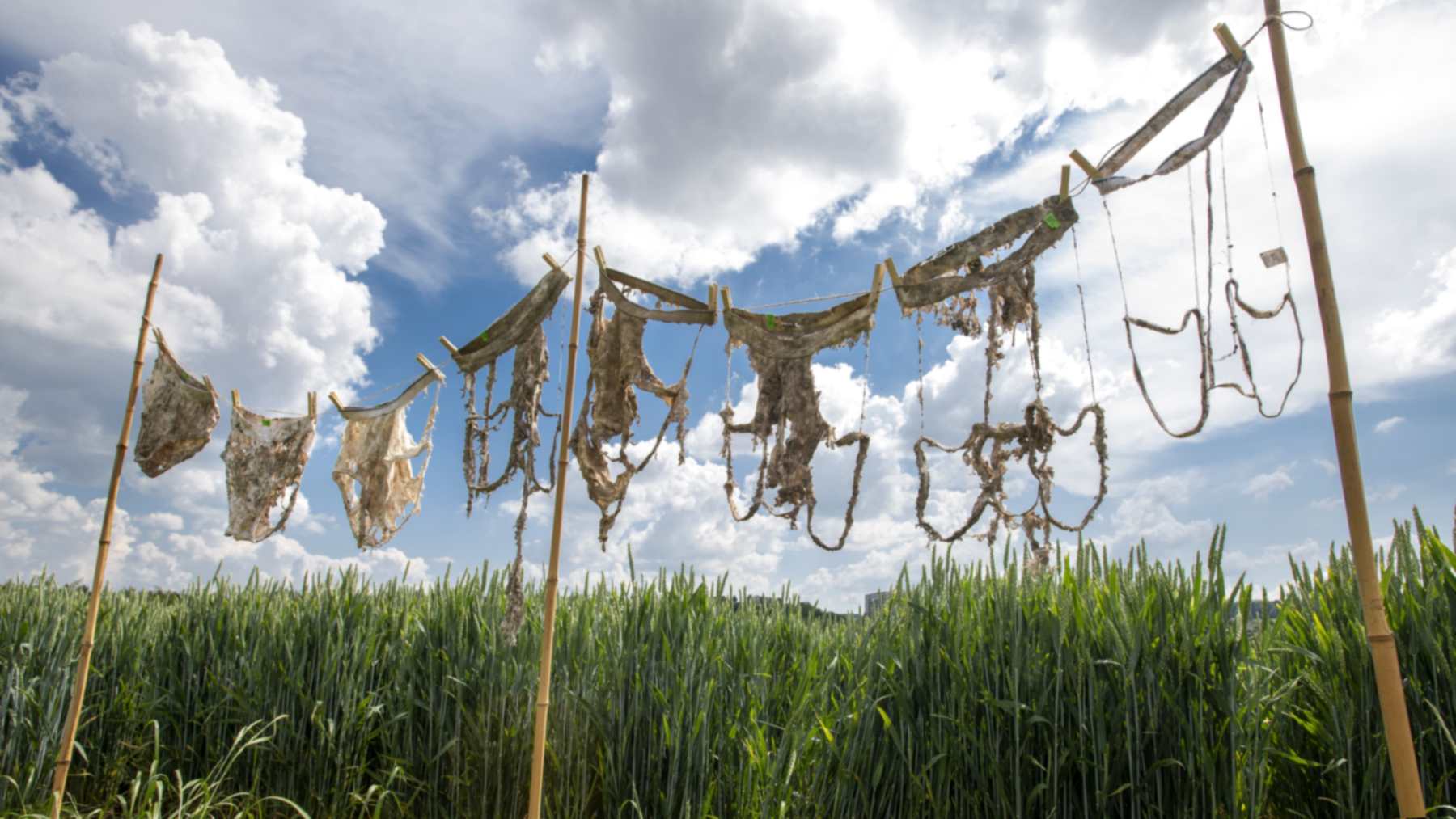
About 1,000 volunteers across Switzerland buried more than 2,000 pairs of cotton underwear for a soil experiment called Proof by Underpants, and after two months private gardens had broken down about 58 percent of the fabric, the most of any land use. Lawns came last at about 40 percent, and garden soils held roughly four times the available phosphorus of farm fields.
The project, run by Agroscope, Switzerland’s federal center for agricultural research, and the University of Zurich, won an Ig Nobel Prize at a ceremony in Zurich on Sept. 3. According to the university, the team took the stage in front of a display of underwear in various stages of decomposition, and Agroscope’s Franz Bender sang a song he had written for the occasion.
A playful test with a serious aim
Bender, head of the agroecological assessments team at Agroscope, co-led the project with Marcel van der Heijden, professor of agroecology at the University of Zurich. Science journalist Atlant Bieri and Pia Viviani, who owns a citizen science agency, helped design it. “The more decomposed the briefs, the more active the soil life,” Agroscope told volunteers on its project page.
Burying briefs to show off soil life was already a known trick, but the authors note it had been done without scientific rigor. About 1,400 people registered within a few days of the 2021 launch, and the team picked about 1,000 of them for an even spread across Switzerland, with at least half being farmers.
Two pairs of briefs per hole
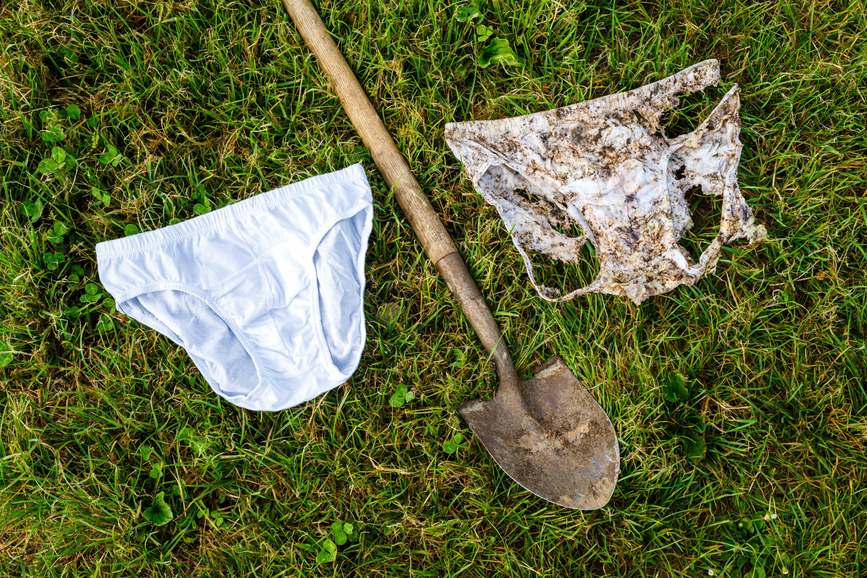
Each volunteer got two pairs of white men’s briefs from the Swiss supermarket chain Coop, made of 100% organic cotton except for the waistband and seams, plus 12 tea bags and a bag for soil. They buried both pairs upright in a hole about 24 by 12 by 12 inches (60 by 30 by 30 centimeters), with the waistband left showing. One pair came out after 30 days and the other after 60.
At Agroscope, staff dried the briefs, cut them open, photographed them on a blue background and used image software to measure how much white cotton was missing compared with a new pair. Volunteers returned 1,752 underpants and 883 soil samples, and 780 sites made it into the analysis.
Gardens chewed through the most cotton
After one month, about 10 percent of a pair was gone on average, and after two, about half. Arable fields reached about 51 percent and permanent grasslands about 47 percent. According to the University of Zurich’s announcement, the underwear decomposed fastest in private gardens, where organic matter was highest and conditions suited earthworms, fungi and bacteria.
Garden soils held about 3.4 percent organic carbon, against about 2.1 percent in arable fields and lawns, and land use explained the differences better than most of the soil properties measured. “Our results show that how soil is managed can significantly affect both soil life and soil quality,” van der Heijden said.
Lawns are often mowed frequently, have little plant diversity and get regular herbicide, all of which can harm soil life, the authors write. Arable fields had carbon as low as lawns but ate more cotton, possibly because their soil is disturbed more. Decomposition also slowed with elevation, likely in part because of colder temperatures higher up.
Cotton briefs are a small meal compared with big decomposition events such as the elephant carcasses that load savanna soil with nitrogen. Because the fabric is low-nutrient cellulose, the nutrients already in the soil matter more.
Garden soils held far too much phosphorus
Garden soils averaged more than 13 milligrams of available phosphorus per kilogram, about four times the 3.5 milligrams of arable fields, and some topped 60. Swiss guidelines call 1.6 to 4.3 milligrams optimal, depending on soil texture. The authors conclude that “many gardeners fertilize well beyond what is necessary,” and that in most cases no extra phosphorus fertilizer is needed.
Excess phosphorus that plants cannot take up can wash into groundwater and streams, the paper says, the same nutrient runoff behind Lake Erie’s oxygen-starved dead zones. It can also harm arbuscular mycorrhizal fungi, which tie into plant roots and form part of the fungal web that runs under our feet.
That is why Bender warns that “maximum decomposition is not desirable in every ecosystem.” In forests and other near-natural habitats, he said, very high nutrient levels can signal a disrupted balance, and in gardens fast decay may point to an oversupply. Many gardeners reported using compost, but it remains unclear whether compost alone caused the high phosphorus.
Cotton and the tea bags, used in the standard Tea Bag Index, told a similar story, with gardens on top in both. But phosphorus and fertilizer type predicted cotton decay and not tea decay, which the authors say suggests their new Underpants Index may be a more sensitive measure of soil fertility. Scoring the briefs by eye in 10% steps proved fast, simple and similarly accurate.
What a pair of briefs cannot tell you
The measured factors explained just 16.5 percent of the variation in cotton loss after two months, and the citizen science setup added noise through missing data, differences in sampling and how people followed instructions. Soil life also depends strongly on temperature and moisture, the university notes.
A shredded pair is not a gold star either. The paper says soil fertility, rather than overall soil health, drives underpants decomposition, and in meadows or forests high nutrient levels are often linked to fewer plant species. The authors say controlled experiments are needed to pin down the precise drivers.
Bananas, cockroaches and 240 co-authors
The Ig Nobels honor “research that first makes you laugh and then makes you think,” as UZH News put it, and this year’s ceremony was the first in 35 years held outside the United States. Van der Heijden said the team chose a deliberately provocative and humorous approach to draw as many people as possible, and to call attention to gradual soil degradation and the decline in biodiversity.
About 240 volunteers are listed as co-authors, and each got their own soil results back. The university’s advice is to keep soil covered, add compost, vary crop rotations and use fewer mineral fertilizers and pesticides. Organic matter can rebuild tired ground, as a Costa Rican pasture showed after about 1,000 truckloads of orange peels were dumped on it.
The full study was published in Plants, People, Planet.
Photo: Gabriela Brändle, Agroscope