Archaeologists have mapped a Qin royal cemetery beside Xi’an Xianyang International Airport in China, recovering 258 objects or sets of objects around a main tomb that stretches 656 feet (200 meters) with its ramps. The Shaanxi Academy of Archaeology began probing the ground in 2018 ahead of a third phase of airport expansion, and archaeologist Zhao Hanqing now argues that the person buried there was most likely Queen Dowager Huayang, adoptive grandmother of China’s first emperor.
The site’s flat-topped earthen mound, about 33 feet (10 meters) high and some 2,130 feet (650 meters) from the south runway, is listed as a protected site called Gongling. The excavation report Zhao co-wrote with the dig team is more careful, settling for an unnamed queen dowager of the Qin state.
A cemetery with one big tomb in the middle
A team led by project director Geng Qinggang dug the northern part of the site, known as the Shangzhaoyao Qin mausoleum, in 2022. Its report came out in July in Archaeology and Cultural Relics, a journal the Shaanxi Academy of Archaeology publishes.
The precinct is nearly square, with an outer and an inner boundary ditch, an inner enclosure wall, attendant and subordinate burials, sacrificial pits and the main tomb, the excavators write. The outer ditch alone runs about 1,980 feet (605 meters) from north to south. The layout is concentric, like the Chinese character hui 回, one square drawn inside another, with the wall splitting an inner precinct from an outer one.
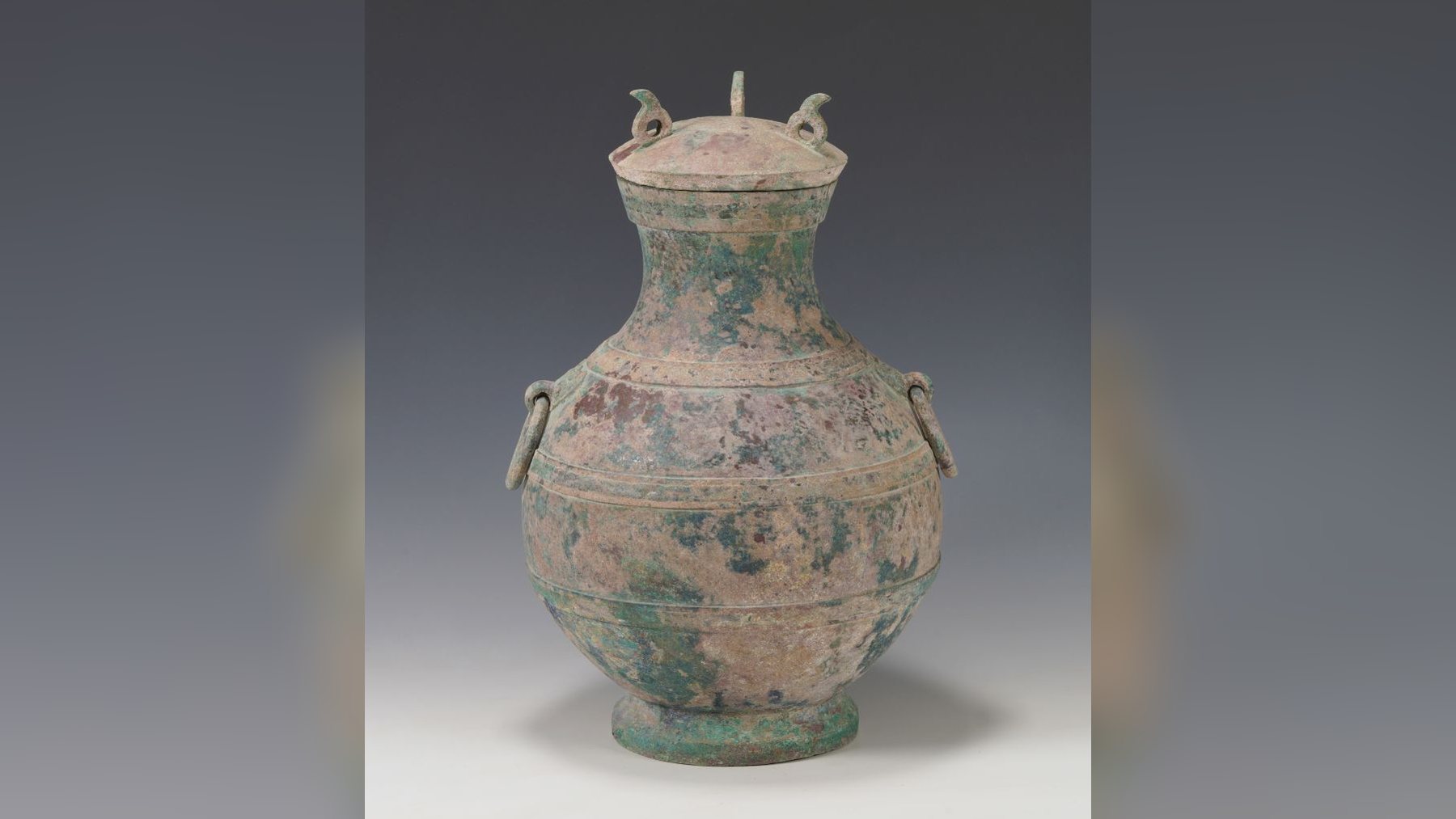
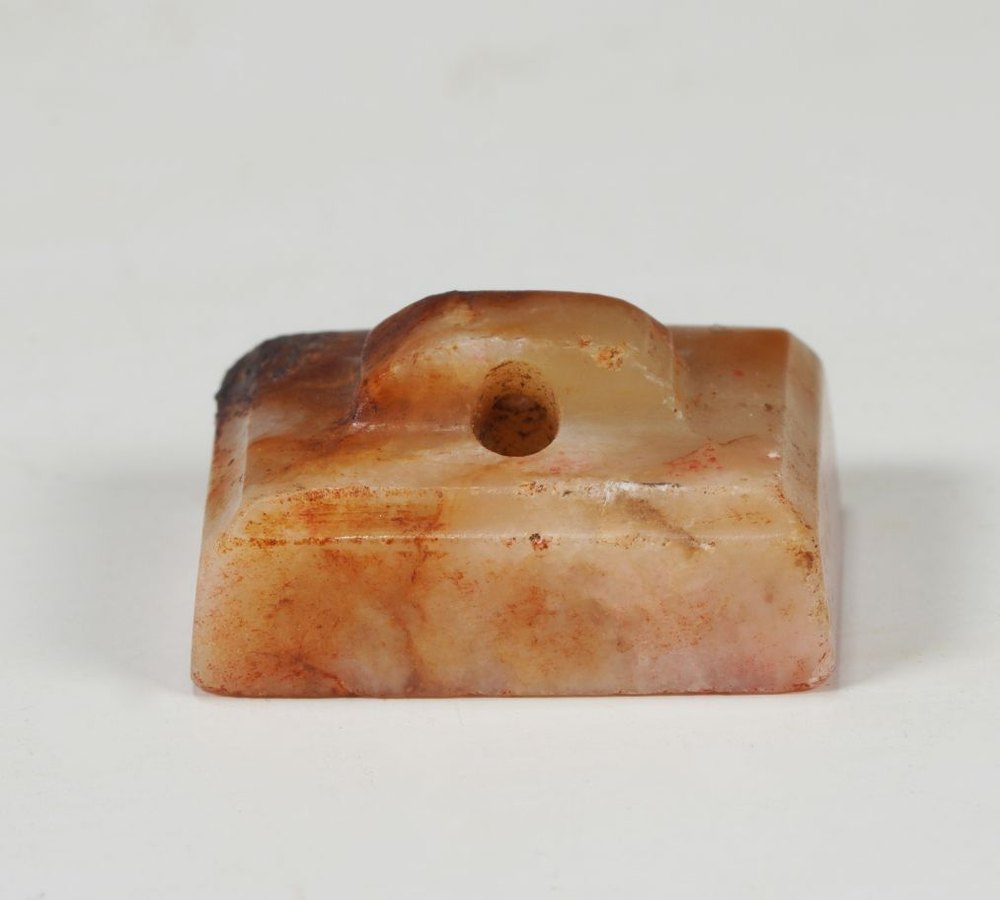
Pottery makes up 117 of the 258 finds. A bronze tripod cauldron, or ding, is engraved Song shi, for the Song clan, and blue glass beads with round “eye” designs and a small jade seal turned up as well.
The team also mapped 62 sacrificial pits, none holding a physical offering, and robbers’ tunnels cut into several of the larger subsidiary graves. Builders and archaeologists cross paths like this all over the world, as when archaeologists checking a building plot in Italy found a 2,600-year-old Etruscan tomb belonging to someone of high rank.
The queen who adopted a king
Huayang’s story survives in the Records of the Grand Historian, written by Sima Qian more than a century after her death. She was the favorite wife of Lord Anguo, a Qin crown prince with more than 20 sons, but had no son of her own. With help from a merchant named Lü Buwei, she adopted one of them, Zichu, then a hostage in the rival state of Zhao.
Lord Anguo reigned as King Xiaowen for one year, Zichu followed as King Zhuangxiang, and Zichu’s son unified China in 221 BC. Sima Qian dates Huayang’s death to 230 BC and says she “was buried alongside King Xiaowen at Shouling.”
Why one archaeologist names Huayang
Three Qin royal cemeteries were already known on the Xianyang plateau: Zhoulingzhen, Yanjiagou and Sijiazhuang. Shangzhaoyao makes four, and its mound stands about 1.4 miles (2,300 meters) from Sijiazhuang’s.
In a separate paper in the same issue, Zhao, who is also affiliated with Northwest University’s School of Cultural Heritage, sorts the four into a rectangular group and a near-square group by their layout and shape. Combining that with historical texts, archaeological evidence and earlier scholarship, he crosses off candidates one at a time and concludes that “Queen Dowager Huayang is the most likely occupant of the mausoleum.”
Nobody has opened the main tomb
The main tomb, shaped like the character ya 亚, roughly a cross, sits under an inverted-bucket-shaped mound in the center of the inner precinct, with a sloping ramp on each of its four sides. With those ramps it stretches 656 feet (200 meters) east to west and 618 feet (188.5 meters) north to south. Its chamber is around 190 feet (58 meters) on each side, and the probes put its floor about 87 feet (26.4 meters) down.
The main tomb fell outside the land the airport project needed, so the team surveyed it and did not dig, the report explains. Based on the layout, the burials and the artifacts, the excavators date the cemetery to the late Warring States period.
Forty-three skeletons from the outer graves
What the team did dig were 45 small graves set in neat rows between the inner and outer ditches.
Cheng Wenhui, a master’s student at Shandong University’s Institute of Cultural Heritage, led a study of 43 skeletons from those graves, published online in Antiquity on March 18, 2026. The authors note that the social identity of people buried on the edges of Qin mausoleums has mostly been read from grave goods and distance from the central tomb, with little evidence from bones.
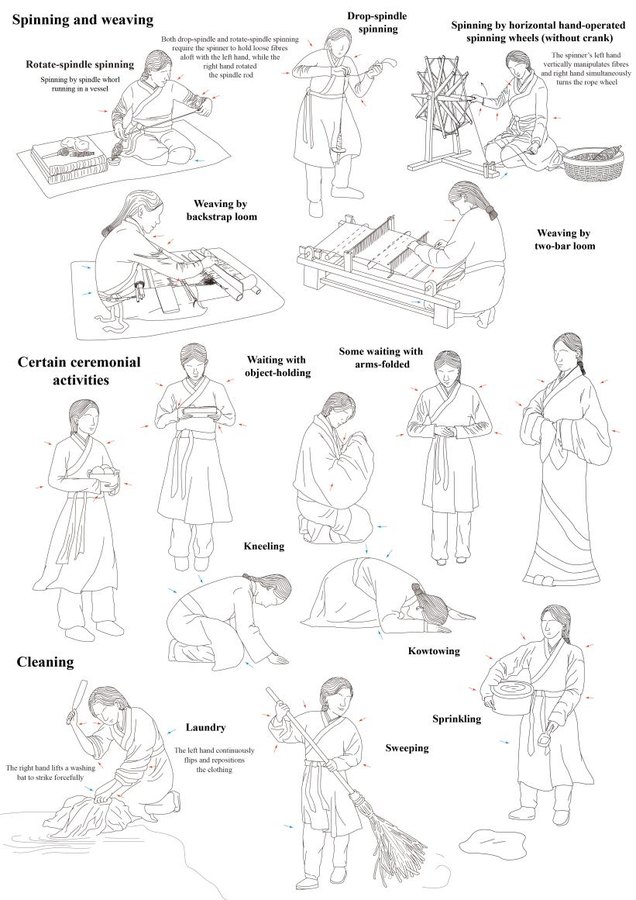
Every one of the 30 skeletons whose sex could be read was female. “Female bias, poor health and participation in high-intensity daily activities together suggest identities associated with menial, miscellaneous labour and reflect the rigid hierarchical system of the Qin state,” the abstract concludes.
The supplementary figures read like a list of injuries: a compression fracture of an upper thoracic vertebra, a break in the right forearm near the wrist, a healed fracture at the lower end of a right upper arm bone and post-traumatic healing on a right femur. Teeth also show linear enamel hypoplasia, thin bands in the enamel left by illness or hunger while they were forming.
One individual, XJM5550, had osteoarthritis at the elbow, with bony growths, porous changes and pitting on the joint surface. A Shandong University summary of the paper suggests jobs such as weaving or cleaning palace rooms.
Where the case is still thin
No inscription yet names whoever lies in the main tomb. The radiocarbon range of 389 to 208 BC comes from one attendant grave, and that kind of carbon-14 dating leaves a window of almost two centuries.
The excavators write that the discovery further complicates the debate over who was buried in the plateau’s Qin cemeteries, but that it also “provides new clues and research ideas for solving the puzzle.”
The palace-worker study reads jobs from wear on bone, and 13 of its 43 skeletons could not be sexed. Building work keeps turning up ordinary people like these, from Xi’an to the 317 skeletons found beneath a shopping center.
The full study was published in Antiquity. The excavation report and Zhao’s paper are in the July 2026 issue of Archaeology and Cultural Relics.
Photo: Shaanxi Academy of Archaeology