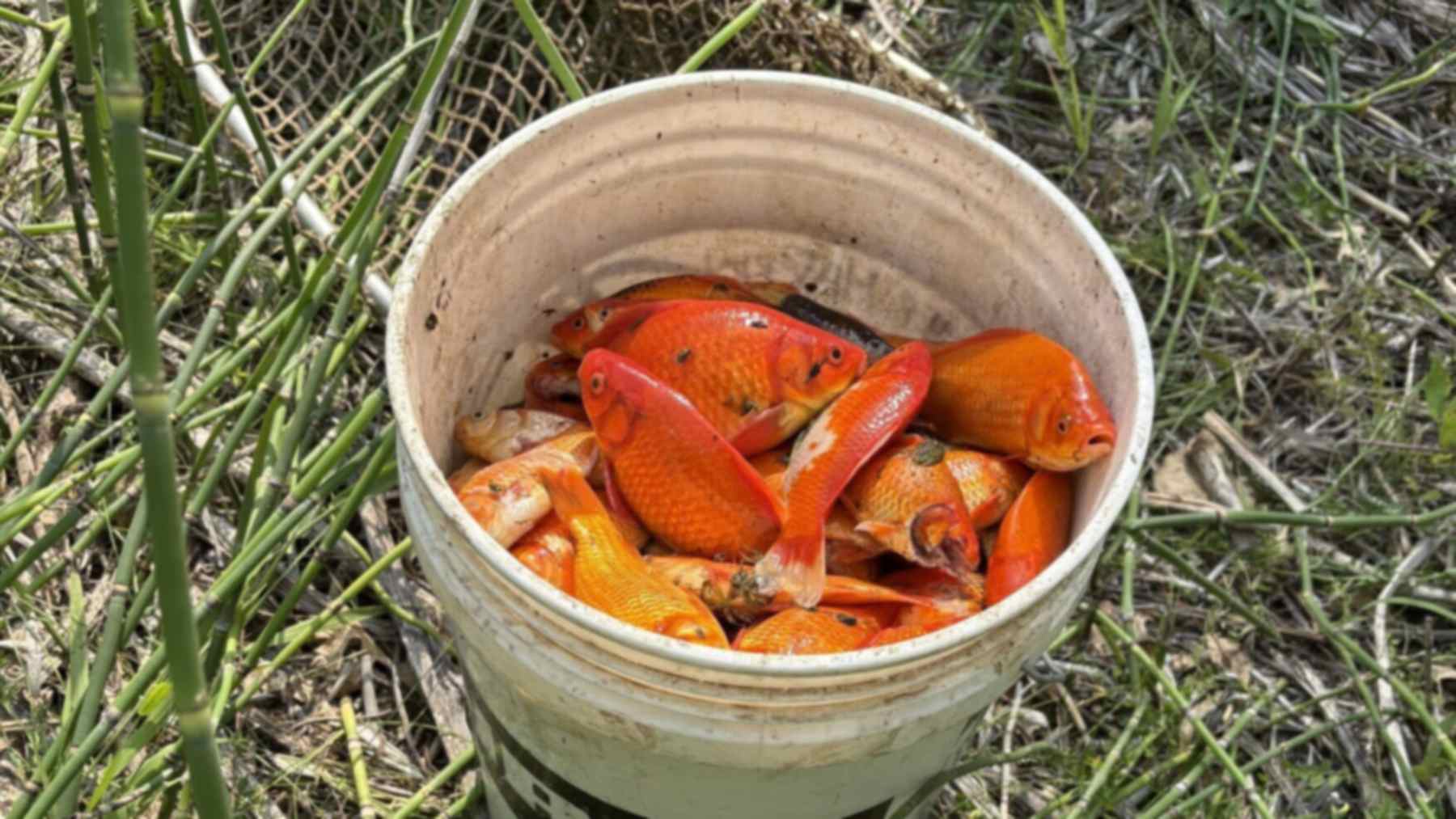
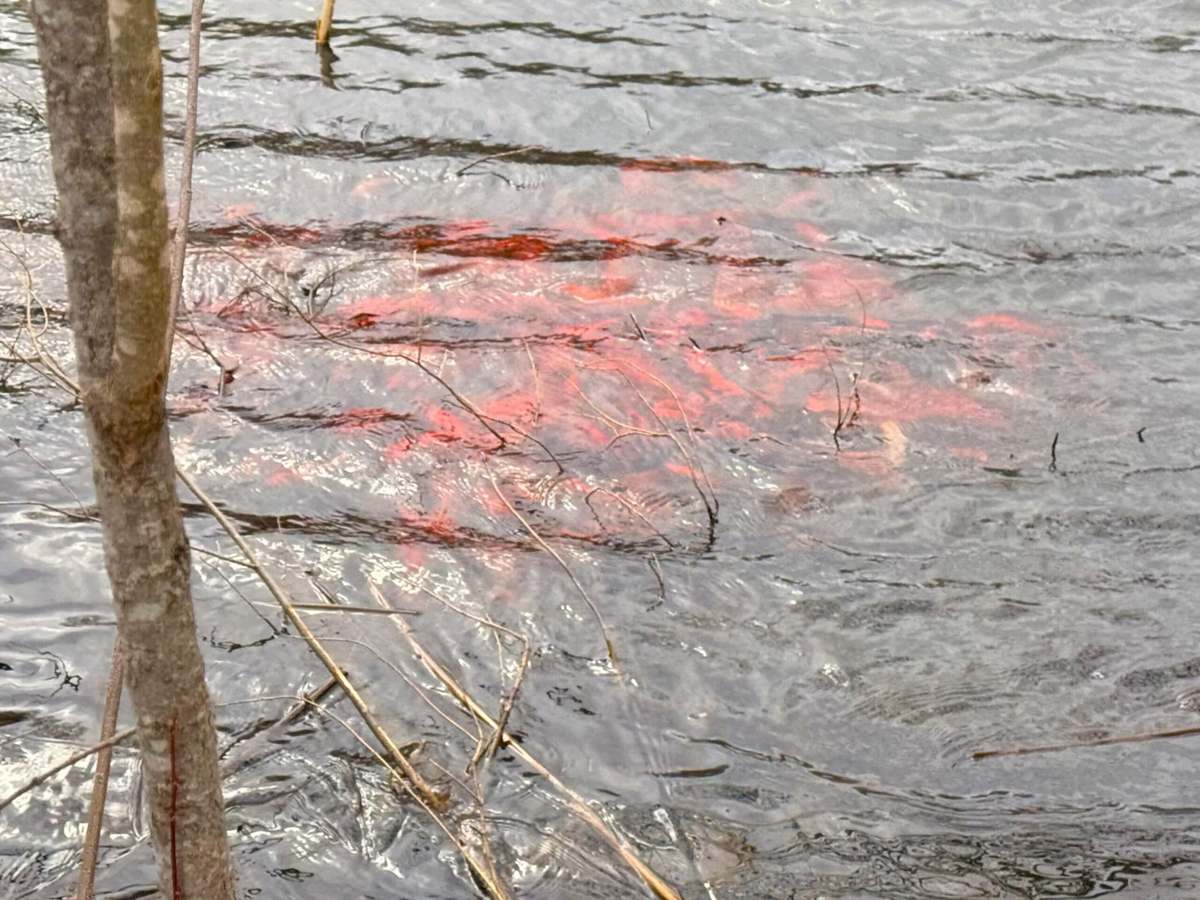
Released pet goldfish have turned up in a stormwater pond in Woodbury, Minnesota. Sonar, electrofishing and baited box nets all failed to clear them, so the city obtained a state permit to use rotenone, a fish toxicant. The South Washington Watershed District described the case in an August 14, 2026, public notice.
According to the district, the fish “continued to reproduce rapidly” in a pond linked to Powers Lake. It calls Powers the lake with the highest quality water in the watershed. Minnesota’s Department of Natural Resources says goldfish can weigh up to 6 pounds (2.7 kilograms).
A school beside Powers Lake
Goldfish have been popping up across the Twin Cities metro and its suburbs in recent years, the district says. It blames people who release unwanted pets. Under Minnesota law, that counts as illegal fish stocking.
In Woodbury, a large school settled in stormwater ponds east of Powers Lake. Those ponds connect directly to the lake. A district notice from July 8 warned that “once they enter the lake, the problem will no longer be easily solved.”
Residents who spot goldfish in the wild are asked to take a photo and report the place, the date and a rough count. The district’s contact for the project is Kyle Axtell, its planning and projects program manager.
Carp cousins near 2 feet
The state’s goldfish and koi management guide places the goldfish in the carp family. A typical adult measures 5 to 8 inches (13 to 20 centimeters). Some reach close to 2 feet (61 centimeters).
Because goldfish feed along the bottom, they stir up sediment and release phosphorus, the district says. The water turns cloudy, and the extra nutrients can feed algae blooms that drain oxygen from lakes.
According to the DNR guide, goldfish can survive long stretches without oxygen, so cold winters offer little help. That lets them ride out the season in ice-covered ponds starved of oxygen.
Their spread has a long paper trail, too. The Smithsonian Environmental Research Center records that the U.S. Fish Commission shipped goldfish to people in at least 37 states between 1878 and 1893.
Rotenone, the last resort
Before turning to chemicals, Woodbury and the district tried to catch the fish with gear. Crews use the same approach to haul invasive carp out of the Kansas River. In the Woodbury pond, every attempt came up short.
Rotenone comes from the roots of tropical plants in the bean family, the district explains. Fisheries managers have used it since the 1930s. It works through gills, so people, pets and birds are not expected to be harmed.
Every fish in the treated pond dies, though, including species that swam in from Powers Lake. The district expects those natives to return. A treatment and cleanup normally take one day.
In its 2022 guide, the DNR calls rotenone “not preferred or recommended.” It is costly, hard to obtain, tricky to apply and not always effective. Every shoreline owner must also agree in writing.
Thirty-two tanks of lake water
Experimental evidence for the damage arrived in April 2026. William Hintz, an associate professor at the University of Toledo’s Lake Erie Center, led the study with Hannah Barrett and Rick Relyea.
In the summer of 2017, the team ran 32 outdoor tanks for 61 days. Each held about 320 gallons (1,210 liters) of water from Lake George in New York. Some tanks got native golden shiners, some got goldfish, and some got both.
In nutrient-rich tanks, goldfish raised suspended mineral particles by as much as 81 percent. Water clarity dropped. Snails, amphipods and zooplankton declined, and the native shiners ended up in poorer condition.
“It is critically important to inform the public that their pets can become pests,” Hintz said in the university’s announcement. Relyea, of the University of Missouri, said released goldfish “rapidly grow into very large fish that stir up lake sediments.”
Keller Lake after 2021
Elsewhere in the metro, Keller Lake sits between Burnsville and Apple Valley. A 2023 report for the Black Dog Watershed Management Organization says a 2021 fish survey there included removing invasive goldfish from the 50-acre lake.
The same report credits alum treatments in 2019 and 2021, which lock phosphorus into the mud, for clearer water. Summer averages beat state standards from 2021 through 2023. Even so, it recommends continued goldfish management.
Rehoming a fish legally
Minnesota lists goldfish as a regulated invasive species. People may buy, sell and keep them, but releasing them into public waters is illegal. Once an invader settles in, removal gets expensive, as with the zebra mussels removed from a Missouri River dam.
For unwanted fish, the DNR suggests asking a store about returns, giving the fish to a hobbyist or a school, or using a surrender event. Oversized exotic pets cause trouble elsewhere too, like the Mekong catfish found in an Uzbek basement pool.
Woodbury’s fish count unpublished
The district’s notices give no number for the Woodbury goldfish, no treatment date and no result. They confirm only that the city obtained the permit. Whether the rotenone has cleared the pond is still unknown.
The tank experiment has limits of its own. It lasted two months in contained tanks, not Minnesota lakes. The authors also found that floating algae rose with the total number of fish, native or invasive, rather than with goldfish alone.
The full study was published in the Journal of Animal Ecology.
Photo: South Washington Watershed District