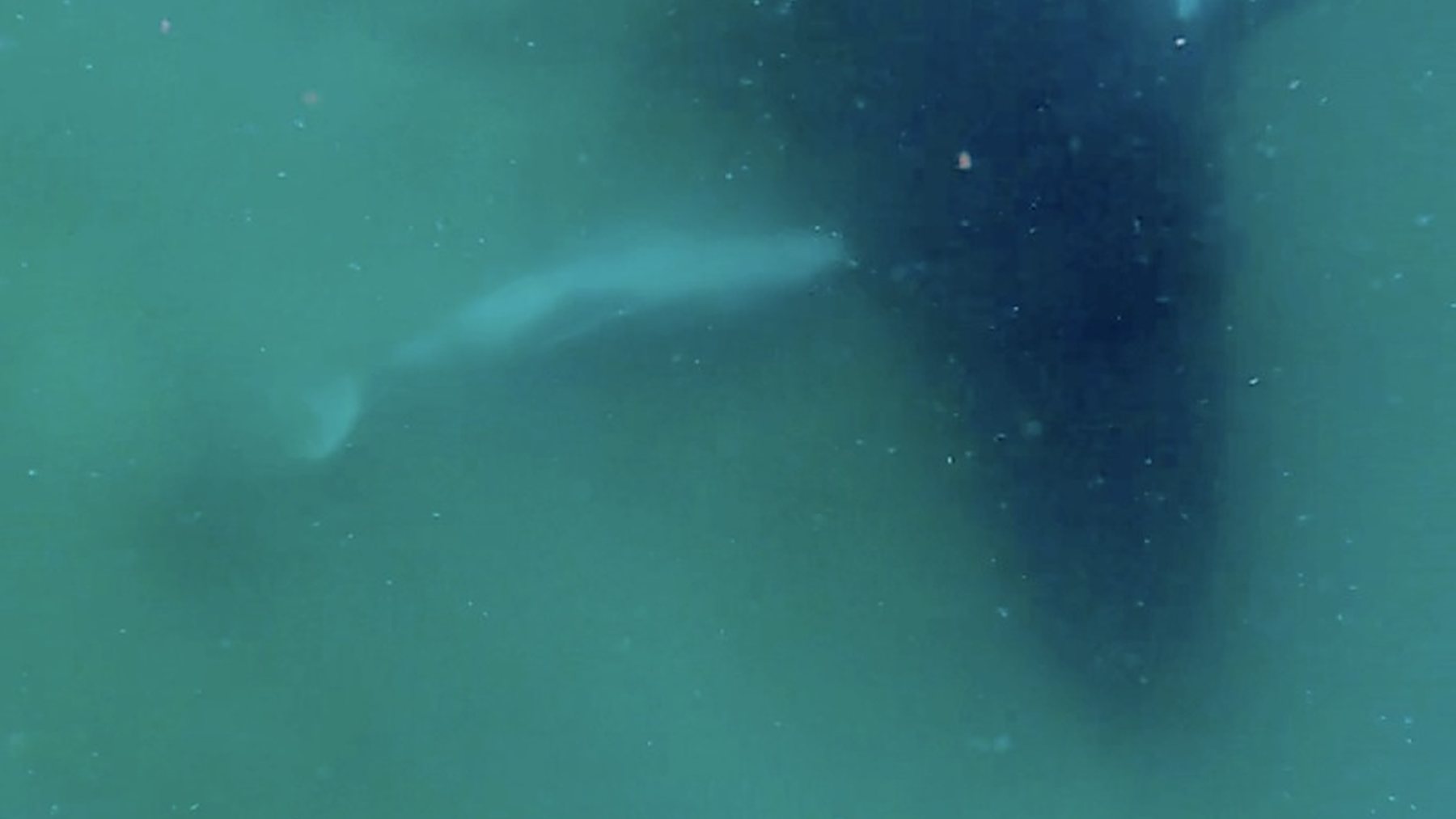
A humpback whale mother off Australia’s Gold Coast stayed with her stillborn calf on the seafloor on July 17, 2025. Underwater footage, 12 minutes of which show the calf, caught her touching the body with her head and flipper. The authors say it is, to their knowledge, the first detailed record of a humpback whale attending a dead calf.
The lead author is marine scientist Jan-Olaf Meynecke of Griffith University’s Whales and Climate Research Program. Andrew Mulville, a rescue boat captain with Sea World Foundation, filmed the scene and co-wrote the paper. The university’s announcement speaks of possible grief, a word the paper handles with care.
A birth near Palm Beach reef
Mulville was on a 16-foot (5-meter) private boat at Palm Beach reef, about 0.6 mile (1 kilometer) from shore. Two whales appeared there at about 8 a.m. The surface water measured 69°F (20.5°C), the study says.
Both adults were roughly 39 to 43 feet (12 to 13 meters) long. The slightly larger one, later identified as the presumed mother, kept arching her back. Her dives lasted less than two minutes, and she resurfaced in nearly the same spot each time.
“At first sight, I thought it was just two whales resting on the surface, but their behaviour was unusual,” Mulville said in the university’s statement. At about 8:30 a.m., his GoPro caught an amniotic membrane floating at the surface.
Head, flipper and eye contact
By about 8:45 a.m., the footage showed a small calf lying still on the seabed, with no sign of movement or breathing. The authors estimate it at under 13 feet (4 meters), possibly undersized.
According to NOAA Fisheries, humpback calves are born after an 11-month gestation and measure about 13 to 16 feet. The presumed mother swam up alongside the body and touched it with her head and pectoral fin. She kept returning to it, eye to eye for at least a minute at a time, until the observers left at 10 a.m.
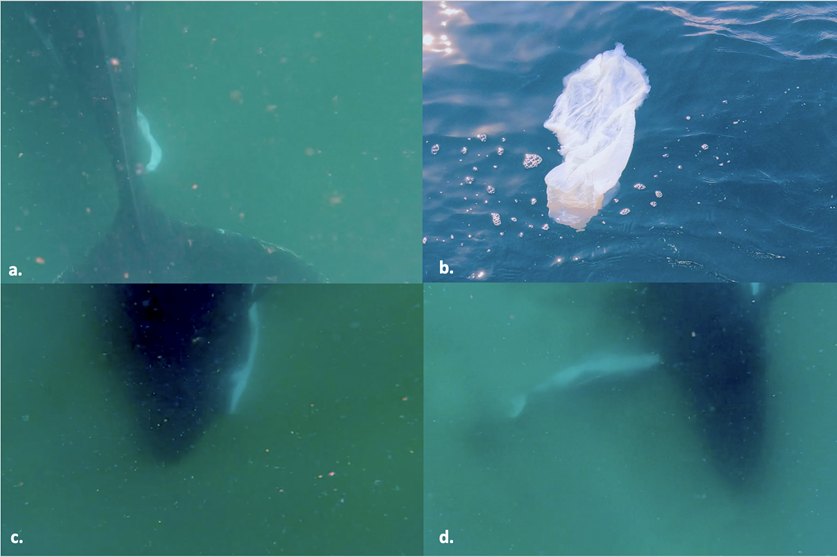
“She remained close to the calf, maintaining eye contact and positioning herself next to her calf over several hours and maybe even days,” Meynecke said. The second adult, which the study calls an escort, circled slowly nearby and showed no aggression.
No attempt to lift the calf
Biologists use the term post-mortem attentive behavior for attention an animal directs toward a dead member of its own species. A 2018 review cited in the study counted 106 cases in aquatic mammals, 81 of them in whales, dolphins and porpoises.
Most of those records involve toothed whales. Dolphin mothers often hold dead calves at the surface or carry them on their snouts. In 2018, the killer whale Tahlequah carried her dead calf for 17 days over more than 930 miles (1,500 kilometers).
“Unlike reports of toothed whales where mothers have been observed lifting their dead calves to the surface, this humpback whale mother showed prolonged post-mortem behaviour and attention towards her deceased calf under the surface,” Meynecke said.
The paper gives three possible reasons why she never lifted the calf. Baleen and toothed whales may simply behave differently. The calf’s position on the seafloor may have made lifting hard, or the mother may have recognized that it was not responding.
Newborns that sink from view
Humpbacks are baleen whales, which filter small prey through plates in their mouths. According to the study, their newborns tend to sink soon after death because they lack blubber. Toothed whale newborns usually float.
Even births are rarely seen, as aerial images of a humpback whale giving birth showed this year. The rarity of such reports in baleen whales “may partly reflect observational limitations rather than true behavioural absence,” the authors write.
Attention toward living companions has been recorded as well. A 2025 study in PLOS ONE found 62 accounts of humpbacks staying near entangled whales in 414 entanglement reports. Entanglement is a known danger for the species, as when a juvenile humpback was freed from two crab pots in Alaska.
Seven dead newborns that July
In July 2025, seven dead humpback newborns were reported between K’gari Island in Queensland and Ballina in New South Wales, the paper notes. A floating dead young whale of unknown age turned up in the same stretch.
The Gold Coast birth took place more than 310 miles (500 kilometers) south of the population’s main breeding grounds in the southern Great Barrier Reef. Its water was also cooler than the 72 to 82°F (22 to 28°C) range of births studied so far.
The cause of these newborn deaths remains unknown. The authors suggest swings in Antarctic krill during the summer feeding season may play a part. In the United States, NOAA has logged 212 unexplained minke whale strandings on the Atlantic coast since 2017.
Two whales nobody could identify
Much of the timeline rests on inference, because nobody saw the birth itself. No blood or placenta was visible in the murky water. The team heard vocalizations but could not tell which whale made them.
On July 18 and 19, shore-based surveys and members of the public spotted two adult humpbacks in the same area. No one confirmed they were the same pair. A photo of the female’s tail fluke found no match among more than 15,800 east Australian humpbacks in the Happywhale database.
“Interpretation of these behaviours as possible grief responses must remain cautious,” the authors write, since distress, attachment, confusion or instinctive caregiving could explain the same actions. The full study was published on September 16, 2026, in Discover Animals.
In the university’s statement, Meynecke called for continued systematic records of rare newborn deaths in large whales. How animals respond to death, he said, offers insight into their emotional lives, social bonds and cognitive capacities.
Photo: Andrew Mulville / Griffith University