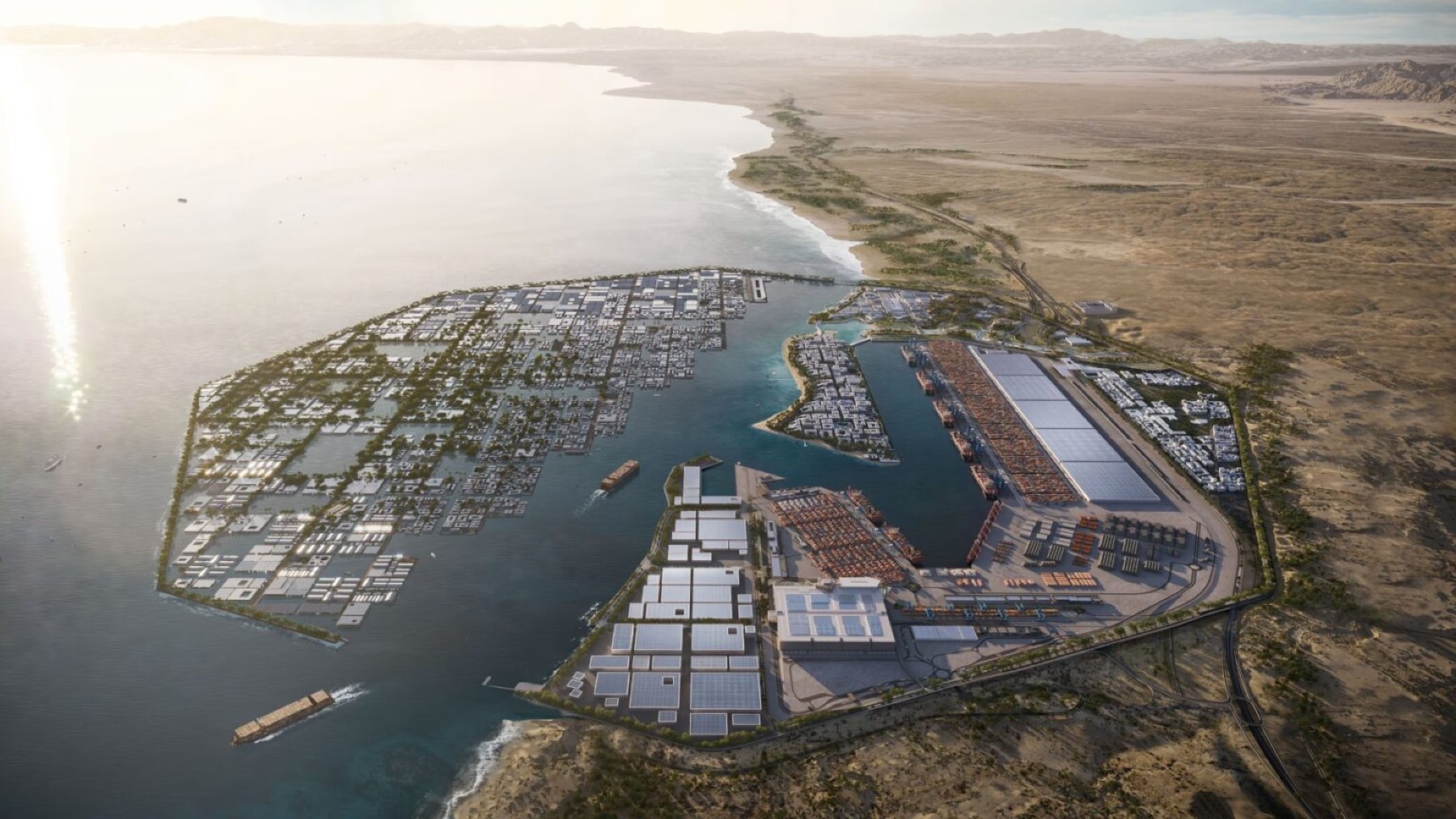
Saudi Arabia to build Hydrogen City. It plans 600 tonnes per day and the most futuristic “octagonal plant” (not a city itself). It is not surprising that hydrogen is gaining such prominence, as we have seen it succeed in other instances, such as the hydrogen-powered invention you can put in your home.
The projection of hydrogen as a clean, carbon-free fuel is extremely enticing. With considerable reserves, natural hydrogen could provide a viable alternative to the oil and gas industry. It is the simplest and most abundant chemical element in the universe and promises to be a key player in the transition to a more sustainable, less fossil-dependent future.
One of the secrets of hydrogen’s success is its versatility. It can be used in a wide range of applications. “I believe it has the potential to replace all fossil fuels,” Vyacheslav Zgonnik, CEO of Natural Hydrogen Energy, once told Science.
Hydrogen City comes to Saudi Arabia: Up to 600 tonnes of green energy will be produced
Saudi Arabia will build an $8.4 billion power plant at its NEOM megaproject. It is erecting what could be one of the world’s largest renewable energy plants in one of its futuristic NEOM megaproject cities. The plan is to build a futuristic megapolis in the Saudi Arabian desert, which will feature a power plant as big as the megalomaniac dreams of its creators.
The goal is to produce 4 GW of renewable energy to help produce up to 600 tonnes per day of green hydrogen. This megaproject has already reached the 8.4 billion needed to build it and could be listed by the end of 2026. NEOM Green Hydrogen Company (NGHC) is a joint venture company that has the participation of the Saudi company ACWA Power, the American company Air Products and NEOM.
The purpose is to develop one of the world’s largest renewable energy projects to help Saudi Arabia make its transition from oil to green energy. In addition to this, the company has a plan to provide energy to all the cities included in the NEOM project.
The project began construction in March 2023. By the end of last year, the assembly hall was almost complete. Two ammonia tanks with a capacity of 70,000 tons are already being erected, and all that remains, according to Edmonson, are the first electrolyzers to be generated by the German company Thyssenkrupp Nucera.
Hydrogen City arrives with high expectations: Saudi Arabia is hosting it
They point out that, once ready, this plant will be able to generate 600 tonnes of green hydrogen per day, which will be used to generate about 1.2 million tonnes of liquid ammonia per year. Air Products has already signed a contract under which it will be able to count on full production for the next 30 years.
“We have financing, it’s in execution and we have to deliver it. Air Products has invested in the downstream stages of the process and wouldn’t do it unless the product comes out,” says Edmonson, who left his job at NGHC this year to take back his Air Products job. “We are totally focused on finishing by the end of 2026. Although we will probably produce some ammonia before then,” he added.
One of the most important customers will be the European Union, which is looking to generate 10 million tonnes of green hydrogen and import another 10 million tonnes between now and 2030. In short, Saudi Arabia will build the Hydrogen City, becoming a strategic point in the context of the energy transition we are experiencing.