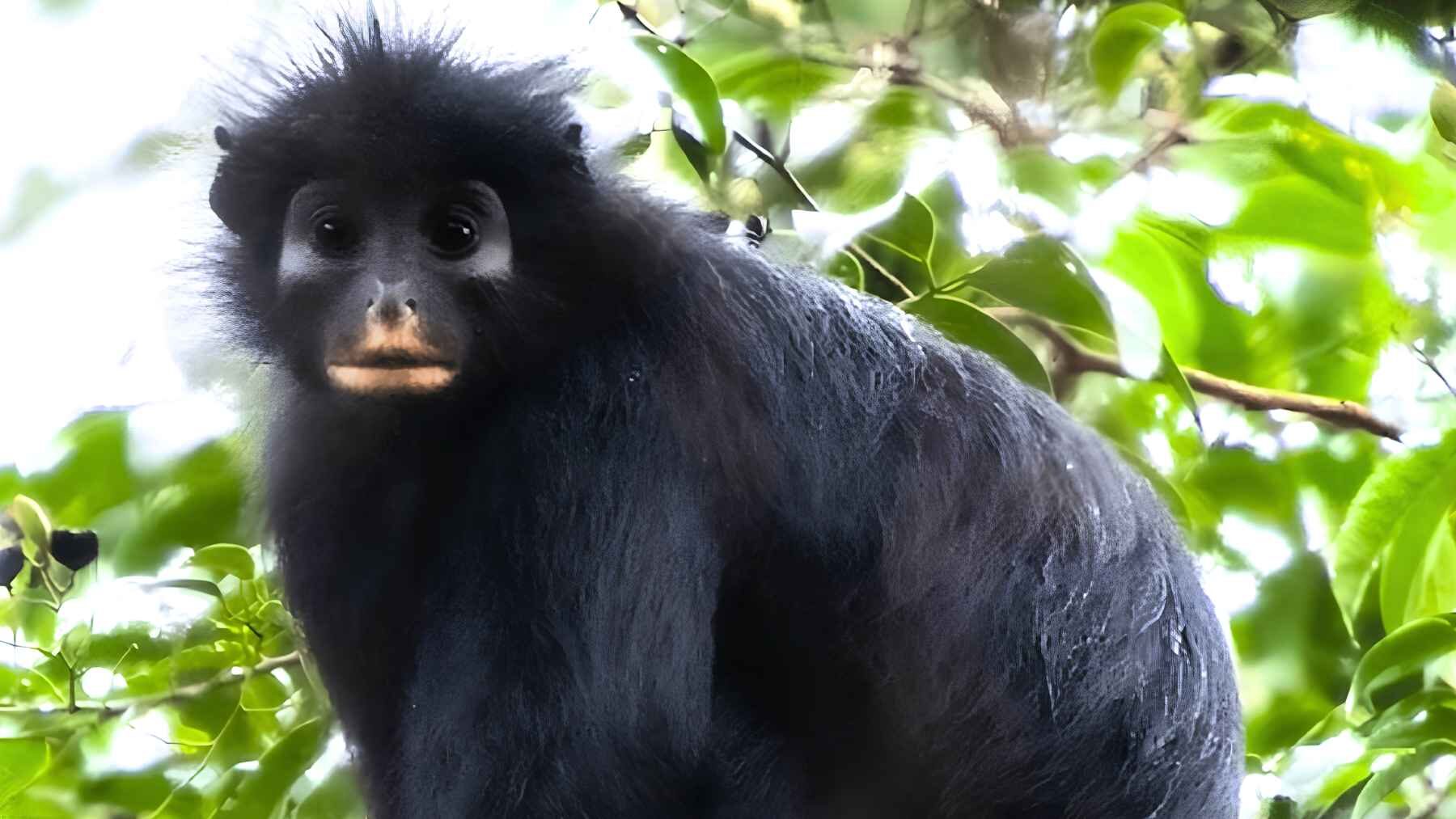
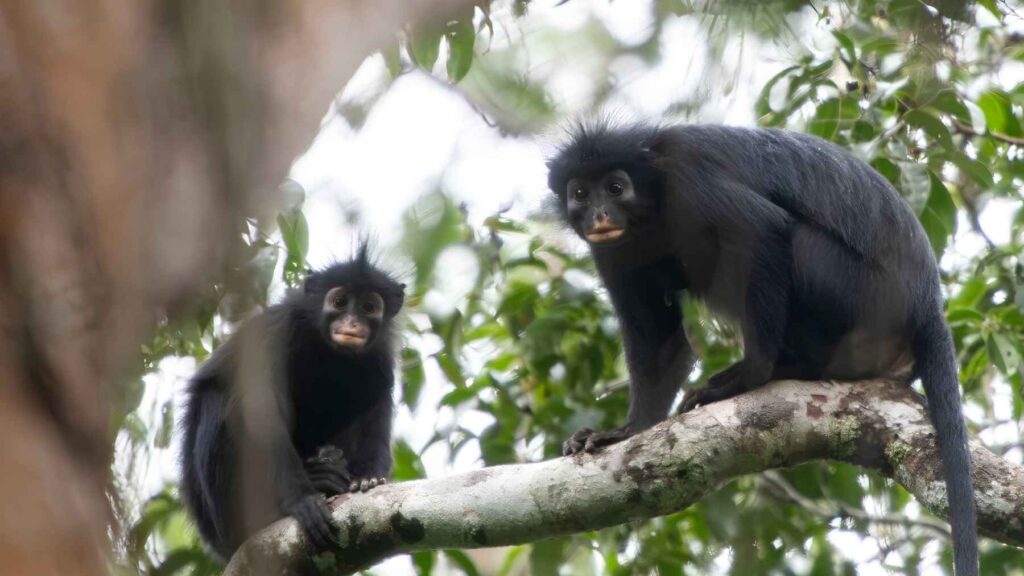
Deep inside the rainforests of the Democratic Republic of the Congo, scientists have formally identified a new species of monkey with black fur, orange-colored lips, and a powerful roaring call. The animal is called Colobus congoensis, although some local communities have long known it as Likweli.
The discovery is far from ordinary. It is only the fifth previously unknown African monkey species documented by scientists during the past 75 years. Researchers say the finding also shows how much wildlife may still be hiding in the vast and difficult-to-reach forests of the Congo Basin.
A monkey hidden in plain sight
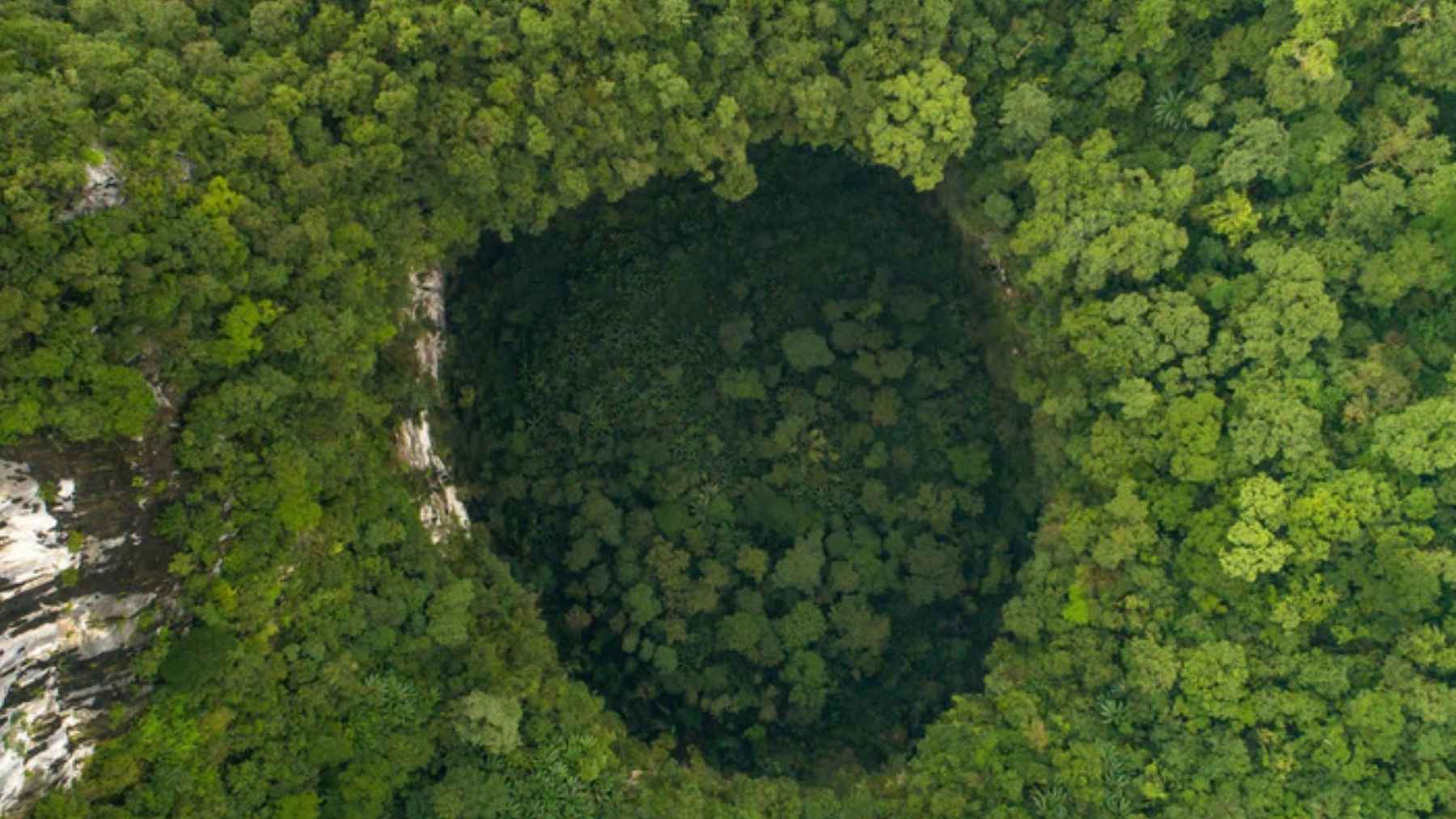
Colobus congoensis lives in and around Lomami National Park in the east-central part of the country. Its known habitat lies between the Lomami and Congo rivers, an isolated landscape filled with dense forest, seasonal wetlands, and natural barriers.
The monkey is mainly black, but its face immediately sets it apart. A creamy orange patch surrounds its mouth and extends toward the lower part of its nose. It also has a white patch beneath its tail, another feature that separates it from every other colobus species known in the area.
Researchers describe the animal as rare, quiet, and “cryptic.” In wildlife research, cryptic does not mean mysterious in a supernatural sense, it means the animal is difficult to detect because it stays hidden, occurs in low numbers, or behaves in ways that make field observations challenging.
That helps explain why formal recognition took so long. People living near the forest had occasionally seen the monkey, but even many neighboring communities knew little about it.
The first photograph raised questions
The scientific trail began in 2008, when conservationists obtained a photograph showing only part of an unfamiliar monkey. The image was incomplete, but its unusual facial markings raised the possibility that researchers were looking at something new.
About a decade later, field researcher Jean-Pierre Kapale led an expedition to search for the animal. He photographed it seven more times in different locations, providing clearer evidence that the original sighting had not been an isolated case.
Those photographs were only the beginning. From 2018 through 2022, researchers recorded 114 detections across an estimated range of about 660 square miles. Eighty-nine encounters involved direct visual observations, while the remaining detections came from calls or limited visual contact.
Finding an unfamiliar monkey once can be a matter of luck. Documenting it repeatedly, comparing its body, genes, and voice, and showing that it represents a separate evolutionary line requires years of work. That is what turned Likweli from a local forest animal into a species officially recognized by science.
Several clues confirmed a new species
The research team did not rely on appearance alone. Scientists compared anatomical features, genetic information, habitat use, and recorded vocalizations with those of other African colobus monkeys.
Each line of evidence pointed in the same direction: colobus congoensis belongs to the same evolutionary group as the black colobus, but the two are genetically distinct and separated by more than 745 miles. Researchers estimate that their evolutionary paths split roughly four to five million years ago.
Its calls added another piece to the puzzle. The monkey communicates with deep roars, and researchers recorded six of these vocalizations with camera equipment during the fieldwork. The structure of the calls resembles those of the black colobus but differs from the voices of other nearby species.
The monkey also appears to live differently from many relatives. It was most often seen in small groups averaging just over six members, although observed groups ranged from 1 to 20 animals. It regularly traveled alongside other primate species, perhaps gaining extra protection or helping locate food.
Local knowledge helped scientists
The discovery was not made by outside researchers working alone. Communities surrounding the forest provided names and information that helped scientists understand where the animal lived and how it behaved.
Balanga people west of the Lomami River call the monkey ‘Likweli’, the name researchers recommend using as its common name. Mituku communities know it as “kasaba nkoni,” which means “the one who shakes the branches.”
Still, knowledge of the species was surprisingly limited. Residents in only 8 of 52 surveyed communities near its range said they recognized the primate and could describe it accurately.
That was unusual because local residents generally had extensive knowledge of other monkeys living in the same forests. The contrast supports the researchers’ conclusion that Likweli is genuinely uncommon and occupies a narrow, patchy habitat.
Junior Amboko, one of the study’s lead contributors, proposed the scientific name in recognition of his home country and the natural heritage of the Congo Basin.
“This discovery is both exciting and deeply personal, highlighting the extraordinary biodiversity of my homeland and how much remains undocumented,” he said.
Its forest habitat is unusually small
Most sightings came from tall, closed-canopy forests growing on deep clay soils. These forests contain a rich variety of trees, but suitable sections are scattered across the landscape rather than forming one continuous block.
The known range covers only about 660 square miles. By comparison, most other recognized species in the same monkey group occupy areas larger than 23,000 square miles. That leaves Colobus congoensis with little room to retreat when its habitat changes.
The species was also difficult to find even inside that small area. During thousands of miles of patrols and survey walks, researchers encountered the monkey at very low rates. Most detections occurred within roughly six miles of the Lomami River.
Why does that matter? An animal restricted to a few forest patches can be affected quickly by hunting, road building, farming, or the arrival of new settlements. Losing even a relatively small part of the habitat could remove a large share of its remaining population.
Scientists warn it may already be endangered
The researchers have proposed that Colobus congoensis receive a preliminary “Endangered” classification on the International Union for Conservation of Nature Red List. That proposal is based on its small range, apparently limited population, hunting pressure, and expected habitat loss.
Human settlement is expanding near the protected area. At least 15 new villages appeared inside or next to the monkey’s range in the park’s buffer zone between 2015 and 2023, according to the study.
If population growth and land conversion continue, the scientists expect significant habitat loss and declining monkey numbers over the coming decades. The species has only just received a scientific name, yet conservationists may already be racing against the clock.
Protecting Lomami National Park will therefore be crucial. The researchers also say conservation programs must work with local communities and discourage hunting while supporting sustainable ways for residents to earn a living.
The park already shelters bonobos, forest elephants, and numerous other threatened animals. It was also linked to the identification of the lesula monkey in 2012, making this remote corner of Central Africa a remarkable center of primate diversity.
Likweli remained hidden from formal science for years, moving quietly through the canopy and occasionally announcing itself with a roar. Its discovery offers a reminder that even large mammals can remain undocumented in the modern world. The harder question is whether they can be protected once scientists finally find them.
The main study was published on PLOS ONE.