“We might expect lower ultraviolet radiation to be simply beneficial, but Antarctic tundra does not respond in such a straightforward way,” Xiyan Xu, a professor at the Institute of Atmospheric Physics of the Chinese Academy of Sciences, said in the institute’s release on a field experiment run on Ardley Island, off the Fildes Peninsula in West Antarctica.
Xu and her colleagues set clear chambers over patches of moss and lichen and covered some of them with thin filters, and when the filters cut ultraviolet light by about 20%, the tundra’s carbon sink shrank by about half, while a 50% cut shrank it by about 80%, according to their study in Atmospheric and Oceanic Science Letters, published online on June 22, 2026.
That is a small-scale version of what the healing ozone hole is slowly doing to the whole continent. If current policies hold, the ozone layer over Antarctica should be back to its 1980 state around 2066, according to the World Meteorological Organization, which credits the Montreal Protocol with phasing out more than 99% of the production and consumption of the controlled chemicals once used in refrigeration, air conditioning, firefighting foam and even hairspray. “Despite the great success of the Montreal Protocol in the intervening decades, this work is not yet finished,” Matt Tully, chair of WMO’s Scientific Advisory Group on Ozone and Solar UV Radiation, said when the agency released its 2025 ozone bulletin.
Plastic filters over a moss marsh
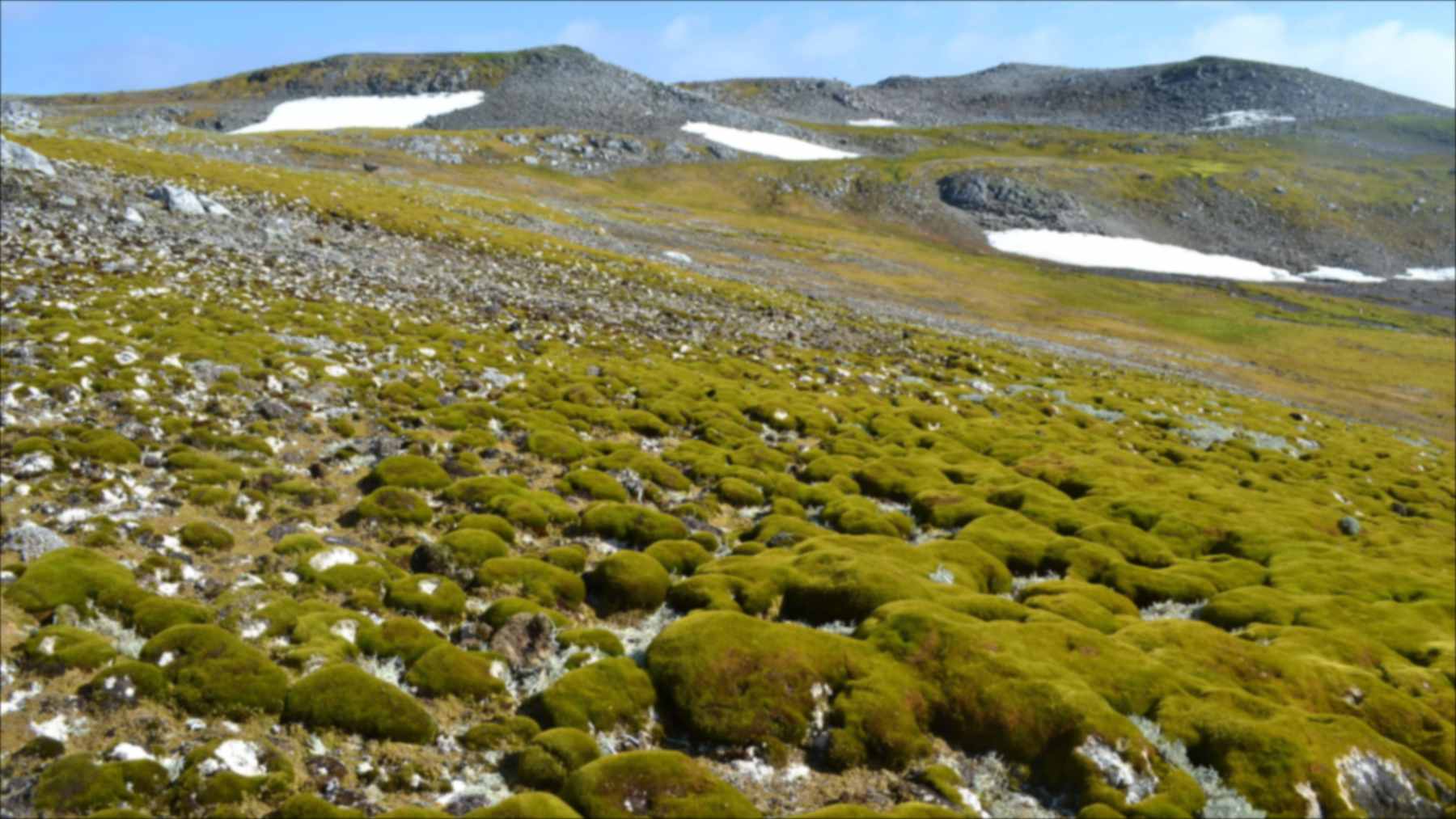
The team worked in two lowland areas of the island, a western marsh of mosses and lichens where marine animals rarely go and an eastern patch heavily fertilized by large penguin breeding colonies. Each area got three chambers, one left as a control and two wrapped in Mylar polyester film 0.03 or 0.06 millimeters thick, which cut ultraviolet light by about 20% and 50%, respectively, while letting through the light plants use for photosynthesis, and the researchers sampled the air inside in daylight and again under a blackout cloth to separate the carbon taken up by photosynthesis from the carbon the whole ecosystem breathed out.
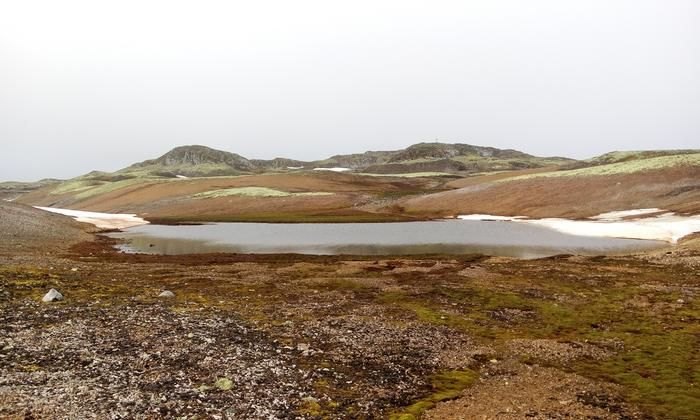
The western marsh was measured over three southern summers between 2011 and 2015, and the penguin area over a single summer. To see how those years compared with the real trend, the authors used UV index records from 1990 to 2022 from the NOAA Antarctic UV Monitoring Network, which includes stations at the South Pole and at Palmer Station, and found that Antarctic UV between December and March has fallen notably since 1998.
Two patches of tundra, two ways to lose carbon
In the western marsh the main loss came from photosynthesis. The authors suggest that mosses and lichens, which evolved under strong ultraviolet light, may put less into protective pigments and UV-absorbing compounds when that pressure eases, which could upset the balance between protecting themselves and capturing carbon, though they write that the direction and size of that effect remain uncertain. “In this sensitive ecosystem, changes in ultraviolet radiation can affect plant photosynthesis, microbial decomposition, and the overall carbon balance at the same time,” Xu said.
On the eastern side, where penguin droppings had raised soil carbon and nitrogen several times over, photosynthesis barely changed, and what weakened the sink was a sharp rise in respiration, probably from soil microbes freed from ultraviolet stress. “Penguin-derived nutrients make these tundra soils biologically active,” said Tao Bao, the study’s first author. “Under lower ultraviolet radiation, this nutrient-rich environment may amplify respiratory carbon loss from the ecosystem.”
With the stronger 50% cut, the tundra even released more carbon dioxide than it absorbed at times, reaching up to 145 milligrams per square meter per hour between mid-February and early March 2015, late in the growing season, which the authors describe as an intermittent shift and not a permanent switch.
How far a few chambers can reach
The plots covered a fraction of a square meter each, and the authors say plainly that their results “are derived from site-specific observations.” They also point out that Antarctica has roughly 72,000 square kilometers of tundra, about 27,800 square miles, along with an estimated 3.05 million breeding pairs of penguins, so the mechanism they describe could matter wherever soils and birds look similar, and could be underestimated if models ignore it. The team plans to combine longer field observations with ecosystem modeling.
None of this undoes the case for the ozone repair. A Nature study in 2021 estimated what the world would have looked like without the Montreal Protocol, and Paul Young of Lancaster University said then that “the increased UV would have massively stunted the ability of plants to soak up carbon from the atmosphere, meaning higher CO2 levels and more global warming.” The Ardley Island result concerns a small, specialized ecosystem whose plants and microbes adapted to long exposure to strong ultraviolet light, and it shows that the recovery can still leave a mark there.
Photo: Dan Charman / University of Exeter (public domain)