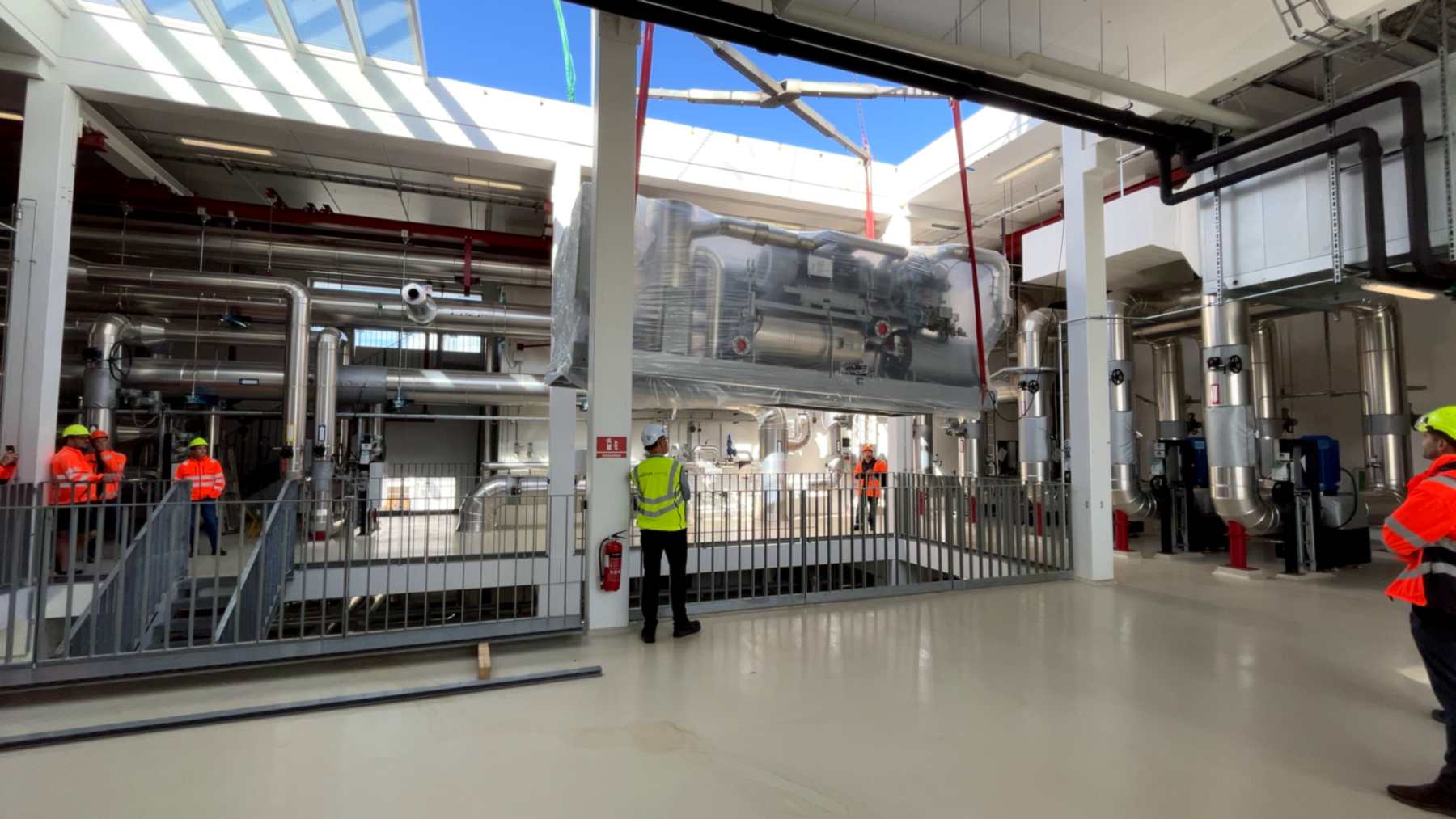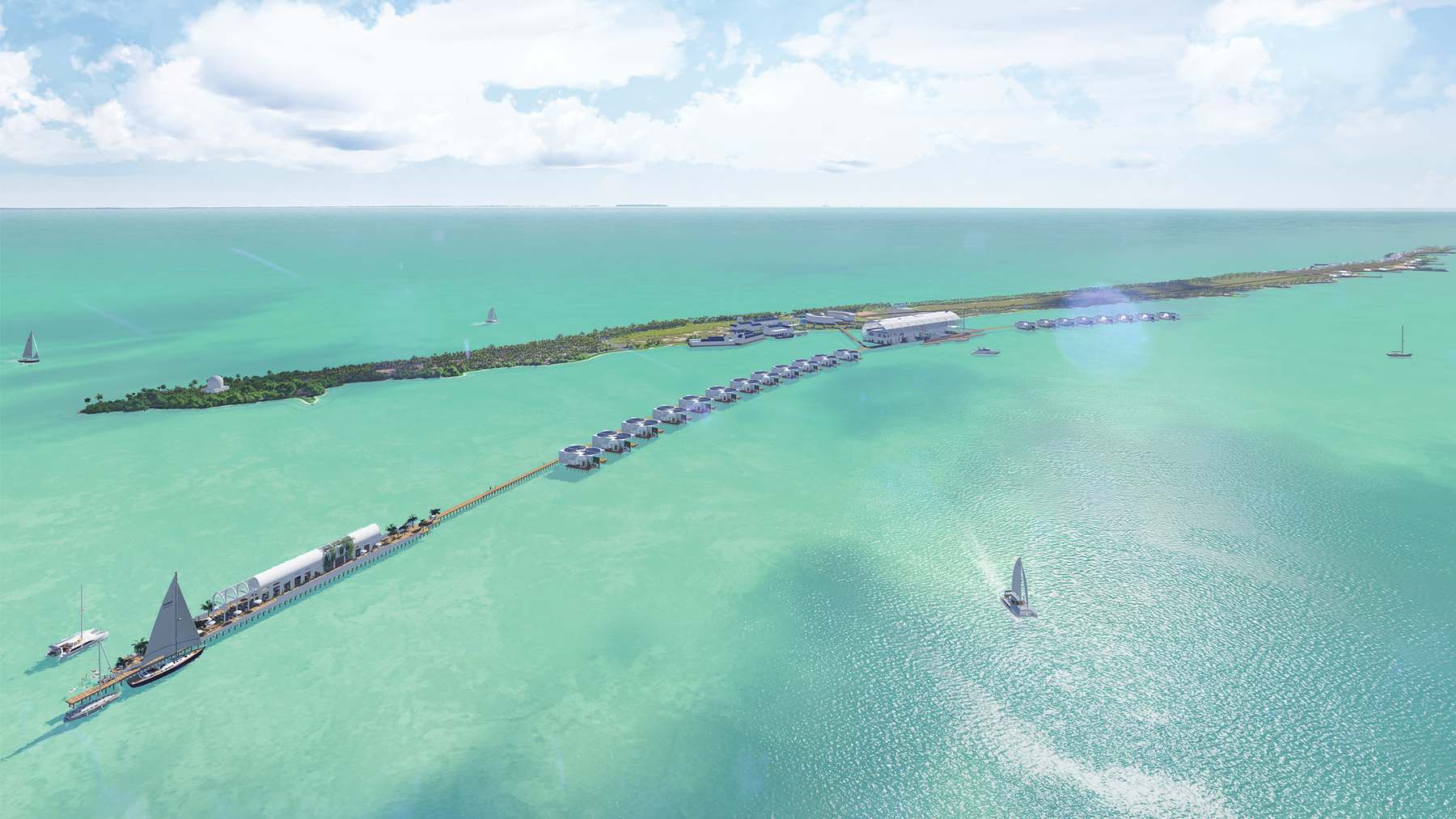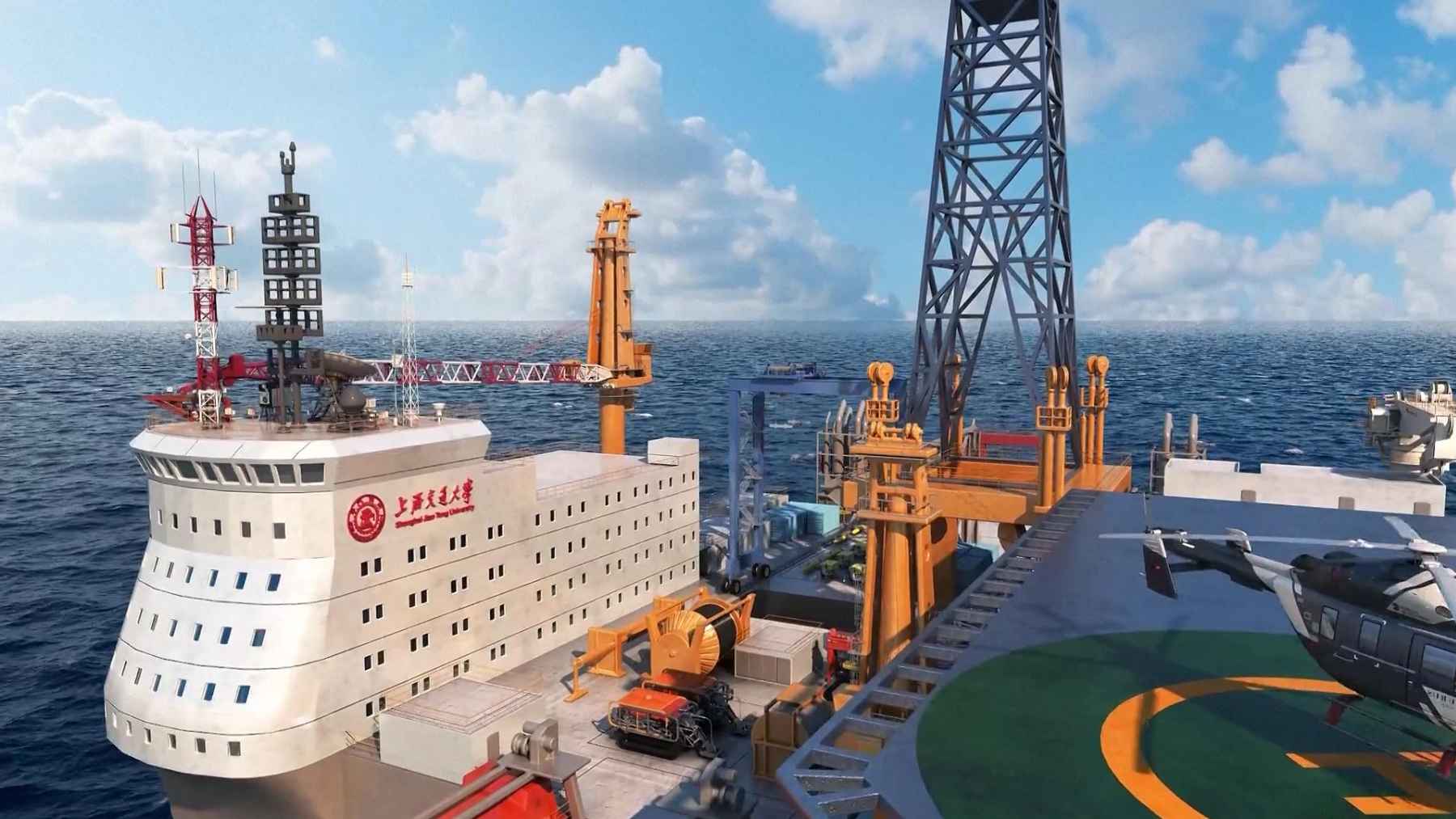
China is building a massive floating research platform that some reports describe as the world’s first mobile “artificial island” designed with nuclear-blast resistance. It is being promoted as a science facility, but its likely operating waters and its industrial capabilities make the environmental angle impossible to ignore.
Better typhoon forecasts and better ocean data can save lives and livelihoods, especially when storm season turns the forecast into a daily habit. Still, a lab that also looks like a bunker raises a simple question that is hard to shake – what happens when science infrastructure is built for worst-case conflict?
What China says it is building
Chinese state media reported on March 28, 2026, that construction has started on a national major science infrastructure project led by Shanghai Jiao Tong University, formally described as a “deep and far sea all-weather resident floating research facility” and also called the “far-sea floating island.” The same report calls it a world-first ultra-large offshore research platform.
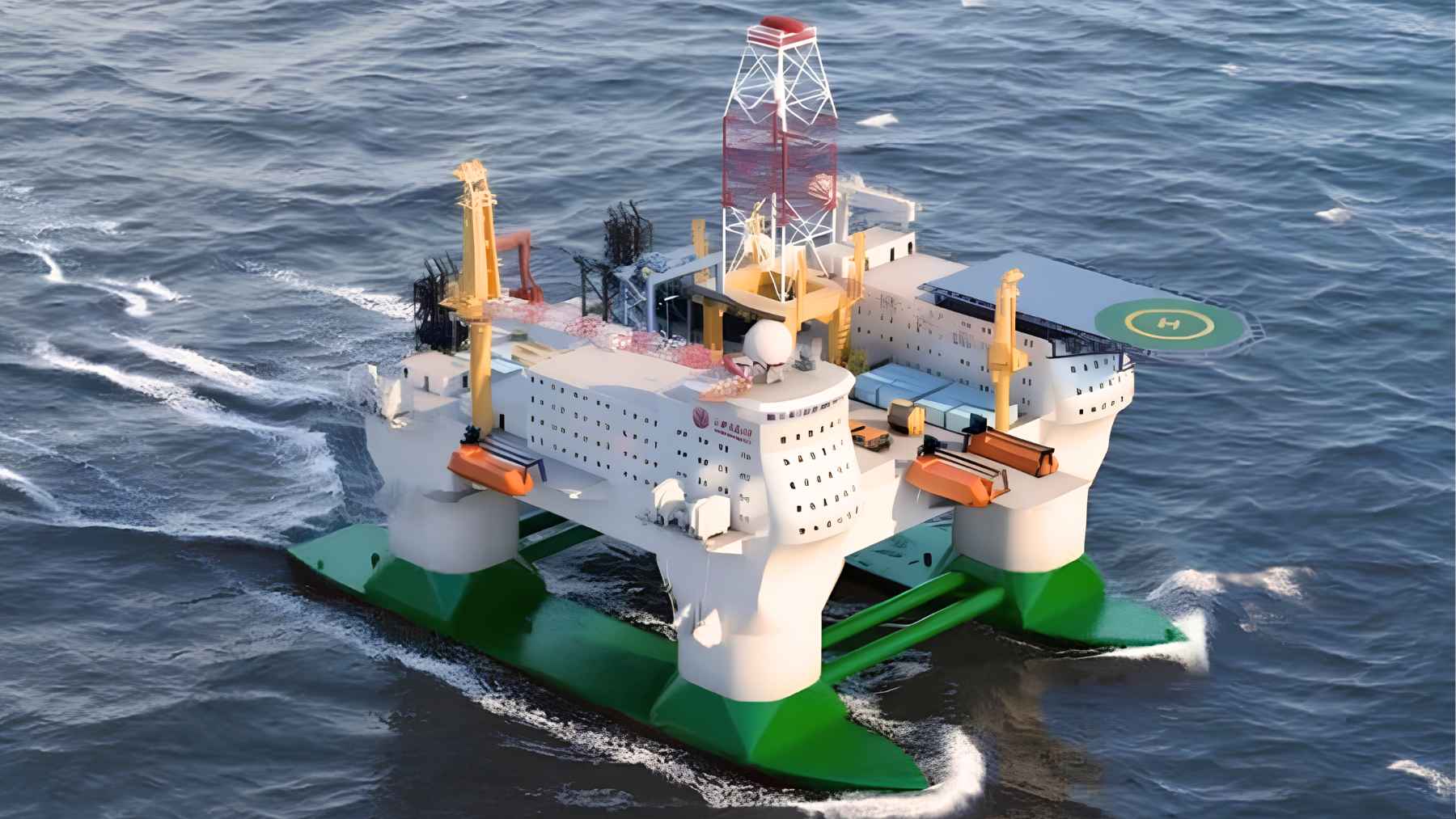
The official description says the project includes a main platform, shipborne laboratories, and shore-based support, built around a semi-submersible twin-hull design for stability. It describes a completion target around 2030, while earlier media reporting cited an operational target closer to 2028, and it says the facility will support research down to about 32,800 feet (10,000 meters).
The bunker feature that grabbed attention
A South China Morning Post report in late 2025 said the platform is engineered to withstand nuclear blasts and relies on “metamaterial” sandwich panels meant to turn “catastrophic shocks into gentle squeezes.” It quoted a paper in the Chinese Journal of Ship Research saying the facility is designed for “all-weather, long-term residency.”
That same reporting says critical compartments for emergency power, communications, and navigation control are the reason blast protection is “absolutely vital.” Other outlets have added that the design references “GJB 1060.1-1991,” described as a Chinese military standard for nuclear-blast protection, and public reporting has not included a detailed official explanation for why that standard is needed here.
How big it is and why mobility matters
Media reports describe a displacement of about 86,000 U.S. tons (roughly 78,000 metric tons) and accommodations for up to 238 people for about four months, or roughly 120 days, without resupply. Published design details put it at about 453 feet long and 279 feet wide (138 by 85 meters), with a main deck around 148 feet (45 meters) above the waterline.
Speed is where the story gets messy. Some coverage has claimed 30 knots, or about 35 mph, but other reporting citing design documents describes a cruising speed up to 15 knots, or about 17 mph, which is still notable for a structure this large. Either way, a platform that can relocate is different from a fixed outpost, and that changes both the science it can do and the footprint it can leave.
Floating does not mean impact-free
One reason environmental experts watch this closely is what permanent island-building has done in the same region. A 2019 Scientific Reports study of dredging at Mischief Reef found sediment plumes that could exceed about 97 square miles (250 square kilometers) and a cumulative area impacted by dredging exceeding about 463 square miles (1,200 square kilometers).
A separate CSIS analysis estimates that dredging and landfill have buried roughly 4,648 acres of reefs in the South China Sea, and it also documents extensive reef damage linked to destructive giant clam harvesting. A mobile platform might reduce incentives for new land reclamation, but it can still bring noise, light, waste streams, and support for seabed extraction that pushes ecosystems in other ways.
The South China Sea is rich in life and already stressed
The South China Sea is widely described as one of the world’s marine biodiversity hotspots. CSIS cites more than 6,500 marine species in the region and notes that coral cover has been declining by about 16% per decade, which is a steep slide for an ecosystem that is supposed to be the nursery for countless fish.
Coral reefs globally cover less than 1% of the seafloor but support at least 25% of marine species, according to the UN Environment Programme. When reefs degrade, it is not just a science statistic – it can show up as smaller catches, higher seafood prices, and fewer natural buffers when storms hit.
What to watch next
The official Chinese description highlights ecosystem research and better typhoon forecasting, but it also points to sea trials for deep-sea mining systems and offshore oil and gas equipment. That mix makes transparency essential, especially if the platform operates near contested and environmentally sensitive waters. That is the balancing act.
Look for concrete details that rarely make splashy headlines, such as environmental impact assessments, rules for wastewater and solid waste, data sharing commitments, and the platform’s power system and emissions.
The official statement was published on Xinhua News Agency’s website.