Einstein predicted this engine, and it’s neither hydrogen nor plasma: Engineers have built it for the first time
What previously was on the shelves of the science fiction has become closer to real-world implementation due to the recent developments in theoretical physics. The warp drive is also based on the law formulated by Albert Einstein, where nothing can travel with a velocity greater than the velocity of light.
Nevertheless, in the Scenario in Specific History, in the year 1994, a man from Mexico named Miguel Alcubierre describes a theoretical model in which the space-time fabric can be manipulated, and as a result, a ship with sufficient mass energy can travel faster than light (remember that this is considered to be the theoretical limit).
It shows that Alcubierre drive means a spacecraft could navigate at a speed that seemed to be faster than light, for it can literally warp space-time as the space in front of the craft contracts and the space behind it expands. This model, while revolutionizing the means by which people received mass communication, was not without its problems.
It’s all about “exotic matter”: Einstein predicted it, and Hawking failed in its search
The original Alcubierre drive was dependent on the use of “exotic matter,” which is a negative energy density that is yet to be identified in any way and can be greatly considered as just a theory. The energy demanded for such a drive was also reportedly mind-boggling, and calculated to be in the order of the mass energy of a planet like Jupiter.
Recent research has shifted the focus from the traditional Alcubierre model to a more feasible approach: the “Constant Velocity Sub-Luminal Warp Drive.” This new idea is a contribution of a team from the Applied Physics, an international think tank, and the University of Alabama in Huntsville proposing a warp drive that can travel at sublight speeds without the use of such materials.
Experts are sincere about the “Einstein engine”: Why it should not be considered as science-fictional
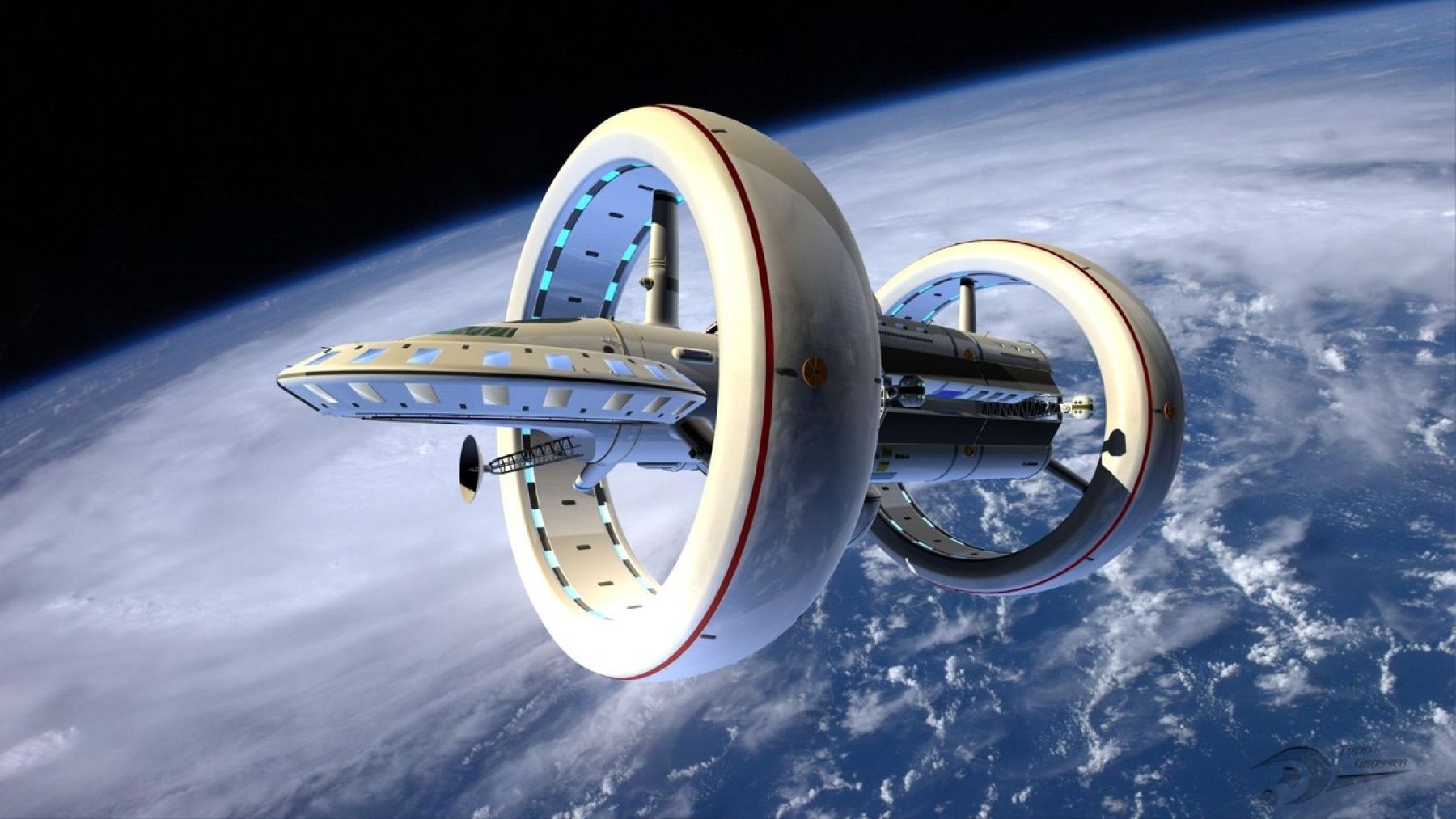
The working principle of the warp drive is to form a warp bubble around the spaceship. The bubble would narrow the space in front of the craft and expand it behind the craft in order to create the perception of the object moving through space without breaking through the speed of light limit with in the confines of the bubble.
This is to mean that if the craft itself ‘flies’ past the speed of light from a distance, it would not be a violation of relativity. The recent work also underlines the necessity to create an application known as “Warp Factory,” which helps to design and analyze warp drive proposals. This tool enables the exclusion of non-physical attributes from the approximate designs, as Einstein predicted.
Warp drives are not exclusively confined to the realms of science fiction anymore, or are at least gradually leaving those realms. Recent advancements in theoretical models and a solution of the energy demand indicate that warp drive technology is more than just an idea, scientists are now able to view the possibility of warp drives as a reality.
What was once seen as impossible to achieve is now closer, with the first warp drive rocket ever “created” or, at least, theorized. Indeed, it was discovered decades ago by Einstein, but now they have managed to “decipher” its very complicated formulas and search the universe for the solution until they find it. However, experts warn that we still have centuries of development to make it a reality, or even more, which is why NASA is skeptical.