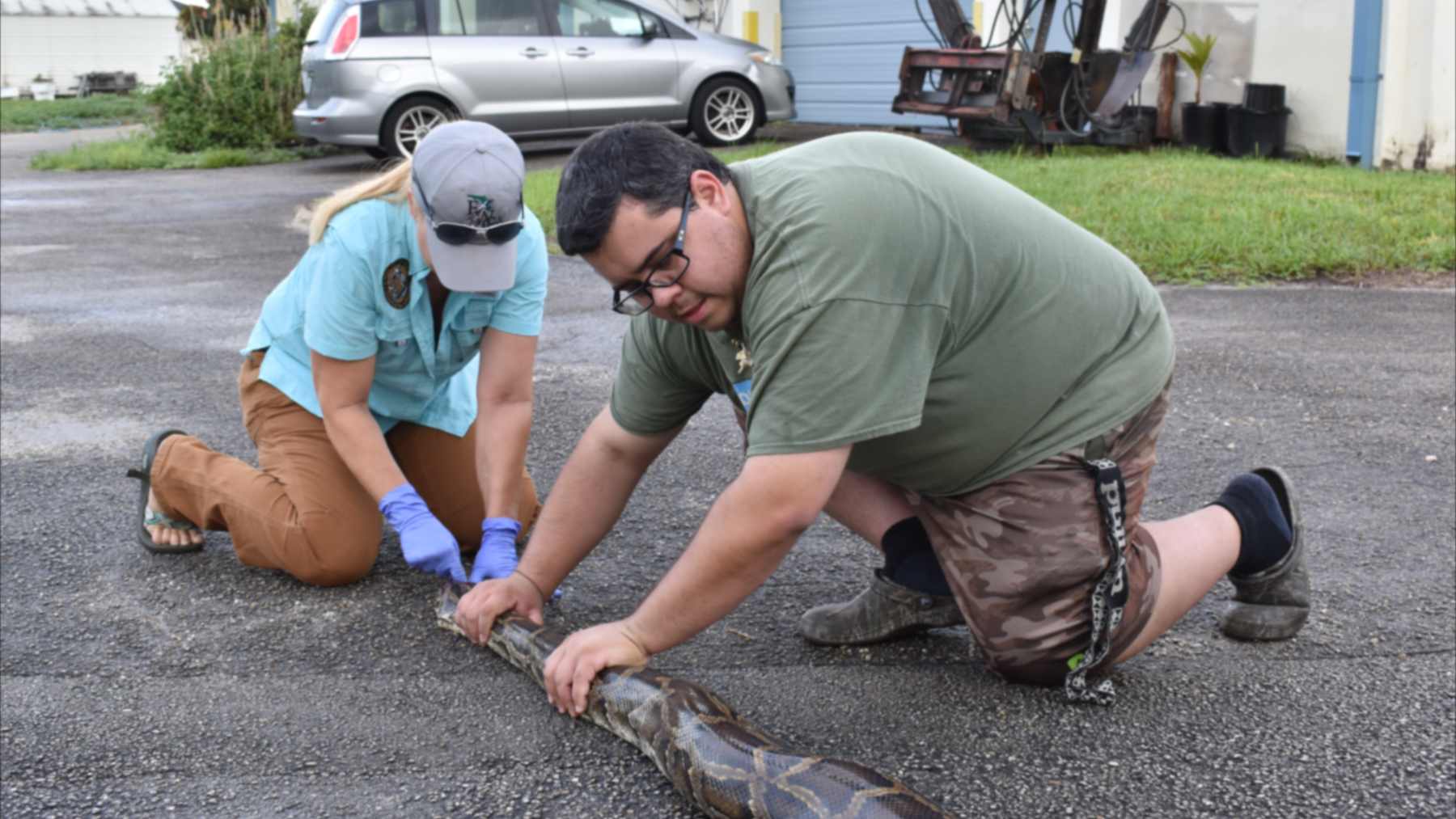
“It’s definitely unrealistic for someone to just come to Florida and think they can make a living doing this,” Aaron Mann, a contractor in the South Florida Water Management District’s python program, told Outdoor Life last year, and the pay sheet explains why so many people keep asking about the job anyway.
The district’s Python Elimination Program, which says it is accepting applications for new removal agents, pays approved contractors $14, $20 or $30 an hour, depending on the area they hunt, for up to 10 hours a day, with the top rate paid only in certain zones, although the frequently asked questions on that same page list $13 and $18 for the two lower tiers, so anyone who signs up should read the numbers in their own contract. On top of the hourly money, a python up to four feet long earns $50 and every foot beyond that adds $25, which is how the district’s own example of an eight-foot snake reaches $150.
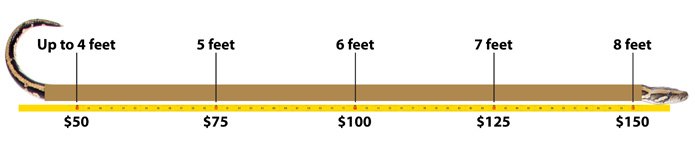
What a good night is worth
Do the math on a full 10-hour shift at the lowest rate with one eight-foot python in the bag and it comes to $290, or $450 in a $30 zone, and a verified active nest adds $200 more, on top of monthly bonuses of $600 for the most pythons, $400 for the longest one and extra awards between $300 and $1,500 for hitting capture goals. Donna Kalil, a professional python hunter, told CBS Miami why the nests count so much: “When you catch a big female full of eggs, you didn’t catch one python you caught maybe 47.” Biologists working one 200-square-mile patch of Florida have stopped roughly 4,100 eggs from hatching that way.
Plenty of nights pay only the hourly rate. “You don’t get one every time. You maybe go out there 50 times and you don’t see anything,” said Christina Kraus, another district contractor, in the same Outdoor Life report, and Amy Siewe, a professional hunter who used to work under contract, told the South Florida Sun-Sentinel in 2023 that “we don’t catch a python every night or every day, and we were out there for hours at a time without catching anything.” Kalil, asked how many had slipped away from her, told the station, “I wanna say five total. Three that maybe I should have been able to catch. I had my hands on them.”
Two programs and one contest
The state wildlife agency runs a separate contractor team called PATRIC, the Python Action Team Removing Invasive Constrictors, which looks for people with “experience removing pythons or other large constrictors from the wild” and encourages applicants to document their safe captures and humane killing methods. “There is an expectation with contractors that these are supposed to be some of the experts out there,” McKayla Spencer, who coordinates the nonnative wildlife program at the Florida Fish and Wildlife Conservation Commission (FWC), told the Sun-Sentinel, and Siewe put the skill side bluntly: “It’s not easy to kill a python. You have to have the proper tools, and I think that’s the thing that people don’t really understand.”
Then there is the contest money that makes the headlines. The 2026 Florida Python Challenge, held from July 10 to July 19, offered $25,000 in prizes with $10,000 for whoever removed the most pythons, and when FWC announced the results on Aug. 5, Tom Rahill had won it with 96 Burmese pythons out of the 280 that 907 participants brought in. “So I started clearing the area, going back and forth in the saw grass and I came across the nest,” Rahill told FOX 35 Orlando, describing how he came across a nest, and he added that “this organization that I founded, the Swamp Apes, is dedicated to veterans.”
FWC Chairman Rodney Barreto called the haul “a major victory for Florida’s native wildlife and a testament to what can be accomplished through strong partnerships and public participation.” The contest is over for this year, though, and outside it the commission pays only contracted PATRIC members and Challenge winners, so a python someone kills on their own does not turn into a state check.
Why Florida pays for the search
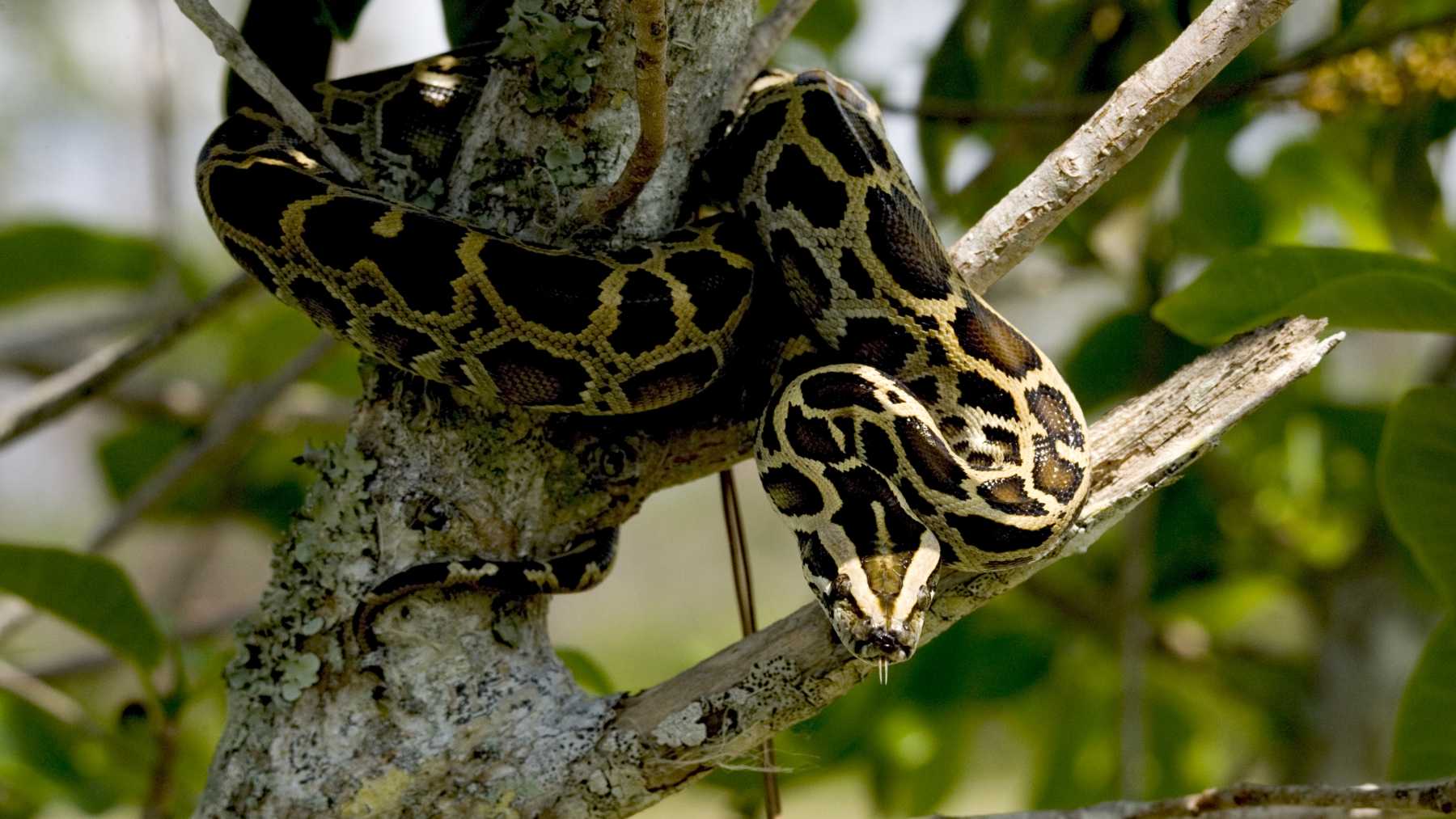
Burmese pythons eat native mammals and birds, and a 2012 study in PNAS compared nighttime road surveys from before 2000 with about 35,400 miles of surveys driven from 2003 to 2011, recording drops of 99.3% in raccoon sightings, 98.9% in opossum sightings and 87.5% in bobcat sightings. Those numbers measure how often animals turned up along the roads, so they are no head count, but the researchers also saw the mammals were more common where pythons had shown up only recently and most abundant outside the snakes’ range, a pattern they read as a sign of python predation.
“In certain areas where their population hasn’t grown as big, I have noticed more native wildlife coming out, so I do think it’s working in certain areas but not everywhere. But every python we get out is eating one less animal,” Taylor Stanberry, a contractor who won the 2025 Challenge, told Outdoor Life. Michael Kirkland of the water management district sounded a similar note to CBS Miami: “In some of the advanced natural areas to the park we are starting to see more marsh rabbits. Before it was zero. I’m cautiously optimistic.”
Nobody knows how many are left
Since 2000, almost 28,000 wild Burmese pythons have been removed from Florida and reported to FWC, more than 19,000 of them by FWC and district contractors since 2017, according to the agency’s August update, part of the steady work that has let crews pull 4 tons of Burmese pythons from the wild. The U.S. Geological Survey still estimates, conservatively, tens of thousands of pythons in the Greater Everglades, and Kirkland explained the problem plainly: “It’s such a cryptic species and they’re so well camouflaged and hard to find. Coupled with the fact that the Everglades is a very vast and relatively inaccessible area, we can’t do a conventional population estimate on these species.”
So the capture totals keep climbing without anyone knowing what share of the snakes they represent, and researchers keep trying new tricks to see more of them, including about 90 robotic rabbits set out in the Everglades as bait for camera traps.
If you see one
Don’t grab it. USGS advises people not to approach or handle a suspected python and to tell a park ranger if they are inside Everglades National Park, and anywhere else sightings can be reported through the state’s IveGot1 system or by calling 888-483-4681, which gives residents a useful role even if they never apply for a contract.