Managers at Glen Canyon Dam tried something that sounds counterintuitive. They deliberately cooled part of the Colorado River to block invasive smallmouth bass reproduction near the Grand Canyon, and monitoring found no recruitment in 2024 while preliminary 2025 results also found none, although field effort was reduced.
The ecological gain came with a steep energy price. Sending colder water around the turbines created $19.1 million in replacement-power costs in 2024 and another $6.5 million in 2025, and the Bureau of Reclamation now says it will not repeat the Cool Mix operation in 2026 because hydropower concerns are already severe.
Drought changed the river
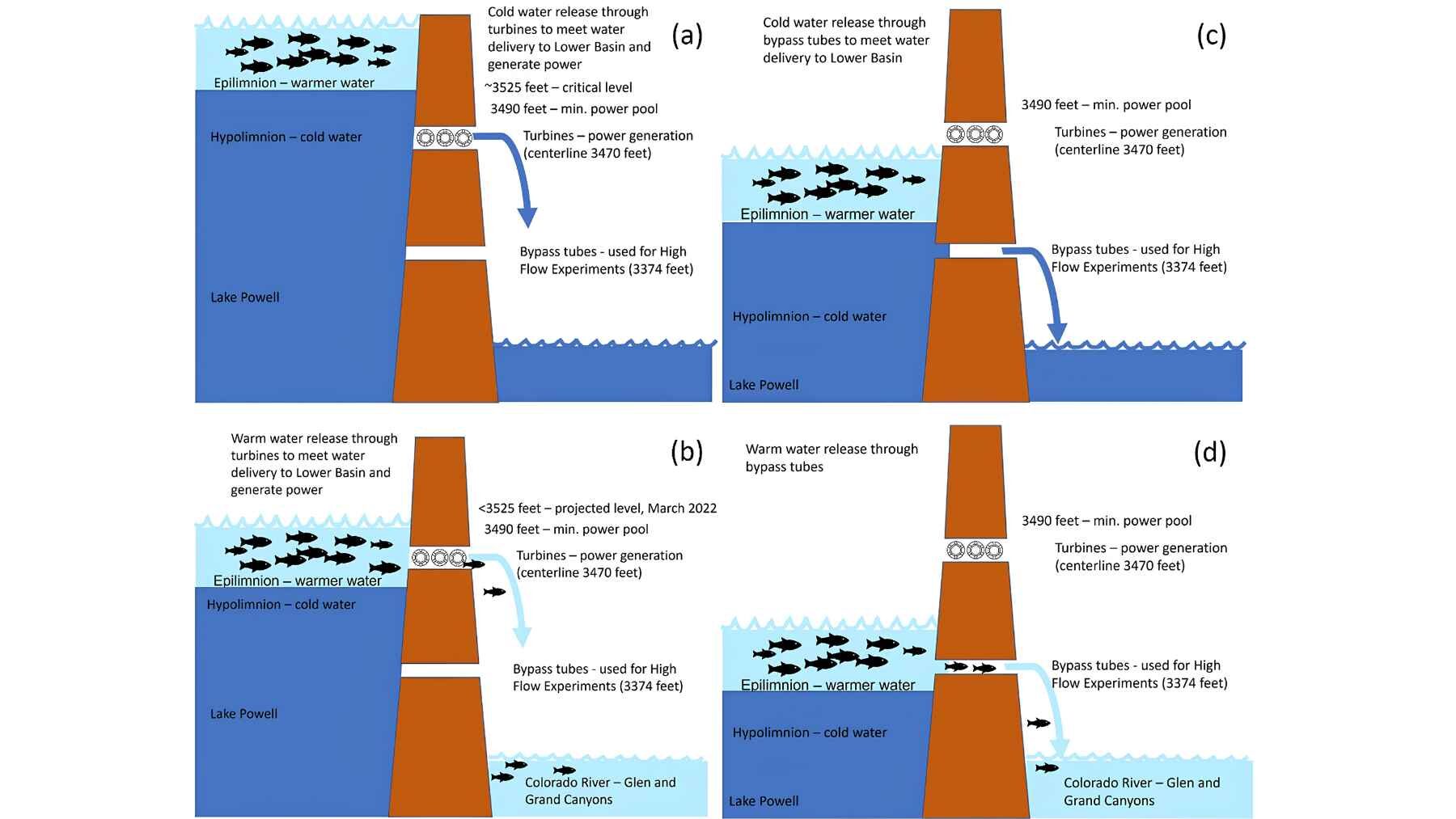
Lake Powell once kept the dam’s turbine intakes well below its warm surface layer. As the reservoir fell, warmer water and fish living near the surface moved closer to those intakes, making it easier for smallmouth bass to pass through the dam and enter the Colorado River below.
Historically, releases below Glen Canyon Dam seldom exceeded 57°F, which was under the roughly 60°F threshold associated with smallmouth bass spawning.Low reservoir levels changed that protective temperature barrier, turning a cold tailwater into more suitable habitat for a warmwater predator.
Native fish face a new predator
Smallmouth bass are considered one of the Colorado River Basin’s highest-risk predatory fish because they can consume young native species and are notoriously difficult to remove once a reproducing population takes hold. Prevention matters here, since managers warn that control below the dam would be expensive and likely unsuccessful.
The best-known fish at risk is the humpback chub, a Colorado River native with the unusual raised back that gives it its name. The species was reclassified from endangered to threatened in 2021 after years of recovery work, but federal protections remain and invasive predators could undermine those gains.
How Cool Mix works
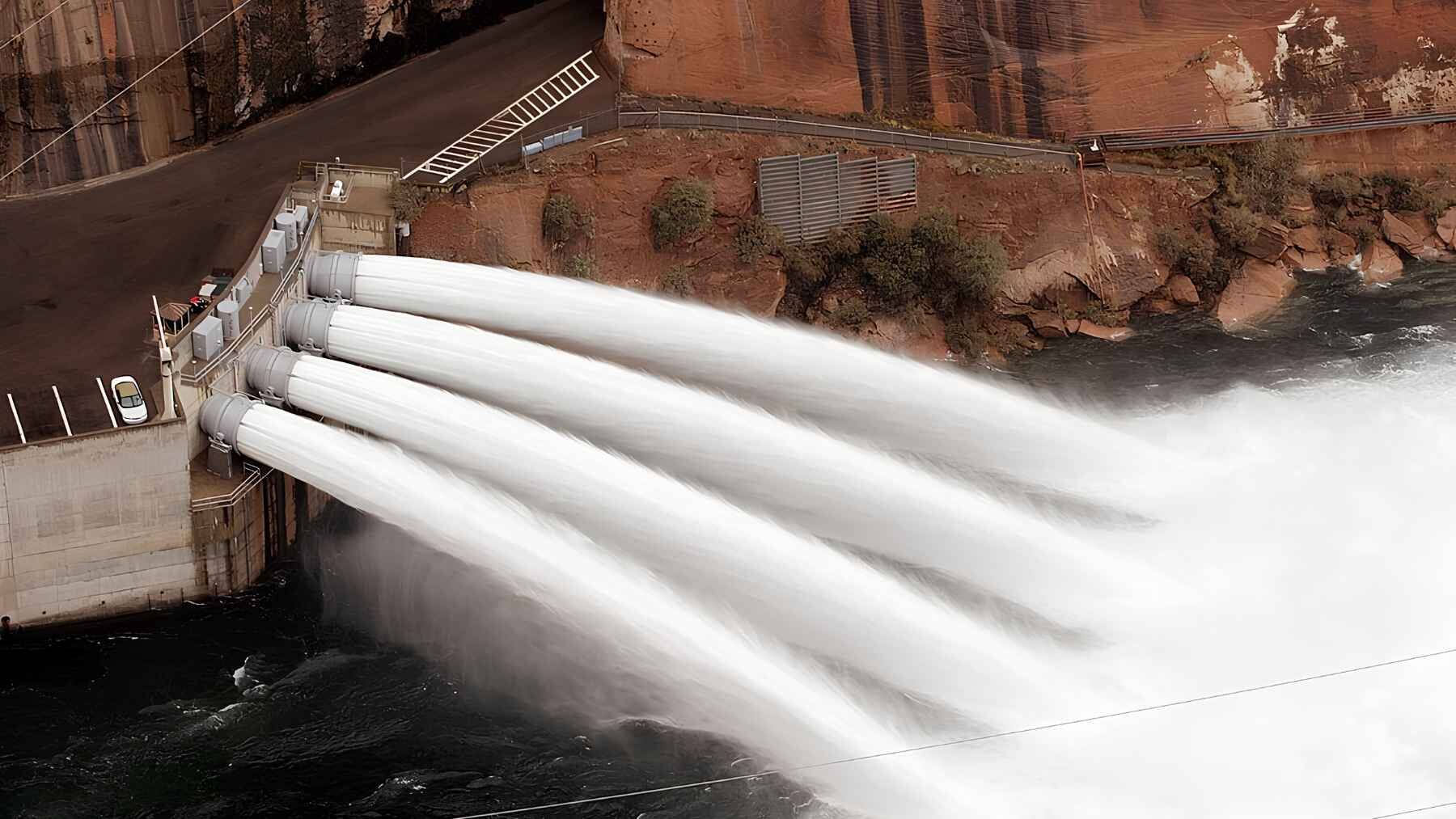
The idea is simple, even if the engineering is not. Operators combine water passing through the power-generating penstocks with colder water drawn through river outlet works located about 100 ft. lower, then adjust the mixture to keep downstream temperatures near or below 15.5°C, or 60°F.
The operation does not change the total monthly or yearly volume released from Glen Canyon Dam. However, water sent through the lower outlets bypasses the turbines, so the river gets colder while the power plant produces less electricity.
The first summer protected 76 miles
Cool Mix began on July 9, 2024, as river temperatures crossed the biological trigger. The National Park Service later reported that the operation prevented smallmouth bass spawning from the dam to the Little Colorado River confluence, 76 miles downstream, and that no reproduction was observed in the main river channel that year.
That result was not cheap. Managers bypassed 892,694 acre-feet of water, lost 372,341 Mwh of generation, and spent $19.1 million on replacement power during the 132-day operation.
The second summer cost less
In 2025, managers moved the temperature target upstream from river mile 61 to river mile 30 and ran a shorter operation. Bypass volume fell to 376,119 acre-feet, lost generation dropped to 145,227 MWh, and replacement-power costs declined to $6.5 million.
At the time, Acting Reclamation Commissioner David Palumbo said the approach “strikes a good balance between achieving biological objectives and reducing hydropower impacts.” Preliminary monitoring recorded 38 smallmouth bass in 2025, compared with 254 at a similar point in 2024, and found no evidence of recruitment in either year, although scientists cautioned that sampling had been reduced.
Why cooling cuts hydropower
What happens when protecting a threatened fish means sending useful water around a turbine? In practical terms, replacement electricity has to be purchased when water skips the generators, and the Western Area Power Administration’s analysis shows that the bill rises mainly with bypass volume.
There is another ripple effect. Revenue from Glen Canyon hydropower goes into the Basin Fund, which supports operation, maintenance, and replacement of infrastructure across the Colorado River Storage Project, so lower generation can squeeze both the power system and the facilities behind it.
The 2026 balance changed
For 2026, Reclamation decided not to implement Cool Mix flows, citing significant hydropower generation concerns under already strained system conditions. The agency says it will instead expand rapid-response fish removal, modify more backwaters, test new tools, and pursue durable structural solutions.
That choice does not mean the invasive-fish threat has disappeared. It means managers have reached the hard part of adaptive management, where a measure can work biologically and still become too costly to repeat every summer.
A longer-term fix
One alternative is to redesign habitat rather than continuously chill the whole river. In 2025, Reclamation and the National Park Service reshaped a warm slough 3.5 miles below the dam, increasing water movement from roughly zero to about one foot per second and making the site less favorable for bass spawning.
Managers are also exploring durable structural solutions and new control tools that could reduce this recurring conflict. At the end of the day, the practical goal is infrastructure that protects native fish without forcing the river and the power grid into the same costly trade-off.
The lesson from Glen Canyon
Cool Mix bought managers time and showed that temperature can be used as a barrier against an invasive predator. It also put a real price on the choice, with $25.6 million in replacement power over two years and no 2026 repeat because Reclamation cited serious hydropower concerns.
The experiment is a reminder that clean energy and conservation do not always move in perfect harmony. Protecting the Colorado River’s native life may require smarter structures, faster monitoring, and upfront investment so that every hot summer does not become a choice between fish and power.
The latest official decision was published on the Bureau of Reclamation’s Glen Canyon Dam Adaptive Management Program website.