We can say that we are well advanced in terms of space exploration and solar energy; after all, a lot has evolved over the decades. However, something that has always been a challenge is providing constant and efficient energy for missions that go beyond the limits of Earth’s orbit. With this in mind, NASA is creating a technology that will innovate the way we generate energy generation in space viable. Experts even say that this new technology is as if we were building a highway to Mars…
Solar energy from space is almost like a highway to Mars?
Back when the first satellites were launched, traditional solar panels dominated as the primary source of energy in space and even held up well for a while. However, over the years, these systems began to show some limitations: they are large, heavy, complex to operate, and vulnerable to mechanical failures.
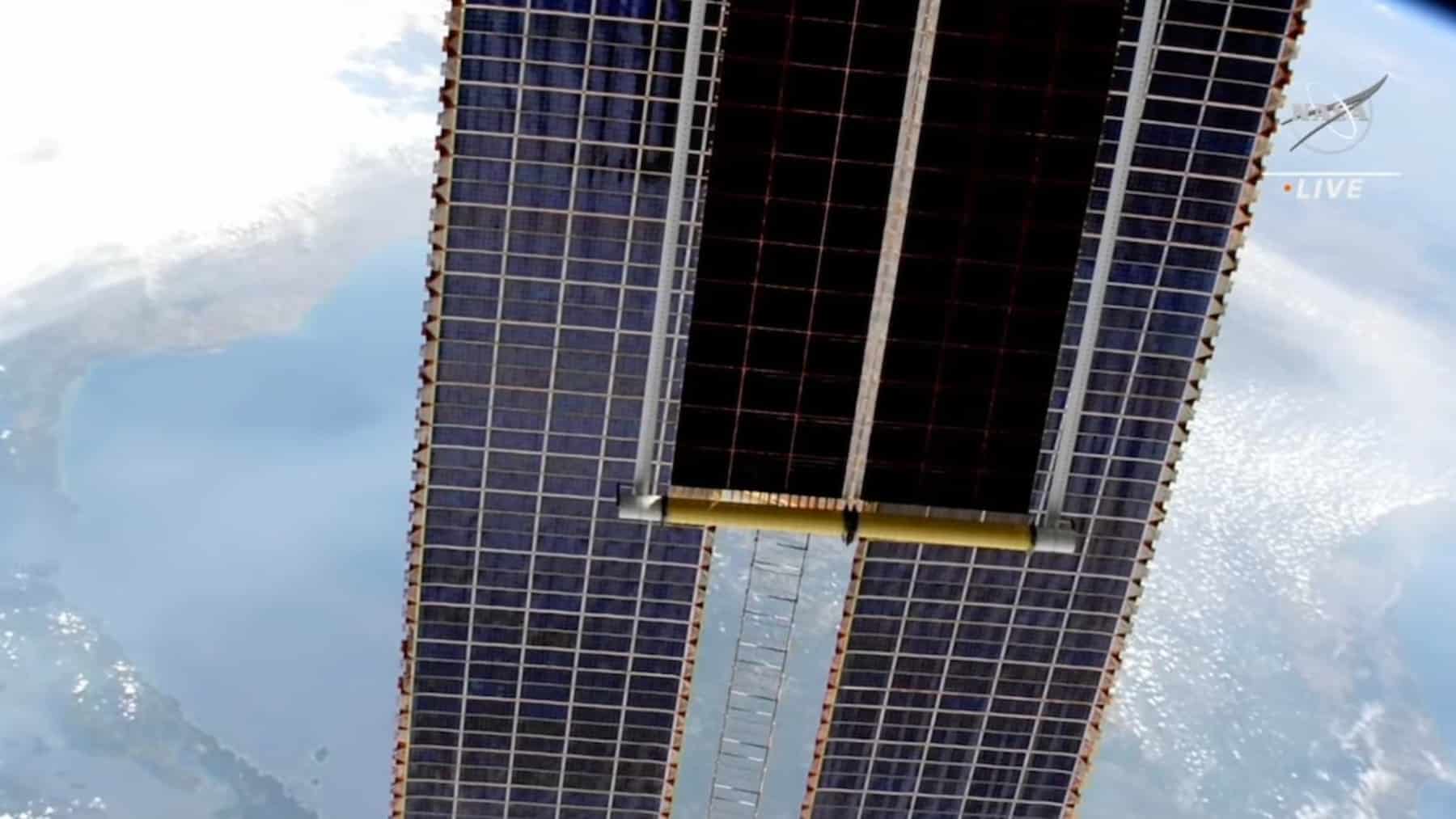
Until scientists created ROSA (Roll-Out Solar Array) technology. It features a new design, as it uses composite arms that store elastic energy, allowing autonomous deployment without engines. And what does this mean? Well, it reduces the points of failure and the total weight. In other words, we will have a lower launch cost and greater reliability for long-duration missions.
And the innovation doesn’t stop there, as each ROSA panel can generate more than 20 kW of energy for more than a decade. And better yet, if we combine the eight wings installed on the ISS, we can exceed 160 kW. Which would allow us to carry out more experiments, habitation modules, and life support systems in extreme environments. In fact, all this efficiency is already being applied to the space station and also to missions such as the lunar Gateway and the DART mission for planetary defense.
But what does this solar energy have to do with the highway to Mars?
We could say that this is an analogy. Why? Well, just as highways connect cities and facilitate transportation, ROSA is here to enable a robust and replicable energy infrastructure in space. And let’s face it, this is a prerequisite for any sustainable plan for colonization or operations on Mars. If we don’t have reliable energy, we won’t be able to operate habitats, communication systems, electric propulsion, or any type of scientific experiment on long-duration missions. In other words, through its modular and scalable design, ROSA can be adapted to different missions.
And the best part is that we won’t need to reinvent the entire energy generation system for each new mission, as this new technology is offering a standardized energy platform. The result of all this? We will have consistency to be able to accelerate schedules, reduce costs, and ensure greater technical predictability (perhaps the colonization of Mars is getting closer and closer).
“The technical success of the program paves the way for new opportunities for commercial space stations and sustained energy infrastructure on the Moon and beyond”, said Peter Cannito, President and CEO of Redwire.
What can we expect from this highway to Mars?
Our focus with ROSA is the future. Because we could have commercial space stations, lunar habitats, and colonies on Mars, not just as an idea, but as a reality… because the energy demand will grow exponentially. This new technology is already positioning itself as the energy backbone of this space economy.
The project is so amazing that its ability to adapt to multiple environments, from low orbit to deep space, and its low transportation cost make this technology ideal for supplying scientific, military, and commercial missions. It may even sound cliché, but more than a solar panel, ROSA represents a significant change, because energy in space no longer needs to be a bottleneck. It seems that Trump and Musk’s Mars revolution may soon become a reality.