Can you imagine planting something in your backyard that can withstand hurricane-force winds and quietly generate clean electricity for the next 20 to 30 years? IceWind, an Icelandic energy innovation company, has created exactly that. With its invention nicknamed “hurricane destroyers” for their near-indestructible build and ability to operate in winds of up to 130 mph, IceWind’s vertical-axis wind turbines offer an all-in-one durable, compact, and bird-safe solution to off-grid and supplemental home energy generation.
These turbines are now available in the U.S. and are not just science fiction but promises of a future of decentralized energy right from your garden.
Why are they called ‘Hurricane Destroyers’?
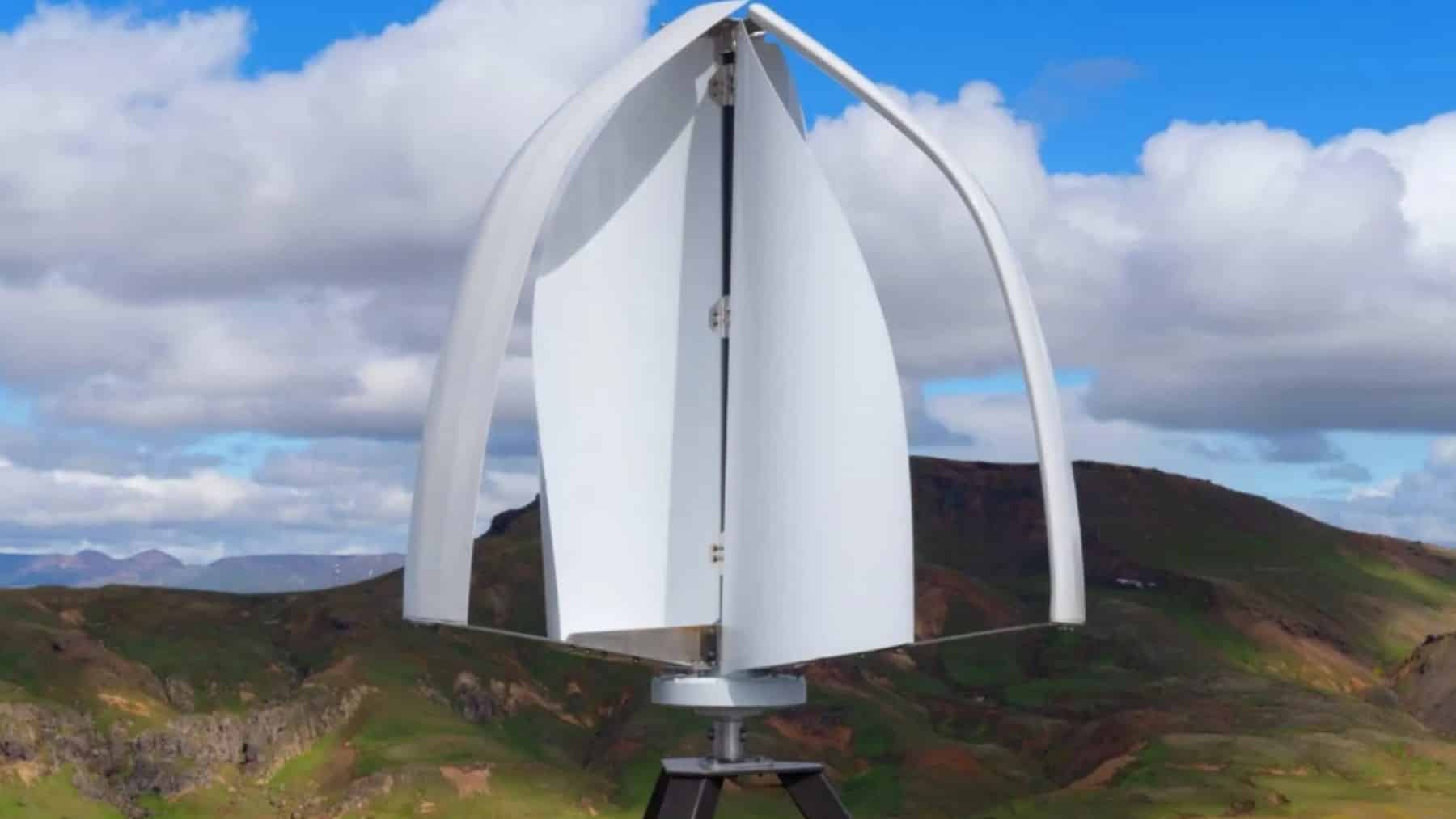
The nickname “hurricane destroyers” came about as a way to pay tribute to the IceWind turbines’ incredible durability and wind resistance. Created specifically to function in Iceland’s notoriously harsh weather, these turbines can withstand wind speeds over 130 miles per hour, a force comparable to a Category 4 hurricane. Most residential turbines would need to shut down or risk damage in such conditions. However, IceWind’s models just keep turning.
Their resilience is due to the six-blade vertical-axis design that is made from stainless steel and aluminum, and built with sealed components meant to resist water, ice, and debris. The inner blades control low-wind speeds starting at just 4.5 mph, while the larger outer blades step in when the wind gets rough and acts as a booster and an automatic braking system during extreme gusts.
IceWind models refer to technology born from necessity in Iceland, where storms are a natural part of life. However, these rugged turbines are making their way into backyards across North America.
How does the IceWind turbine work?
Horizontal wind turbines should be gently oriented to catch wind from the right direction. But IceWind’s vertical-axis design is omnidirectional, allowing it to catch wind from any direction without needing to turn. This gives the turbine a huge advantage during unpredictable or shifting wind environments, such as coastal regions, hillsides, or wide plains.
The Freya model, the company’s flagship residential unit, stands just five feet tall with a 4.5-foot diameter. Being compact enough for garden or rooftop installation and quiet enough to blend into suburban life, it operates at less than 30 decibels- making it softer than a whisper.
Key features include:
- 20–30-year lifespan
- Safe enough for birds and wildlife
- Off-grid or on-grid capability
- 600W peak power output
- Robust design with minimal maintenance
One turbine is not quite enough to power a full-size U.S. home on its own, however, it can significantly and considerably reduce energy bills, especially when paired with solar panels or used in an off-grid setup like a cabin or remote property.
An investment in long-term clean energy
IceWind’s turbines have been designed for longevity and ease of use, giving homeowners a way to take control of their energy needs without relying on fossil fuels or massive infrastructure. Installation is relatively straightforward. With wind turbines beating solar panels, this could be quite the investment for your home.
Priced at around $3,200, the investment will eventually pay itself over time, especially in windy regions. The fact remains these wind turbines provide peace of mind and energy independence in a time when the grid faces increasing strain from climate events.
While larger grid-scale turbines dominate wind farms, IceWind is targeting the decentralized future of energy, one in which individuals, not just corporations, become producers. This innovation works in places where solar isn’t always viable, such as cloudy, windy climates. Therefore, the IceWind turbine might be the ideal answer for citizens in windy regions.
Giving backyard power a strong future
While pushing for cleaner, more resilient energy, IceWind’s vertical turbines are a quiet revolution. IceWind turbines are not just symbolic of innovation from a country powered almost entirely by renewables, they are practical tools for modern homes seeking freedom from the grid.
With a hurricane-proof design, 30-year lifespan, and the ability to function in nearly all wind conditions, these turbines could become as common as solar panels in homes across the globe.