A new form of energy is being explored that is entirely renewable, cost effective, and environmentally friendly. Infinite energy sounds too good to be true, but is it?
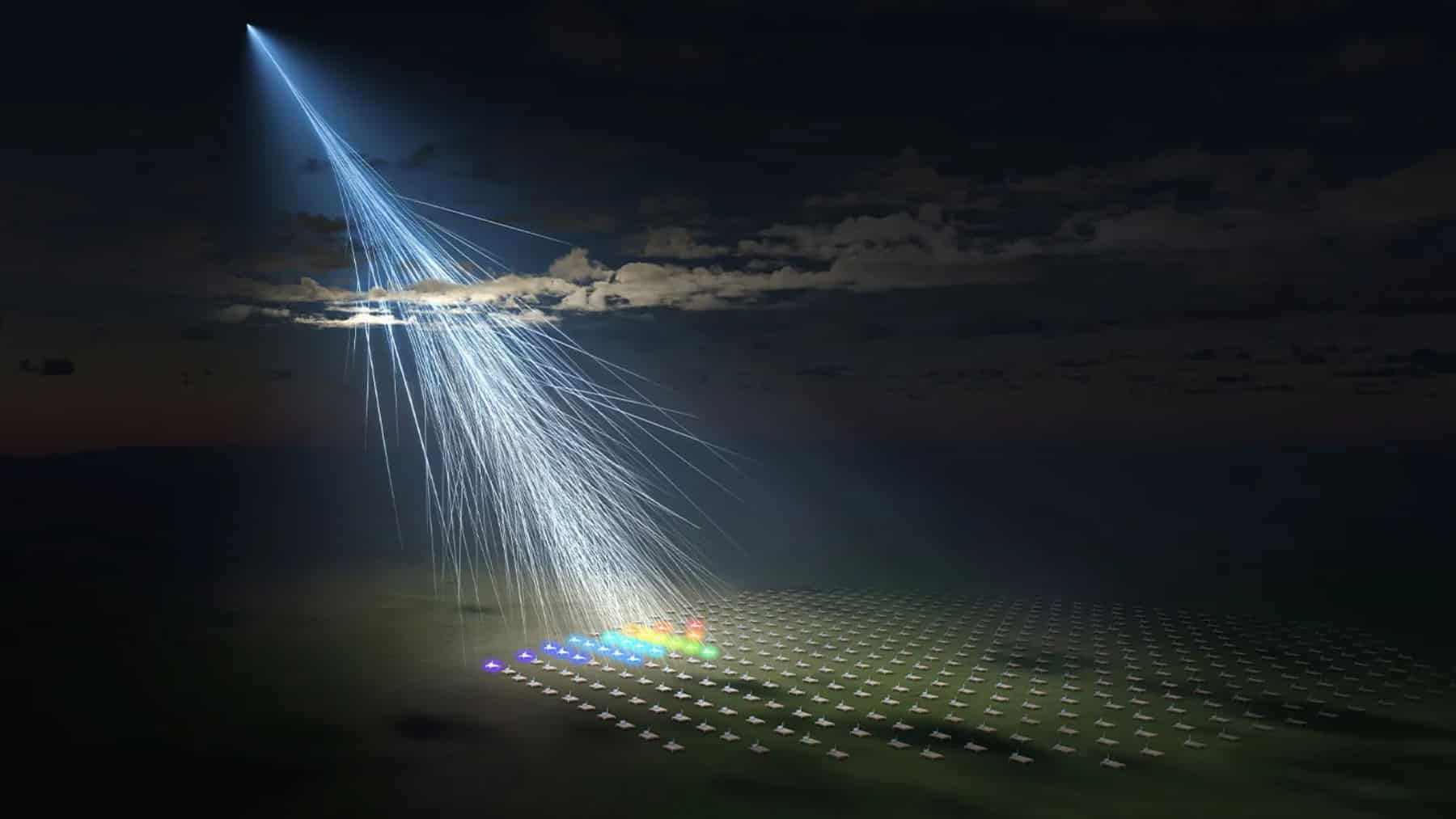
What are these cosmic rays known as neutrinos?
In 2015, Japanese scientist, Takaaki Kajita and Canadian scientist, Arthur McDonald were awarded the Nobel Prize in Physics for their discovery that neutrinos have a mass. Neutrinos are the tiny subatomic particles that permeate just about everything in the universe.
These neutrinos, once thought to be massless, are capable of converting their miniscule mass into energy, in accordance with Einstein’s famous equation, E=mc2.
This equation underpins much of our contemporary understanding of the universe. This same theory posits that neutrinos can be used to generate energy on earth – to power our homes, cars, and cell phones.
If it is possible, how would neutrino power work?
A neutrino power cell would work much like the photovoltaic cell (found in this fence that is revolutionising solar power) in solar panels. Part of the neutrino’s kinetic energy would be converted to electricity through the use of a neutrino power cell – likely made of layers of silicon and carbon applied to a metallic substrate.
When the neutrinos hit the neutrino power cells, their resonance would be converted into the optimal resonating frequency for an electrical conductor.
What would the benefits of neutrino power be?
Though neutrino power cells function in much the same way as photovoltaic cells, there is one crucial way in which they differ – they do not require sunlight. One of the greatest drawbacks of solar power is its reliance on the sun for its power. In regions where sunlight is scarce, solar power is not a viable means of producing electricity. Neutrino-generated electricity does not have this same constraint. It will work day and night, all year round.
Sounds good, but what are neutrino power’s potential drawbacks?
Some people in the scientific community are concerned that these particles could be damaging to humans and the environment due to the fact that they are highly ionizing and contain high amounts of energy. Additionally, because only a small amount of cosmic rays make it to earth, they would be very difficult to harvest and channel into electricity.
However, as technology develops and scientists create new ways of harvesting neutrinos (like Enhanced Air Dynamo collection technology), the possibility for the widespread use of neutrino power will only grow.
Because neutrino power cubes would generate much less power than solar power, our entire power system would need to be overhauled. Devices that require lots of electricity to run (like televisions) will need to be modified so that they require less electricity to operate.
Though the initial infrastructure cost would be substantial, the long-term benefits of this power would far outweigh the initial investment fee. Some estimates place the cost of neutrino power at 50% of the cost of solar power. As devices require less and less power to run, the potential viability of neutrino power looks more and more promising.
Are neutrinos the long-awaited key to “infinite power”?
It is hard to say with absolute certainty what neutrinos will mean for the way we produce and think about electricity. Despite this uncertainty, if neutrinos prove to be a viable means of producing electricity at scale, the possibilities are certainly infinite.
Neutrino power has the potential to fundamentally alter how we conceive of electricity. Electricity will cease to be the often tenuous resource it is now and will be come as natural to everyone on the globe as the air that we breathe. Infinite energy production is a hot-button issue (see this potentially infinite source of energy). Could neutrinos be the answer to all our energy needs? Only time will tell.