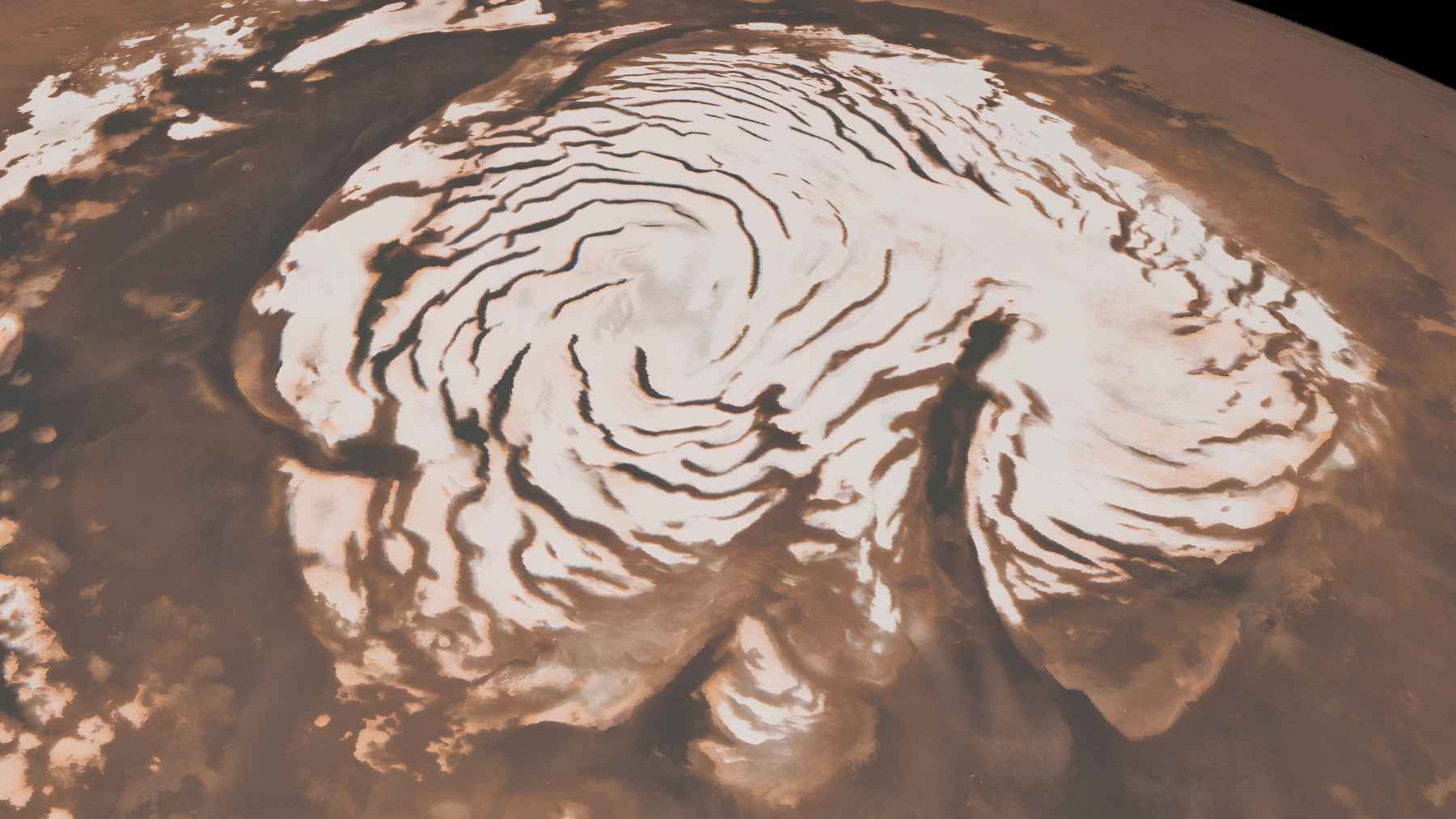
For many years, one of the most fascinating mysteries of Mars was hidden beneath the ice of its south pole. In the year 2018, a radar of the European Space Agency found an unusual, bright reflection, located around 0.9 miles below the surface. This could mean that there was a lake of salty liquid water, approximately 12 miles wide.
Now, a different radar has studied that area, but what it found is not so impressive. NASA’s SHARAD instrument only detected a low echo, so this made it less likely to be a body of liquid water, although researchers are still not able to confirm what lies under the ice.
Why they believed there was water
This conclusion came from MARSIS, a radar instrument carried by ESA’s Mars Express spacecraft. Scientists studied 29 observations made between 2012 and 2015 near Ultimi Scopuli, an area within the layered deposits that surround the south pole.
MARSIS used low-frequency radio pulses that were sent through thick ice and dust. In an area about 12 miles wide, the radar detected some echoes beneath the ice that were stronger than the ones that came from the surface. On Earth, patterns like this one, generally indicate that there is subglacial water.
Because liquid water has very different electrical properties from ice and many rocks, the team believed that the most logical explanation was the presence of salty water, but at the same time, radar evidence is not a photograph or chemical confirmation of a lake.
NASA’s radar needed a rare maneuver
NASA’s Mars Reconnaissance Orbiter has an instrument called SHARAD, which works at a higher frequency than MARSIS. It can detect thinner layers, but the problem is that its signal loses more energy as it passes through polar ice.
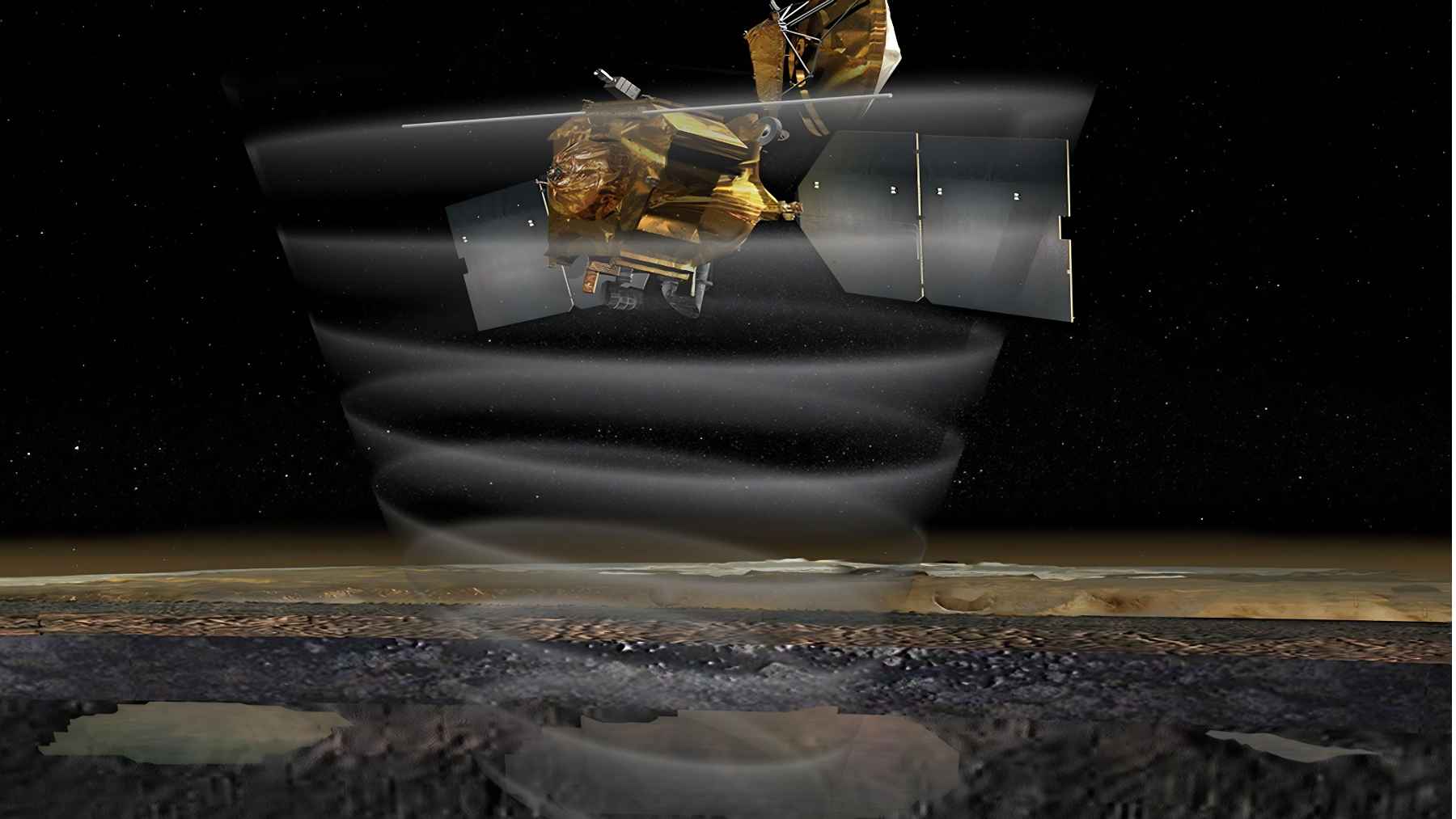
To improve the signal and obtain better results, NASA rotated the spacecraft approximately 120 degrees, so it would not be on the antenna’s way. This improved the signal, making it at least ten times stronger, although this was a risky move that could only be made with carefully controlled conditions.
No bright echo
SHARAD managed to reach the base of the ice but just recorded only a very weak return from the possible lake. Researchers did not expect that the instruments would produce identical results because they use different frequencies and they process data in a different way.
If there was a lake, it would have appeared in SHARAD’s data. If there was a flat layer of liquid water, it would have been detected. One possibility is that the ice present above the suspected lake absorbed the high-frequency signal.
Other materials may seem like water
Radar brightness does not automatically mean there is one specific material. It could also come from rock, conductive minerals, thin layers, or variations in the amount of ice and dust content.
Another obstacle is temperature. Beneath the polar cap, temperatures are believed to be below the normal freezing point of water. An explanation for a large underground lake to remain liquid would be if the water were extremely salty or if Mars supplied more geothermal heat than expected.
Previous surveys also found bright reflections in parts where the ice seemed to be too cold or too shallow for melting. This made researchers think that these “water” echoes could have another cause. The latest results of SHARAD give scientists another reason to consider this explanation.
Unresolved mystery
A single radar pass is not enough to reveal what lies under almost a mile of ice. To solve the mystery, scientists will need to carry out repeated observations and better knowledge on how ice affects each signal. Radar instruments could help future missions, using different frequencies to obtain more accurate results.
What we do know is that the two radars found different results. MARSIS found a low-frequency reflector which would indicate there is liquid water, while SHARAD registered a weaker high-frequency echo in the same area. Nobody knows what is hidden under Mars’ south pole, but the theory of a water lake is not so convincing.
The study was published in Geophysical Research Letters.