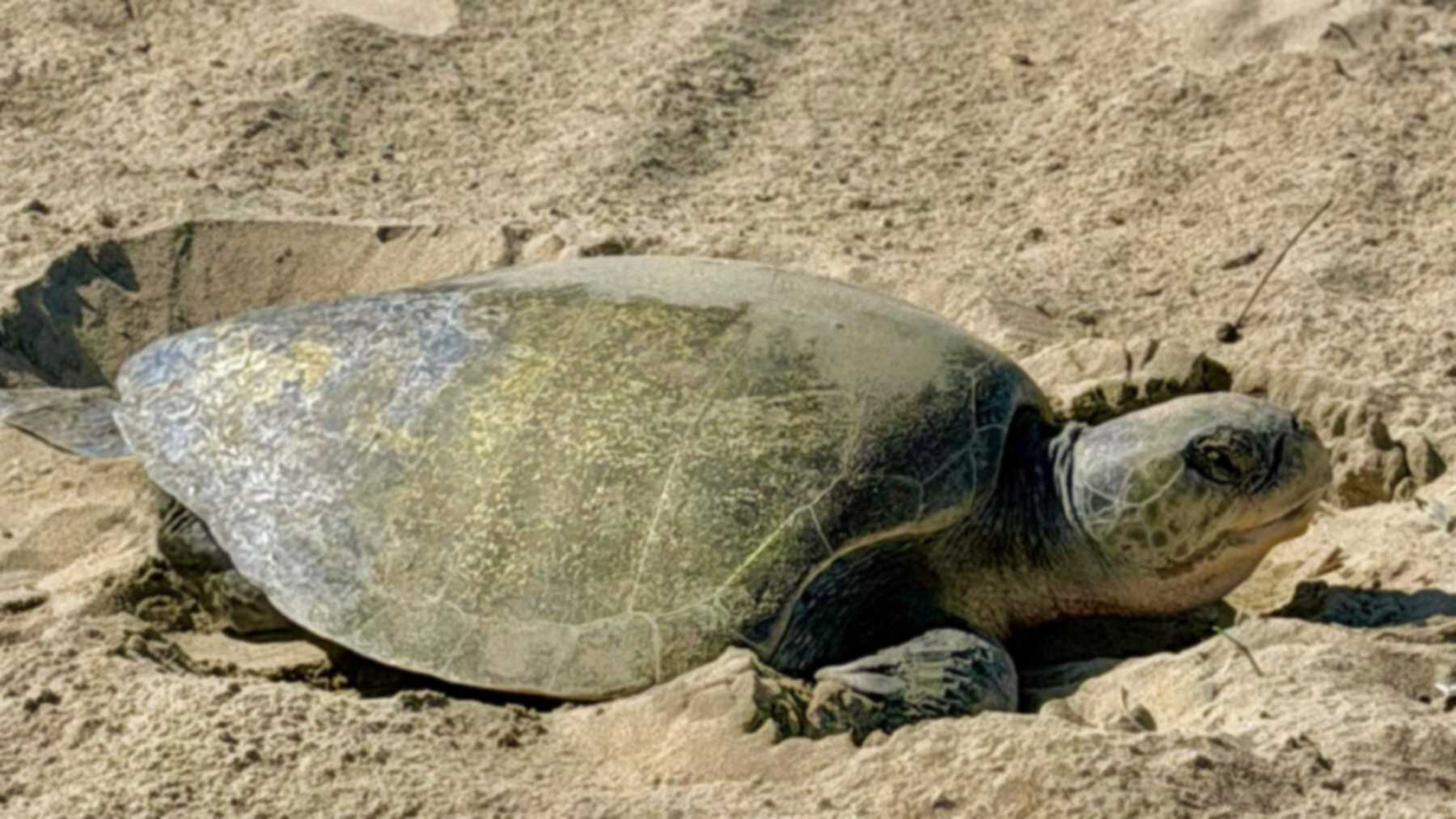
The lifeguards in Seal Beach thought the turtle was hurt. On Sept. 16, 2026, they walked over to what looked like a struggling animal in the sand near the Surfside neighborhood of Orange County, California, and found it digging a nest. Three days later and about 8 miles (13 kilometers) down the coast, a second female did the same thing near the Huntington Beach Pier, and the two olive ridley sea turtles left behind the first sea turtle nests ever recorded on the U.S. West Coast.
“This is the first documented case of a turtle nesting on the west coast,” Justin Viezbicke, NOAA’s California stranding coordinator, told The Guardian.
Trevor McDonald, a Marine Safety Division chief with the Huntington Beach Fire Department, said his lifeguards were on patrol that Saturday evening when the second turtle showed up. “They saw a turtle come up onto the sand and start digging a hole,” he told the Daily Pilot. “When our staff saw the turtle making a nesting spot, they immediately created a buffer zone to keep everybody back and keep the turtle safe and allow for the best chances of survival.”
“I’d never heard of turtles nesting in this area, but I didn’t know it was the first two instances ever along California’s coastline,” McDonald said.
Heidi Stephen told the Associated Press that her 9-year-old son, Jude, begged her to take him to see the Huntington Beach nest. “It’s so magical,” she said.
Barnacles and shell plates told the turtles apart
Olive ridleys often lay two or three clutches a season about two weeks apart, so at first one turtle might have nested twice. Cali Turner Tomaszewicz, a biologist at NOAA’s Southwest Fisheries Science Center, compared photos of both animals, checking body shape, how many barnacles each one carried and where, and the scutes, the big plates on a turtle’s shell, whose layout NOAA says works “much like a human fingerprint.” They were two different mothers.
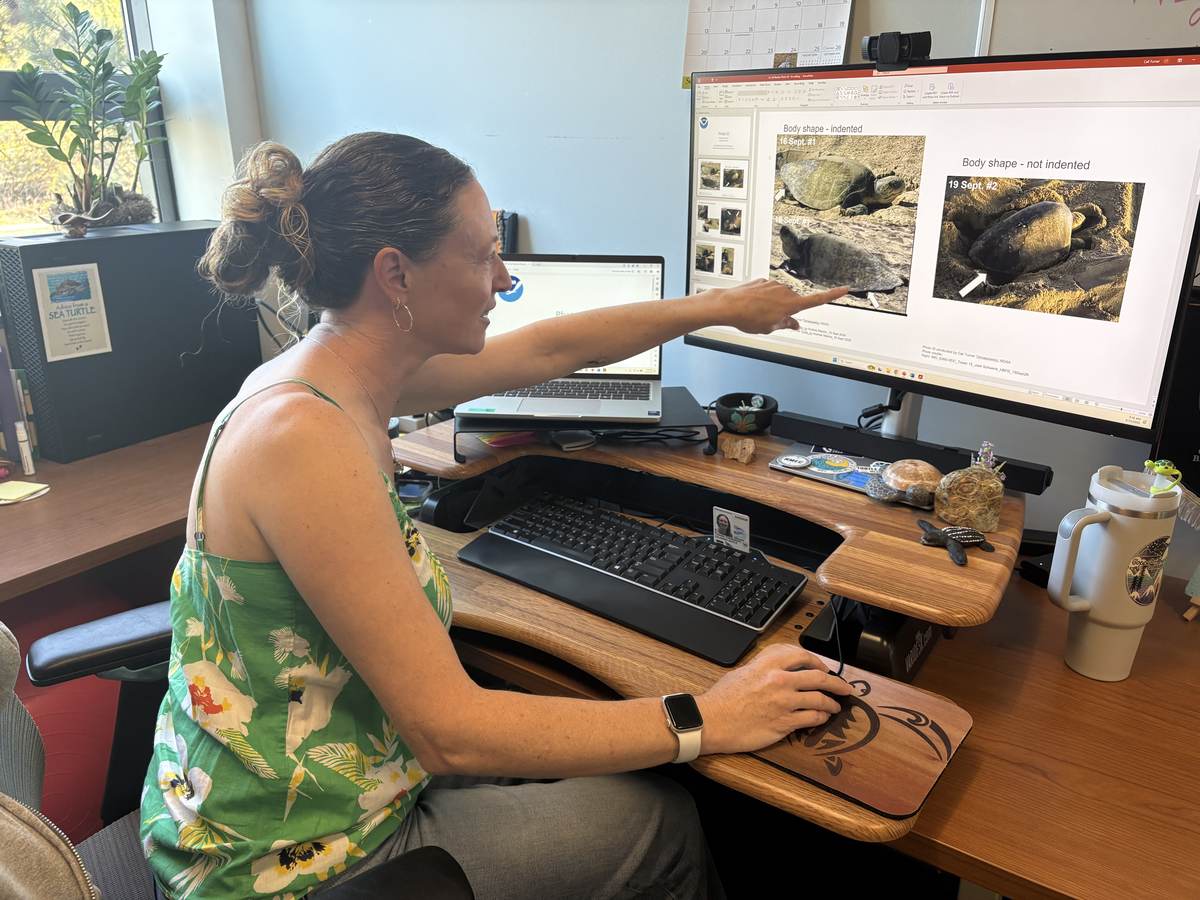
Jeffrey Seminoff, who leads NOAA’s Marine Turtle Ecology and Assessment Program, called the discovery unexpected. “Two individuals crawling up on our shores within eight kilometers of each other in Orange County. And it’s just a totally unexpected, totally different sort of a scenario in the turtle world than we’d ever expected,” he told ABC7.
“In all this time, I think this is one of my career highlights,” Seminoff told NBC Los Angeles. “To have animals nest in our own backyard is just an incredible thing.”
The nests are about 700 miles north of the old limit
Until last month, the farthest north anyone had documented olive ridleys nesting was Baja California Sur in Mexico, about 700 miles (1,100 kilometers) south of Orange County, the Los Angeles Times reported.
“I have been expecting to see subtropical species present off the coast of Southern California, which is typical during El Niños,” Lindsey Peavey Reeves, a senior scientist with the National Marine Sanctuary Foundation who has studied olive ridleys in the eastern Pacific for 20 years, told the Los Angeles Times. “However, I wasn’t expecting to see olive ridley sea turtles nesting in Orange County.”
“While I wasn’t expecting this nesting event, it’s not outlandish for olive ridley nesting to continue to shift northward as both ocean water temperatures and sand temperatures increase, and some of their usual nesting beaches erode away during periods of strong storms,” she said.
“Typically the most north we know of any olive ridley or any sea turtle that nests are in Mexico, so this is quite a bit further north for them,” Jeff Flocken, president and CEO of the Aquarium of the Pacific, told SFGATE.
Pamela Plotkin, a retired oceanography professor at Texas A&M University, told the Times the species can handle that kind of change. “They’re very flexible and adaptable,” she said. “They can sort of go with the flow, if you want to put it in human terms. They take advantage of opportunities that many other sea turtles don’t have the capability of doing. They feed on lots of different things out in deep waters, and so they are not tied to just one type of food like some turtles are.”
A 17-year study found that loggerheads in Cape Verde nest earlier but lay fewer eggs, one more sign that sea turtle nesting is on the move.
Warm water and a possible navigation mistake
NOAA lists “warm sea surface temperatures from ongoing marine heatwaves and the incoming 2027 El Niño” as likely key factors, along with the species’ wandering habits and “perhaps navigational errors.”
“We’ll never know for sure, but what we’re looking at are correlations with these events,” Seminoff told NBC Los Angeles. “One of the obvious things is El Nino. We’re already experiencing warm waters, so that’s a driver. Not just the fact that it’s warm waters, but that these are warm waters that have been sustained for some time.”
“Other things like currents and prey bases, those are all important factors that might have gotten those turtles to inhabit the coast here,” he said.
He told CNN the behavior was very likely influenced by the current super El Niño, and added, “Nothing is off the table in terms of causation. It will be so hard to unravel the specific reasons.”
Viezbicke called the cause the “million dollar question.” Besides warmer coastal water and other effects of El Niño, he said, the turtles “could have been blown off course by the recent hurricane.” In his words, “There’s been a lot of activity in the Pacific Ocean.”
Seminoff also raised the possibility of a navigational blunder. “All sea turtles are ancient mariners,” he said. “When a turtle hatches as a small baby turtle, it goes out to the ocean for 16 years or more, and it usually goes back to the same beach where it hatched. In this case, that’s probably unlikely.”
He added that the odds have gone up simply because there are more olive ridleys. “There are more turtles out there today. Things like the U.S. Endangered Species Act, which is so important for habitat protection, reducing by-catch, those are important things that led to ridley recovery,” Seminoff said. Bycatch means animals caught by accident in fishing gear.
Hurricane Polo forced a dawn rescue
Both nests were fenced and signed, but Hurricanes Polo and Odalys gathered off Mexico just as a round of very high tides approached, and the Los Angeles Times reported that the surge and surf forecast for that weekend would almost surely have destroyed them.
At first light on Sept. 25, biologists from NOAA and the U.S. Fish and Wildlife Service crouched at each nest and lifted out golf-ball-sized eggs, 204 in all, packed them in foam coolers with sand and drove them to the Aquarium of the Pacific in Long Beach.
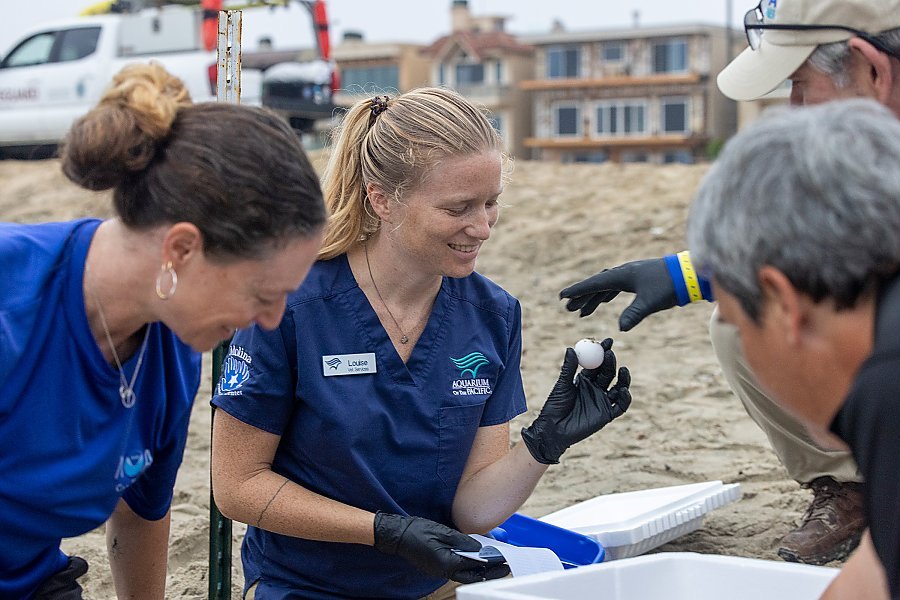
“We had to make some quick decisions,” Jonathan Snyder, a biologist with the U.S. Fish and Wildlife Service, told the Times. “This is the decision that we made, and I think it’s the best one for species recovery.”
The eggs now sit in sand-filled containers in a quiet, private room of the Aquarium of the Pacific‘s Molina Animal Care Center. “This is an unprecedented situation, and we’re proud to provide a temporary home for these eggs as they incubate,” said Dr. Lance Adams, the aquarium’s veterinarian. “We’re hopeful that this will lead to a successful hatching in the near future and a successful release back to the wild.”
Warm sand could make them all female
A sea turtle’s sex depends on how warm the sand is during the middle part of incubation. “After about 87.8F, they’re almost all female,” Adams told The Guardian, which is about 31 degrees Celsius.
Incubation usually runs 45 to 60 days, and officials quoted by ABC7 said viable eggs could hatch around the first week of November. The hatchlings would then be released on the beaches where their mothers dug the nests.
Seminoff said fewer than 1 percent of hatchlings live to adulthood, and with no hard shell they make “nice little hors d’oeuvres” for birds and fish. Even on land they can get stuck, as Florida Keys homeowners learned when 64 baby sea turtles ended up trapped in their backyard pool.
“If they successfully hatch, these baby turtles may one day return to nest to carry on future generations on these very same beaches, giving us a remarkable opportunity to help a species expand its range and thrive,” Flocken said in the aquarium’s announcement.
Two nests leave many questions open
NOAA says it still does not know whether the eggs were fertilized or are viable, and Adams told The Guardian it is hard to generalize from two turtles. “The turtles could be here by mistake,” he said.
“Is this the first girl who is coming up to start putting her eggs in California, and maybe others will follow, and it’ll become a thing, or is this just a one-off?” Plotkin asked. “I think time will tell.”
Mexico’s nesting season runs from about July to December. “We might see additional sea turtles making beach crawls to nest in the next 30 to 90 days,” Adams said, adding that people who want a look at the fenced nests should not bother. “People won’t see anything.”
Before the eggs were moved, Flocken told SFGATE the goal was for them to hatch naturally. “Of course, we have our fingers crossed and are hoping that it is,” he said. “It would certainly be an exciting thing for California since it’s unprecedented.”
George Zamora told the Associated Press he hoped the eggs could survive the tides, the storms and the big beach events. “Let them do their thing,” he said. “Let them be born.”
NOAA Fisheries published its official account of the nesting on Sept. 25, 2026, and updated it on Oct. 3.
Olive ridleys are protected under the Endangered Species Act, so anyone who spots one on a Southern California beach should keep back and call lifeguards or NOAA’s West Coast stranding hotline at (562) 506-4315.
Photo: Huntington Beach Fire Department / NOAA Fisheries