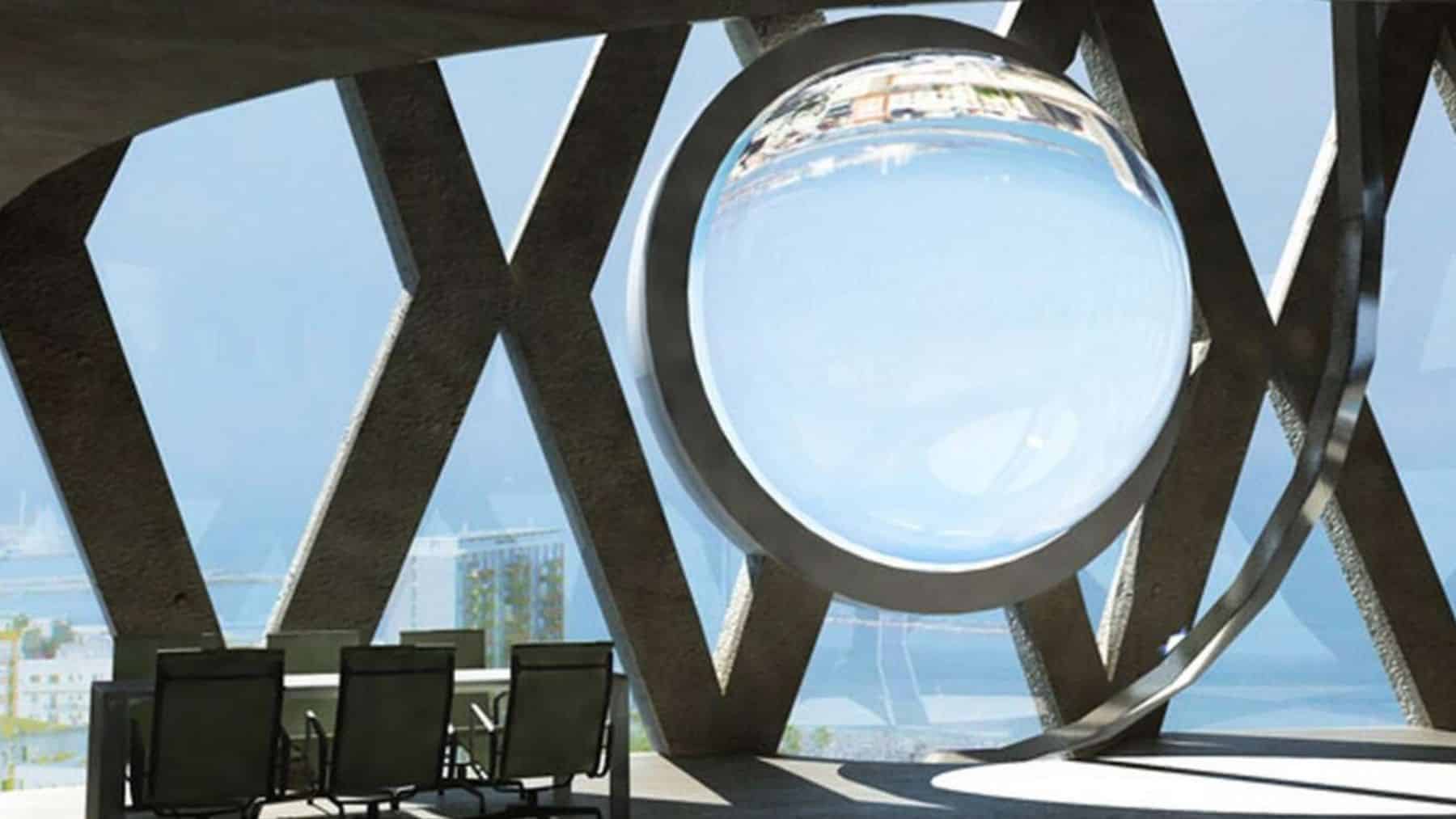
Solar panels may soon be outdated, as an energy sphere promises about 1.1 kWh of energy a day for free. Recently, the era of the flat solar panel seems to be coming to an end, thanks to the emergence of a spherical glass solar generator. A German-born, Barcelona-based architect is behind the spherical Rawlemon Solar Architecture generator that is directly challenging the more traditional turbines.
Understanding the mechanics behind the sphere
The device by André Broessel is rather similar to a futuristic creation and can concentrate 10,000 times more sunlight while reducing costs in the process.
The way Rawlemon works is by ball lens geometry, which can capture sunlight even at an angle. Traditional panels mainly capture sunlight on flat surfaces. While the sun reflects easily on flat surfaces, the traditional panels lose efficiency when sunlight is shining at an angle. This spherically designed solar panel can solve this problem due to its rotational weatherproofing tracking system that tracks the sun’s position all through the day.
Houses can mount this solar panel onto their inclined rooftops, ensuring optimal light conditioning. The system can capture diffused light available on a rather overcast day. Another rather incredible feature is that the Rawlemon Solar Architecture generator is that it is able to focus on moonlight, too, producing energy throughout the night as well. Although minimal energy is produced at night, this incredible feature of the energy sphere must be mentioned and noted. Traditional panels do not harness energy during the evenings.
Understanding the data generated by the team at Rawlemon
According to the data that has been shared by André Broessel and the team at Rawlemon, the sphere’s ß.torics system is responsible for improving solar energy efficiency by 35% in comparison to normal solar panels. While the Rawlemon Solar Architecture generator has been put forward as a residential solution, its efficiency rate makes it a fantastic option for futuristic architectural approaches as well. The spherical energy generator can surely assist other solar panels and turbines and ensure that countries can safely go off the grid.
The energy sphere is designed with an architectural purpose in mind
The sun-tracking glass globe was meant to absorb solar energy as well as lunar energy, but André Broessel’s energy sphere was designed with an architectural purpose in mind. Boasting a clean design, the Rawlemon energy sphere wishes to reestablish the relationship between nature and buildings.
The architect André Broessel must be applauded for being able to translate a vision so clean, yet so efficient. There are dual-axis tracking systems and multi-lens versions filled with water, which capture the essence of nature. The vision captured is that of skyscrapers being able to harness energy all day.
The energy sphere is more than just an upgrade; it’s a mindset shift. While being fully adaptable to the sun and the moon, the Rawlemon energy sphere is far more visually appealing than traditional panels. The creation of more and more flat solar panels in America and beyond has recently been questioned since Japan has unveiled the first-ever photovoltaic spheres.
André Broessel has put forward a futuristic ß.torics system
The architect wished to create a system that could be embedded into buildings and walls. The idea was not only to produce energy generators, but also to create visually appealing windows. The energy efficiency harnessed by this ß.torics system is not the most noteworthy factor; it is the fact that this ß.torics system was effectively designed to harness lunar energy as well. It will be exciting to see how these futuristic energy spheres will be incorporated into buildings of the future and how beautiful these systems will look. The question we need to ask ourselves is, why are we still making flat solar panels?