Black holes
Black holes are difficult to directly observe so instead, we look for evidence. Read about the pulse from a torn star, learn about a planned instrument on the Moon to detect collisions, and find out about the search for white holes. The physics involved is explained simply.
31 stories · since 2024 · latest, November 9, 2026
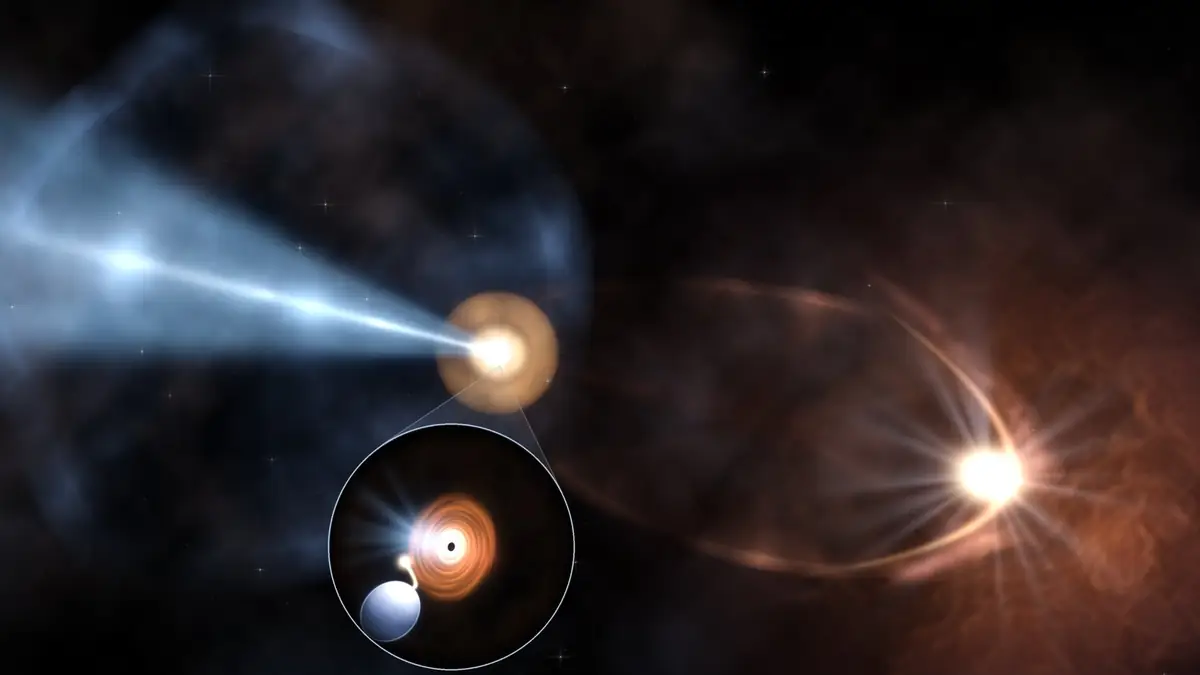
A black hole 12,000 light-years away is aiming a jet at Earth, and astronomers calling it the Milky Way’s first microblazar suspect its invisible twin jet is behind some of the galaxy’s most energetic particles
Astronomers have identified what they call the Milky Way’s first microblazar, a black hole about 12,000 light-years away that fires a jet almost straight…
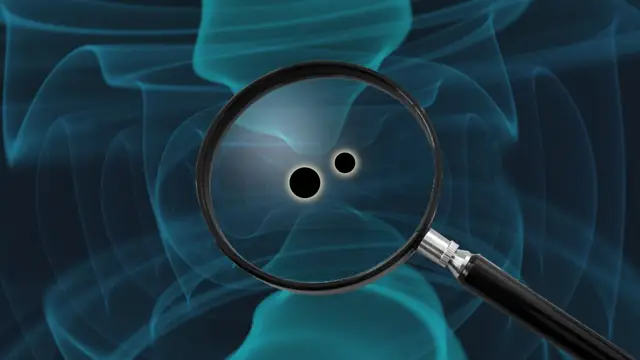
Scientists detected one of the heaviest black hole collisions, weighing about 230 times the sun’s mass, and now they suspect warped spacetime may have been playing tricks on them
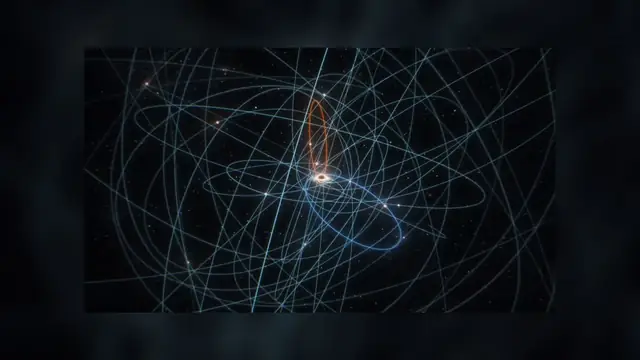
At the center of the Milky Way, astronomers found the fastest known star, S301, reaching about 15,900 miles per second near Sagittarius A*, and its 8.7-year orbit could reveal how fast the black hole spins
Six billion Suns weigh a hidden black hole in the young universe, revealed by how its gravity tugs on the surrounding stars in a distant galaxy
A black hole does not need to blaze like a quasar to reveal its weight. Astronomers have measured a hidden giant at the heart of the distant galaxy…
Adrian Villellas · August 8, 2026
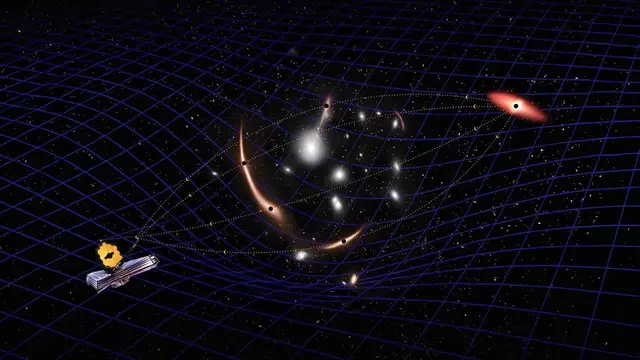
It all began with a strange echo around 14 giant black holes; scientists now believe it could indicate massive concentrations of dark matter, the mysterious component that makes up 27% of the universe
Supermassive black holes have already gained the reputation of being the universe’s most extreme phenomena. They can weigh millions or even billions of…
Adrian Villellas · July 2, 2026
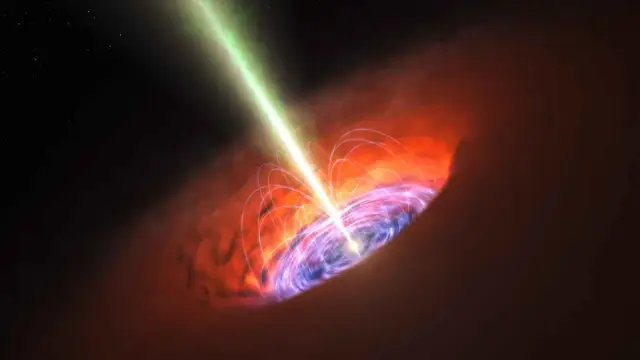
Forget about epic explosions: just 300 years ago, a swarm of hyper-powerful stars would have left a perfect crater next to the central black hole… and today, astronomers see it as a kind of space graffiti that’s still smoldering
What could punch a nearly round hole in the glowing gas near the Milky Way’s central black hole, then disappear from the scene? A new astrophysics study…
ECOnews Newsroom · June 27, 2026
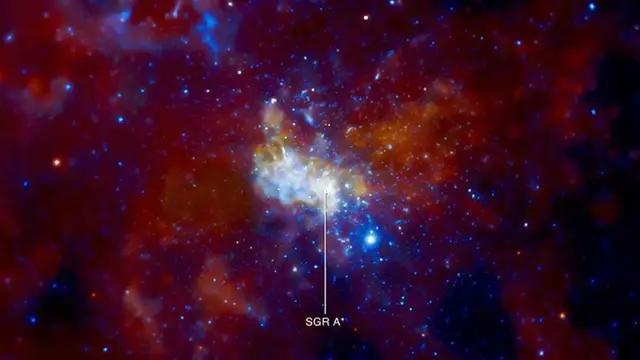
NASA’s X-ray eye caught a jet shooting from the first black hole we ever photographed—apparently fame hasn’t tamed the beast
The first black hole ever photographed is no longer just a famous orange ring. New X-ray observations show that the monster at the heart of the galaxy…
ECOnews Newsroom · June 26, 2026
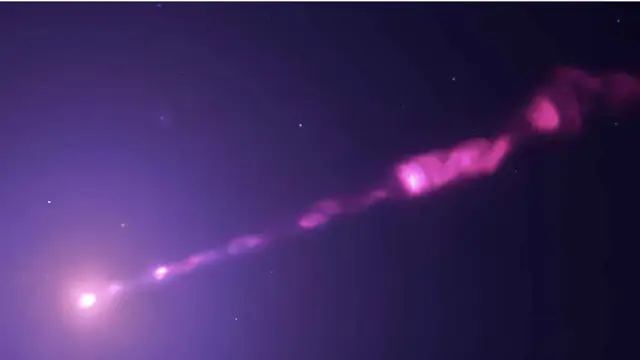
Scientists have detected a forbidden zone in space where planets should not behave this way, and the discovery changes what we thought about how worlds are born
Scientists have spotted a missing slice in the universe’s black hole lineup. A study published on April 1, 2026, reports a drop-off starting around 45…
ECOnews Newsroom · May 9, 2026
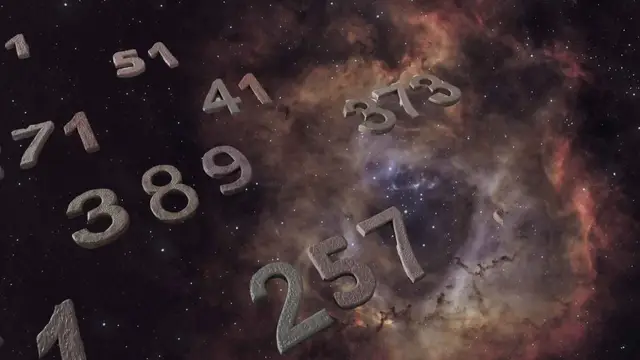
Physicists link prime numbers to the chaotic spacetime near black hole singularities
What could prime numbers possibly have to do with a black hole? Prime numbers look like the definition of “pure math,” but new theoretical work argues…
Adrian Villellas · May 7, 2026
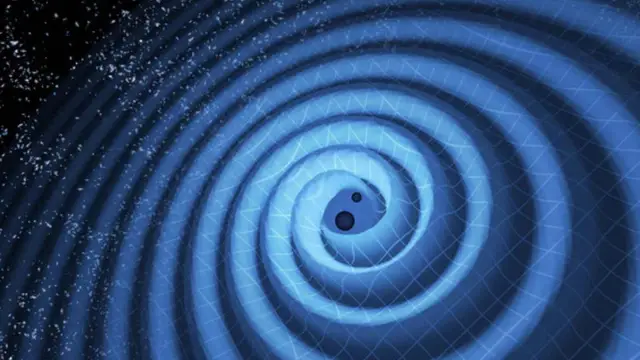
Scientists want to build an instrument on the Moon capable of detecting black hole collisions, and the Moon’s near-total silence could be the key to the project’s success
What if the quietest place in the solar neighborhood became the best place to pick up a cosmic whisper? A new project aims to place a gravitational-wave…
ECOnews Newsroom · April 29, 2026
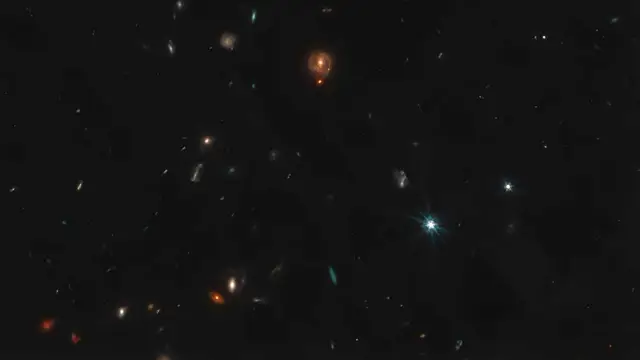
The James Webb Space Telescope detected strange red spots in the early universe, and now a study suggests that they were not galaxies, but young black holes growing at a breakneck pace
What if some of the strangest lights in the early universe were not giant, impossible galaxies at all, but young black holes hiding in plain sight? A new…
ECOnews Newsroom · April 10, 2026
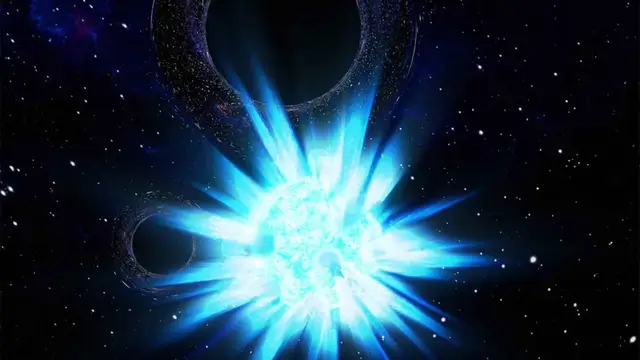
A gamma-ray burst kept astronomers on tenterhooks for 7 hours
Astronomers have caught the longest gamma ray burst ever seen, a seven-hour flash of high-energy light that looks like a black hole eating a companion…
Adrian Villellas · April 4, 2026
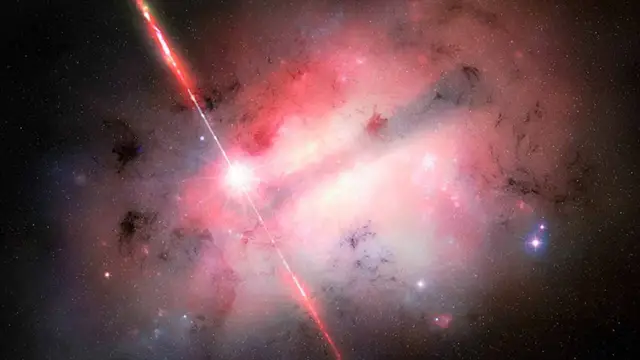
A study suggests that a dense clump of dark matter, not a black hole, could sit at the center of the Milky Way
For more than fifty years, astronomy textbooks have treated the center of the Milky Way as the home of a supermassive black hole. It is the invisible…
ECOnews Newsroom · March 31, 2026
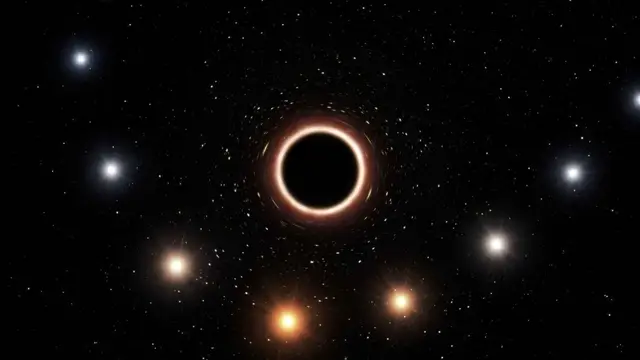
NASA makes it clear: the “monster” located at the center of the Milky Way (4 million suns) has a set date for its “awakening”
From here on Earth, the Milky Way looks calm. Yet at its center sits Sagittarius A*, a supermassive black hole millions of times more massive than the…
ECOnews Newsroom · March 30, 2026
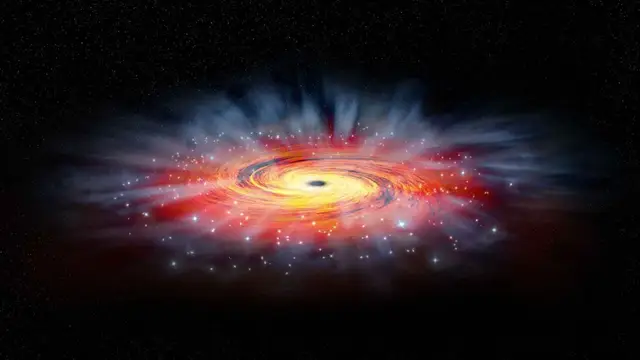
According to this new study, what lies at the center of the Milky Way may not be what it seemed
What sits at the center of the Milky Way? For decades, the standard answer has been clear. A supermassive black hole called Sagittarius A*. But a new…
ECOnews Newsroom · March 22, 2026