
Space exploration
53 stories · since 2024 · latest, November 17, 2026
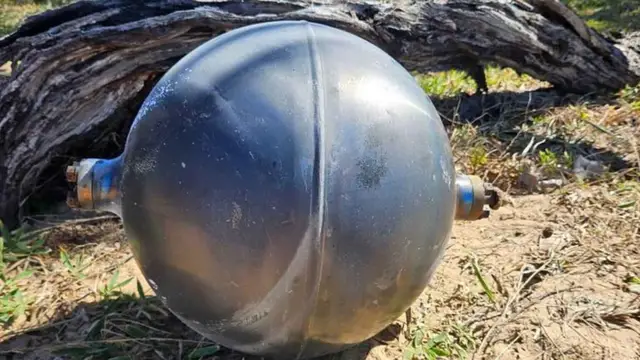
In July 2026, six mysterious metallic “space balls” appeared on a quiet Australian beach, and after police, firefighters, and hazardous materials teams cordoned off the area, authorities concluded that they were likely pressurized rocket containers that had survived a fiery reentry into the atmosphere after leaving orbit
Can you imagine yourself walking around the beach and instead of finding some shells near the sea, you see six metallic spheres? Well, that is what…
Adrian Villellas · August 27, 2026
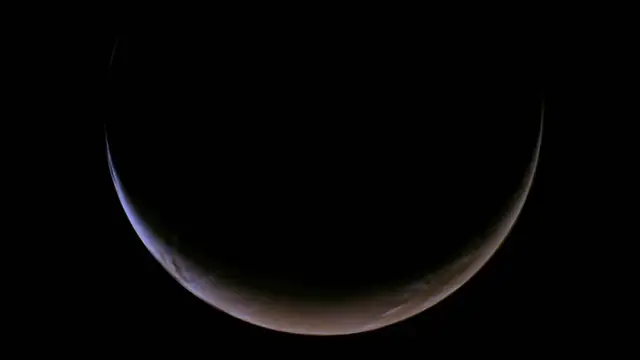
NASA’s Psyche spacecraft borrowed Mars’ gravity in May 2026, gaining a thousand miles per hour and testing instruments built to study a metal-rich asteroid
NASA’s Psyche spacecraft did more than borrow a push from Mars on May 15, 2026. It passed within 2,864 miles of the surface, gained about 1,000 miles per…
ECOnews Newsroom · August 8, 2026
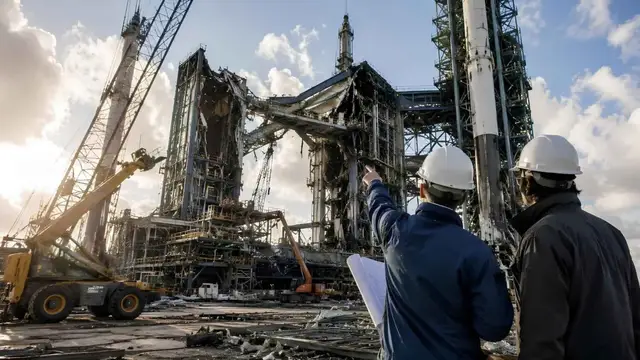
The new space race no longer seems like an idyllic adventure toward the stars, because in 2026, Blue Origin is rebuilding a destroyed launch pad, Relativity has its sights set on Mars, and a Chinese rocket is leaving more debris floating above Earth
The space industry is moving fast again, and not always smoothly. Blue Origin has begun rebuilding its damaged Florida launch pad after a New Glenn rocket…
ECOnews Newsroom · July 9, 2026
Menstruation has been a part of astronauts’ space travel for decades, but in 2027 it could, for the first time, become the focus of a specific experiment conducted in microgravity conditions
Menstruation has followed astronauts into orbit for decades, but it has never been the central question of a dedicated spaceflight experiment. That is the…
ECOnews Newsroom · July 4, 2026

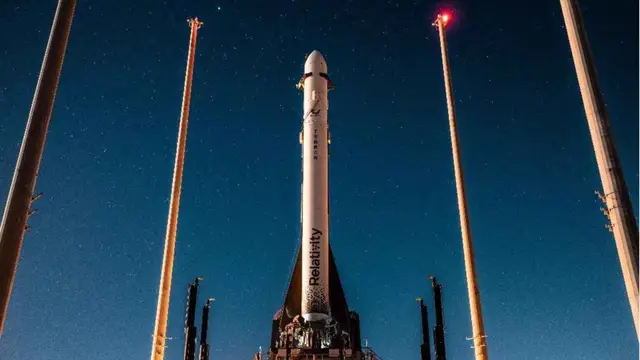
NASA is teaming up with Relativity Space, a newbie in the space exploration field, and not Space X, for a project mapping the violent seasons on Mars due to take off in 2028
NASA has confirmed a new private partner for its next Mars science mission, and this time the company is not SpaceX. California-based Relativity Space…
ECOnews Newsroom · July 3, 2026
MIT’s new method promises to speed up the search for alloys for rockets, chips, and clean energy by analyzing invisible “neighborhoods” between atoms
Finding a better metal is not as simple as mixing ingredients and hoping for a stronger result. For companies building rockets, cleaner energy systems, or…
ECOnews Newsroom · July 2, 2026
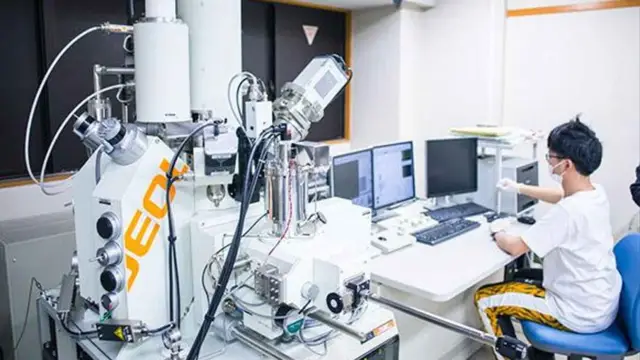
NASA is launching its wildest plan since “Apollo 13”: launching a Pegasus rocket from the air, releasing the LINK spacecraft into the middle of the Pacific, and catching the veteran Neil Gehrels Swift Observatory before it crashes like a burning hunk of scrap metal onto your roof
NASA is moving into the final stretch of an unusually fast rescue attempt for the Neil Gehrels Swift Observatory, a space telescope launched in 2004 that…
Adrian Villellas · June 27, 2026
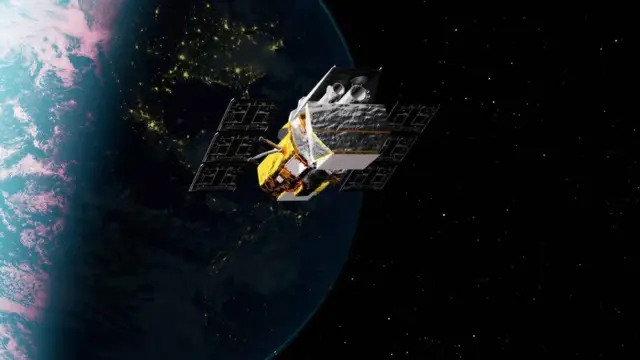
The microwave-sized mini-refrigerator floating 400 km above Earth has just put atoms into “ghost mode” at –273 °C, and NASA scientists believe this experiment could equip future rockets with a “galactic GPS” that not even errors in solar signals could throw off course
Astronauts aboard the International Space Station have switched on a newly upgraded NASA Cold Atom Lab, a minifridge-sized quantum physics facility…
ECOnews Newsroom · June 27, 2026
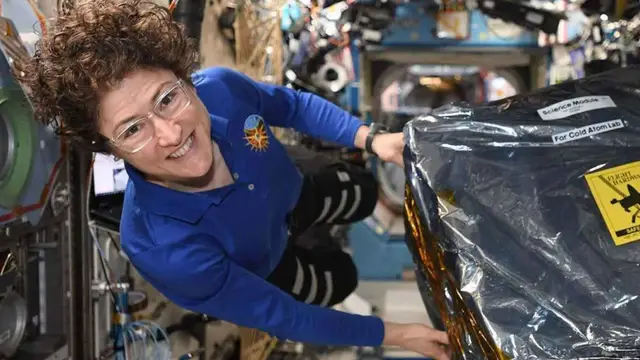
In 1982 the Soviet Venera 13 lander survived 127 minutes on Venus in about 855°F heat and pressure comparable to roughly 2,950 feet underwater, long enough to beam back two panoramas of basaltic rock under an orange sky
Most spacecraft are built to avoid disaster. Venera 13 was built to meet one head-on. On March 1, 1982, the Soviet lander touched down on Venus and kept…
Adrian Villellas · June 6, 2026
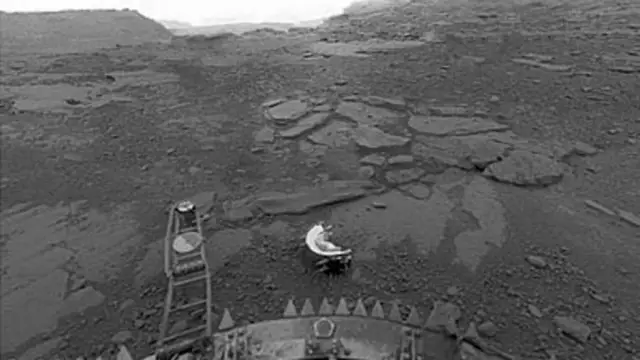
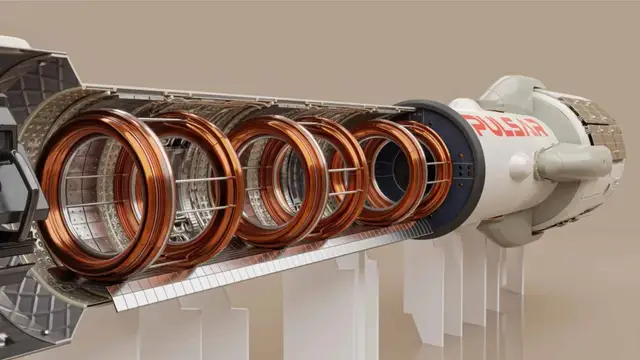
The UK fires up a fusion rocket for the first time and accelerates the race to conquer Mars before anyone else
A British propulsion company says it has reached a small but meaningful milestone on the long road to nuclear fusion rockets. On March 25, 2026, Pulsar…
Adrian Villellas · April 23, 2026
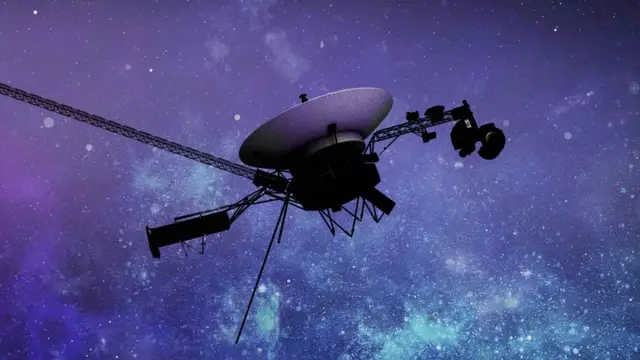
A group of amateur astronomers has just “heard” a signal from 25 billion kilometers away, confirming that Voyager 1 is still transmitting from the outer reaches of the Solar System
An aging spacecraft almost 25 billion kilometers from Earth has just checked in again, and this time the call did not go through a giant space agency antenna.
ECOnews Newsroom · April 2, 2026
ESA analyzes the storm system battering Spain from space and reveals an atmospheric pattern that could recur more frequently
In just a few weeks, three winter storms named Kristin, Leonardo and Marta have soaked Spain and Portugal so heavily that the damage can now be seen from…
ECOnews Newsroom · March 19, 2026

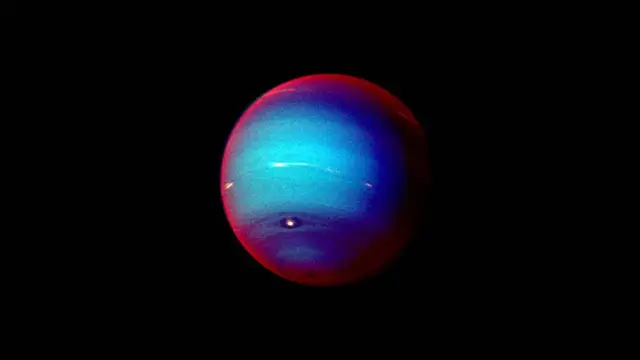
In 1989, Voyager 2 observed “something that didn’t add up” on Neptune, and it took us decades to understand it. Now, a study published in Nature suggests that dark ice could be the cause of the planet’s strange magnetism
When Voyager 2 swept past Neptune in 1989, its cameras grabbed the headlines. The real surprise, though, came from its magnetometers. Instead of a tidy…
ECOnews Newsroom · March 12, 2026
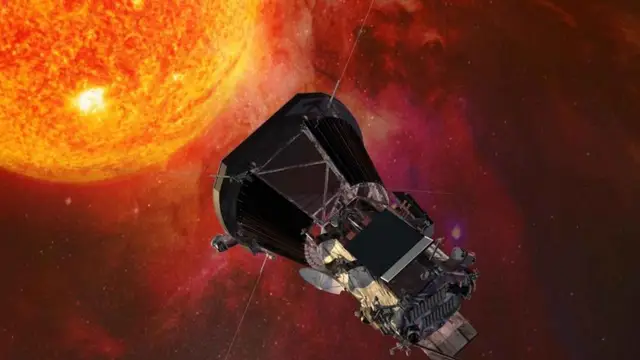
An unprecedented view of the Sun is about to arrive: the Parker probe passed through the solar atmosphere at approximately 429,000 miles per hour (mph) and recorded data that could solve one of science’s oldest mysteries
What happens when a spacecraft skims the atmosphere of our star, in a region hotter than a blast furnace and far beyond any astronaut’s reach? On New…
ECOnews Newsroom · February 28, 2026
Elon Musk reveals his most ambitious (and detailed) plan for Mars: 1,000 spacecraft, 20 years of launches, and a self-sustaining city of one million inhabitants on Mars by 2050
At the entrance to Starbase in south Texas, a glowing sign now welcomes visitors with the words “Gateway to Mars.” The display sits in front of SpaceX…
ECOnews Newsroom · February 13, 2026
