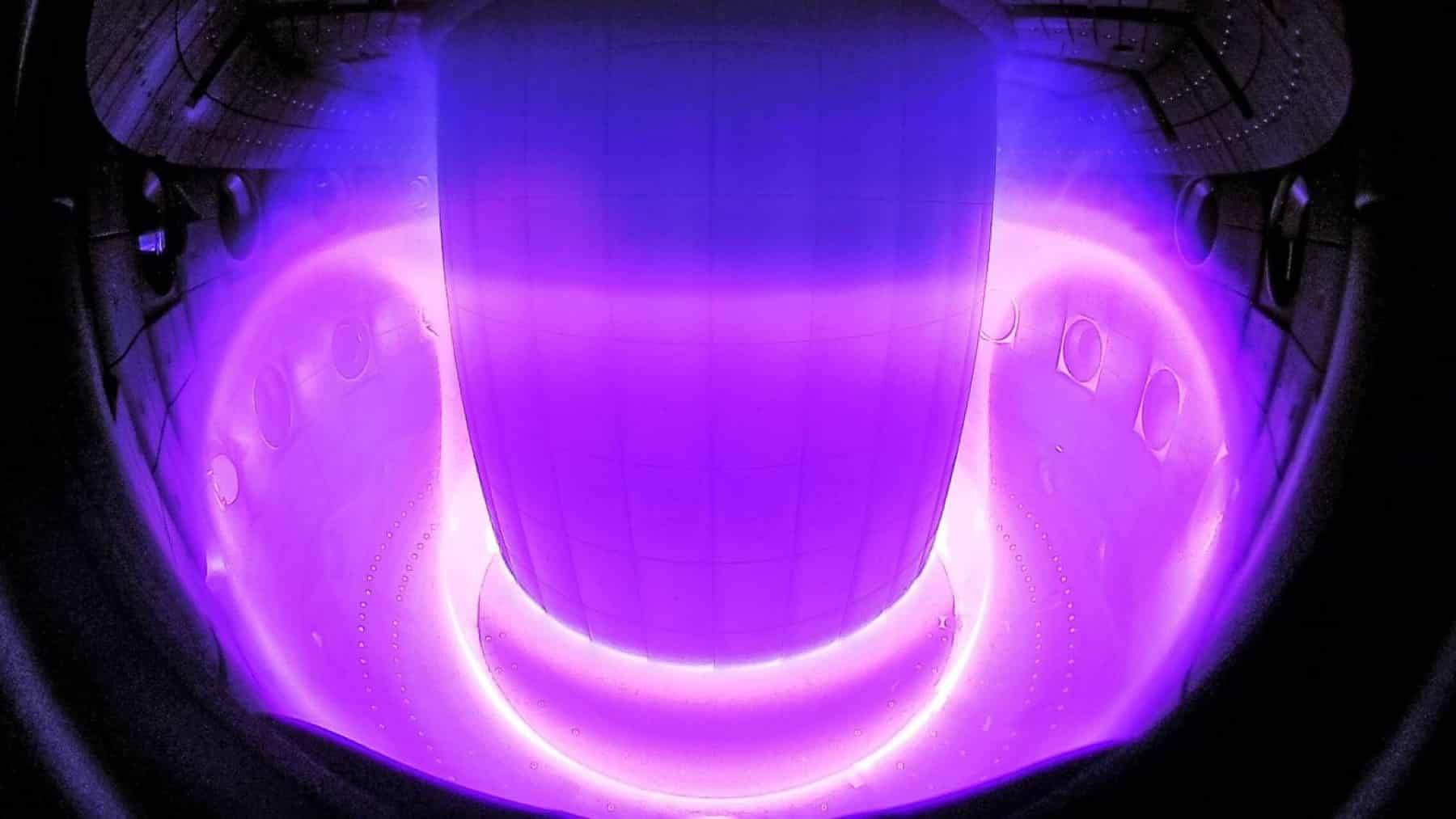
Imagine a world that runs on an endless, clean energy, like the Sun. A new fusion reactor, JT-60SA, was just activated in Japan and it is an important step toward making this clean energy a reality. Fusion, in contrast to fossil fuels or nuclear fission, has the potential to be an almost limitless source of energy that once again has minimal environmental consequences.
JT-60SA – The future of fusion energy
JT-60SA is the world’s largest operational superconducting tokamak, a type of nuclear fusion reactor that uses large magnetic fields to keep plasma in a doughnut shape in these fusion reactors. In contrast to conventional nuclear reactors which use fission, the splitting of atoms, fusion works by merging atomic nuclei, releasing incredible amounts of energy in the process.
Fusion’s energy output is orders of magnitude greater than that of fission and does not generate hazardous long-lived radioactive waste. The reactor’s purpose is to test and enable technologies that will eventually be utilized by the International Thermonuclear Experimental Reactor (ITER), which is the next phase of collaborative fusion research. ITER, now being built in France, is an international project that aims to prove the viability of fusion as a large-scale energy source.
Fusions’ biggest challenge: Keeping super-heated plasma stable
A major hurdle to fusion research is creating and sustaining the extreme conditions necessary for the reaction to take place. The temperatures that can be achieved within JT-60SA reach over 100 million degrees Celsius, ten times hotter than the core particles of the Sun (like this artificial sun that is 120 million degrees Celsius).
In the nuclear furnace, hydrogen atoms slam into one another and fuse, an act in which pheromones generate vast quantities of energy. But keeping these conditions stable for an extended time is an extremely difficult technological task. Advanced superconducting magnets within the reactor create powerful magnetic fields that ensure the super-heated plasma stays centered and doesn’t touch the reactor walls.
This is essential because if any of the plasma touches the inner surfaces of the reactor, it would cool, interrupting the fusion process. JT-60SA’s sustained long plasma is another important feature. In past fusion experiments, plasma has proven to be difficult to stabilize for more than a few seconds.
However, this concept is expected to be improved by the JT-60SA, making the practical production of long-term fusion energy a more realistic goal. If this effort proves successful, insights learned from this reactor will help influence the design of future reactors that could produce 24/7 base-load power.
Commercial fusion power: The road from lab to energy grid
JT-60SA is, nonetheless, an experimental machine, and while it is a remarkable accomplishment, the long-term objective is to create commercial fusion power plants that can generate electricity on a large scale. The insights gained from the JT-60SA program will contribute to the ITER project, which is currently under construction and is expected to become operational in the next few years.
If ITER is successful in confirming that fusion can produce more energy than it uses, then it will be building prototype power plants that will feed the reaction into already existing energy grids. Fusion is attracting significant investments from governments and private companies around the globe due to its transformational potential for energy generation. Fusion, if successful, could put an end to our reliance on fossil fuels, cut greenhouse gas emissions to zero, and offer an essentially limitless power source for generations to come.
The activation of JT-60SA is a major milestone toward nuclear fusion (just like this fusion reactor of the millennium that was turned on by Canada). Despite the remaining challenges, every breakthrough takes us one step closer to inexhaustible and clean energy. The information from JT-60SA will influence the next generation of fusion power plants, revolutionizing how we generate energy for our planet. If commercialized, fusion could be one of the biggest technological advances in history.