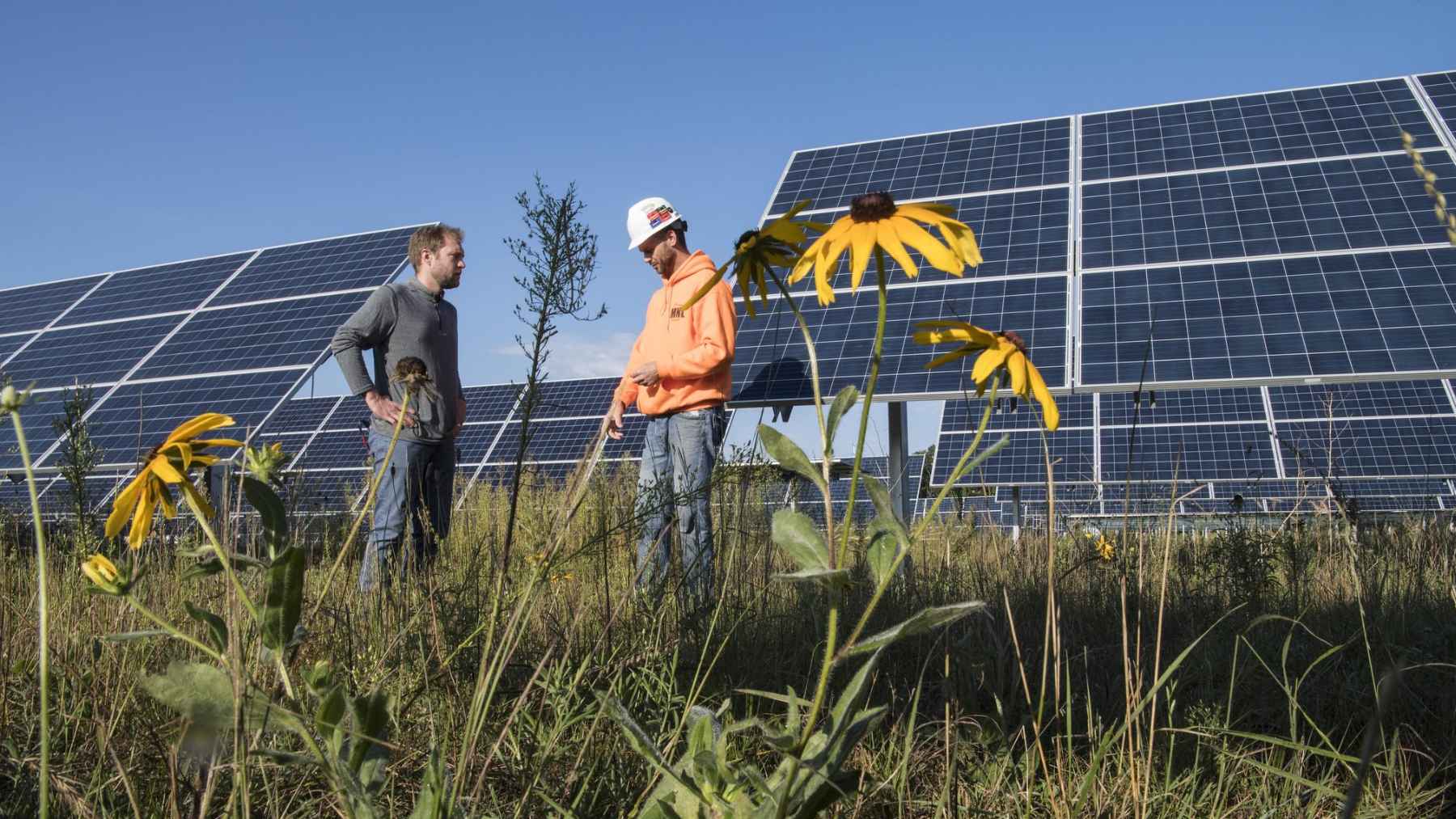
Two solar farms in southern Minnesota planted native grasses and wildflowers beneath their panels. The results became clear over time. During a five-year study, the number of insects at the sites tripled, and native bees increased more than 20 times.
The benefits reached beyond the solar farms. Bees from the restored habitat were also found pollinating soybeans in surrounding fields. This indicates that solar sites may benefit nearby farms if the area below the panels is managed as wildlife habitat. The panels themselves were nothing new. The real difference came from the plants that were growing below.
An ignored ground below solar panels
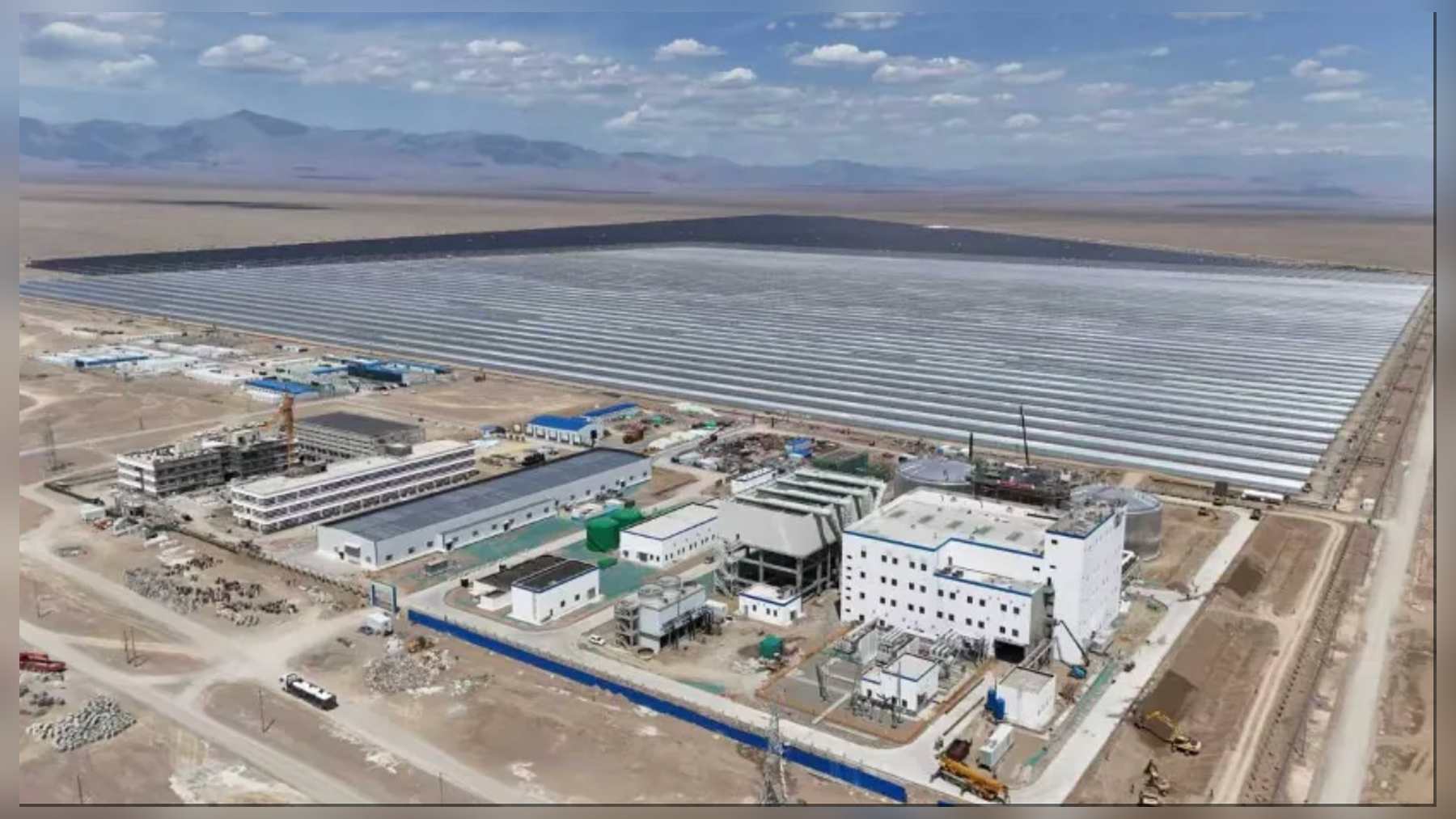
The study was carried out at the Atwater and Eastwood solar farms. They were both built in 2017 on fields where row crops had been grown for decades. The two Enel Green Power North America sites cover about 77 acres, Atwater produces 4 megawatts and Eastwood 5.5 megawatts.
Once they finished the construction, crews planted native grasses and wildflowers in both sites. More mixtures of seeds were tested in selected plots in 2018. Given the fact that the plants flowered at different times, bees and other insects could find food from spring until late summer.
Planting the seeds was just the first step. Workers then mowed the land as needed and controlled invasive weeds. Researchers also visited the sites several times between August 2018 and August 2022, observing and recording the insects found there during 358 walks along the same studied paths.
A sudden buzzing habitat
The first year seemed very quiet. The sites changed significantly over the period of four years. On average, they supported seven times more flowering plant species and three times more beneficial insects. The variety of insects also grew by approximately 13 percent each year.
Beetles, flies, and moths were the biggest groups in quantity, but native bees showed the biggest change. During this study, researchers counted 729 native bees, and more than 80 percent of those observations were recorded after the second year.
Most of the native bees were sweat bees and furrow bees from the Halictidae family. On the other hand, bumblebees accounted for about one-fifth of native bee observations. This means that patience was very important here. A site with just a few bees at first started changing quickly after the native plants matured.
YouTube: @EnelGreenPower
The fence was not a limit for the bees
Soybean fields close to the solar facility were also studied by the team during the July bloom, starting in 2019. Besides the reconditioned solar habitat, bee visits to soybean flowers were 2 times as high as those along locations by the roadside, and around 2.5 times as high as those in soybean field interiors.
The levels of the visits next to the solar habitats were similar to the ones alongside grasslands registered in the federal Conservation Reserve Program. Considering that those protected grasslands are already used as a preservation instrument in farm country, this comparison is highly meaningful.
Nonetheless, the investigation didn’t register soybean production, so it must not be considered as evidence that adjacent farmers harvested a larger amount of beans. What was indeed documented by researchers was bee visitations, which is usually considered as a sign of pollination services, which may both benefit a crop by self-pollinization, but also respond to visits by insects.
Management is more important than panels
There is a considerable caveat. The experimental plots which yielded the highest biodiversity results had received extra plant species and had different management than other parts of the solar sites, so these findings do not guarantee that every solar farm inevitably becomes a refuge for bees.
While the larger areas had 66 species of native grass and flowering plants in the mix of seeds, the experimental plots had 61 extra species. The areas outside those plots were sheared more frequently and sheep grazed in them during the last 2 years, which makes it difficult to assume that every acre had the sema response.
Heidi Hartmann of Argonne National Laboratory, one of the co-authors stated: “The effort to obtain these data was considerable, returning to each site four times per summer to record pollinator counts”. The rebound could have been completely ignored by a fast summer survey.
A second task for solar power
In a broader sense, the lesson here is about making better use of land that has already been altered. One estimate cited in the paper estimates that around 80 percent of future ground-mounted solar development in the United States could happen on agricultural land. This means that choices about seed mixes, mowing, panel setting, and location will impact way more than just the electric bill.
Planting native vegetation in solar farms could help protect insects and also, attract more pollinators to nearby crops, while at the same time, allowing that same land to produce electricity. Still, Minnesota’s results may not apply to every site. It took many years for the habitat to develop, as well as thorough maintenance, and the result could be different in dry areas or in places where panels are placed lower and closer together.
So, in conclusion, these panels kept producing electricity as usual while the soil around them helped rebuild a small food web.