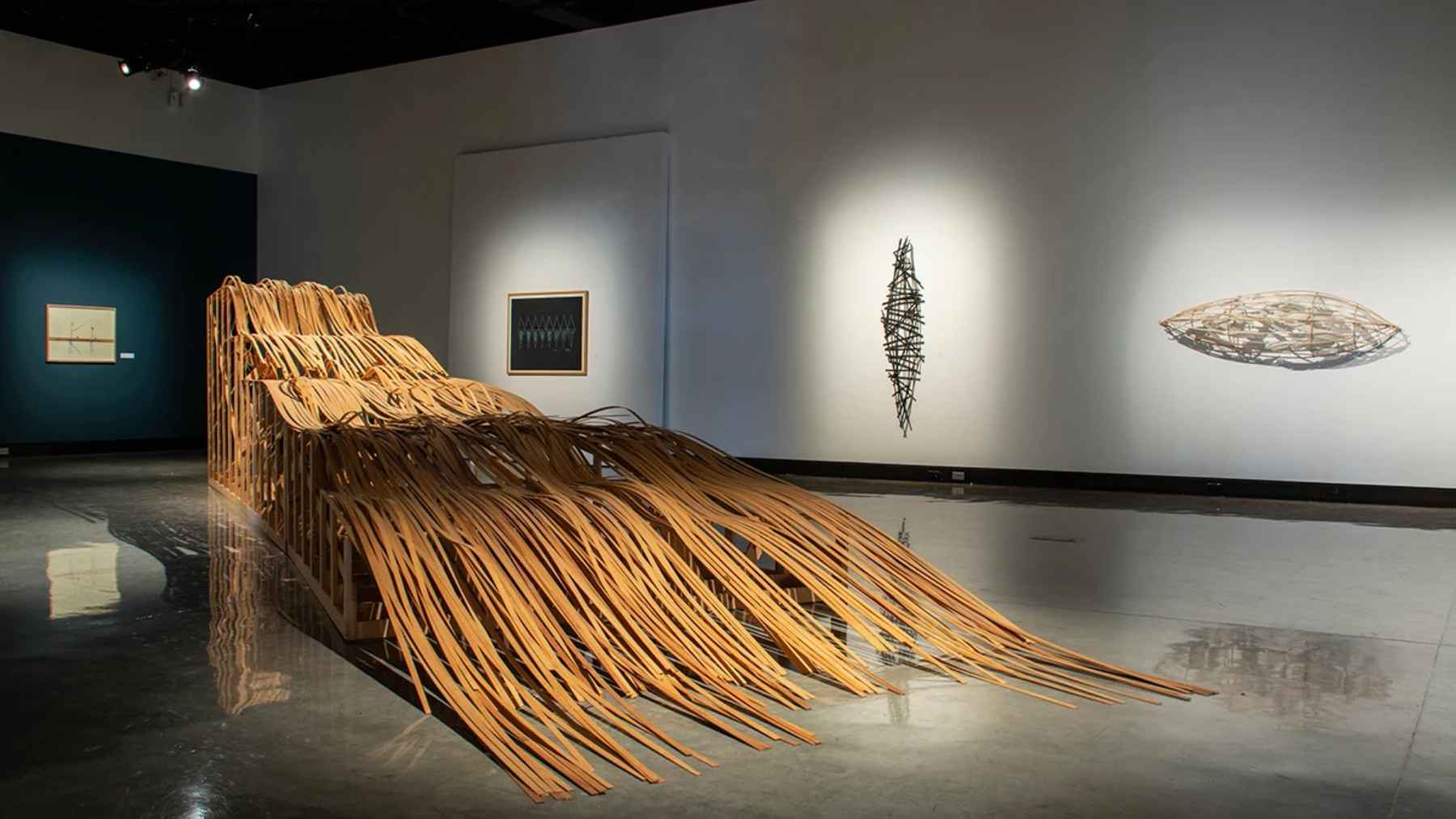
Almost 50 exotic sculptures, drawings, and paintings transmit and reflect the evolution of his work and all the changes it underwent across his whole career. Here there are 28 pieces that now belong to the museum’s own collection. More than a retrospective of his career, the exhibition shows how family knowledge, cultural memory, and environmental respect can shape a unique artistic language.
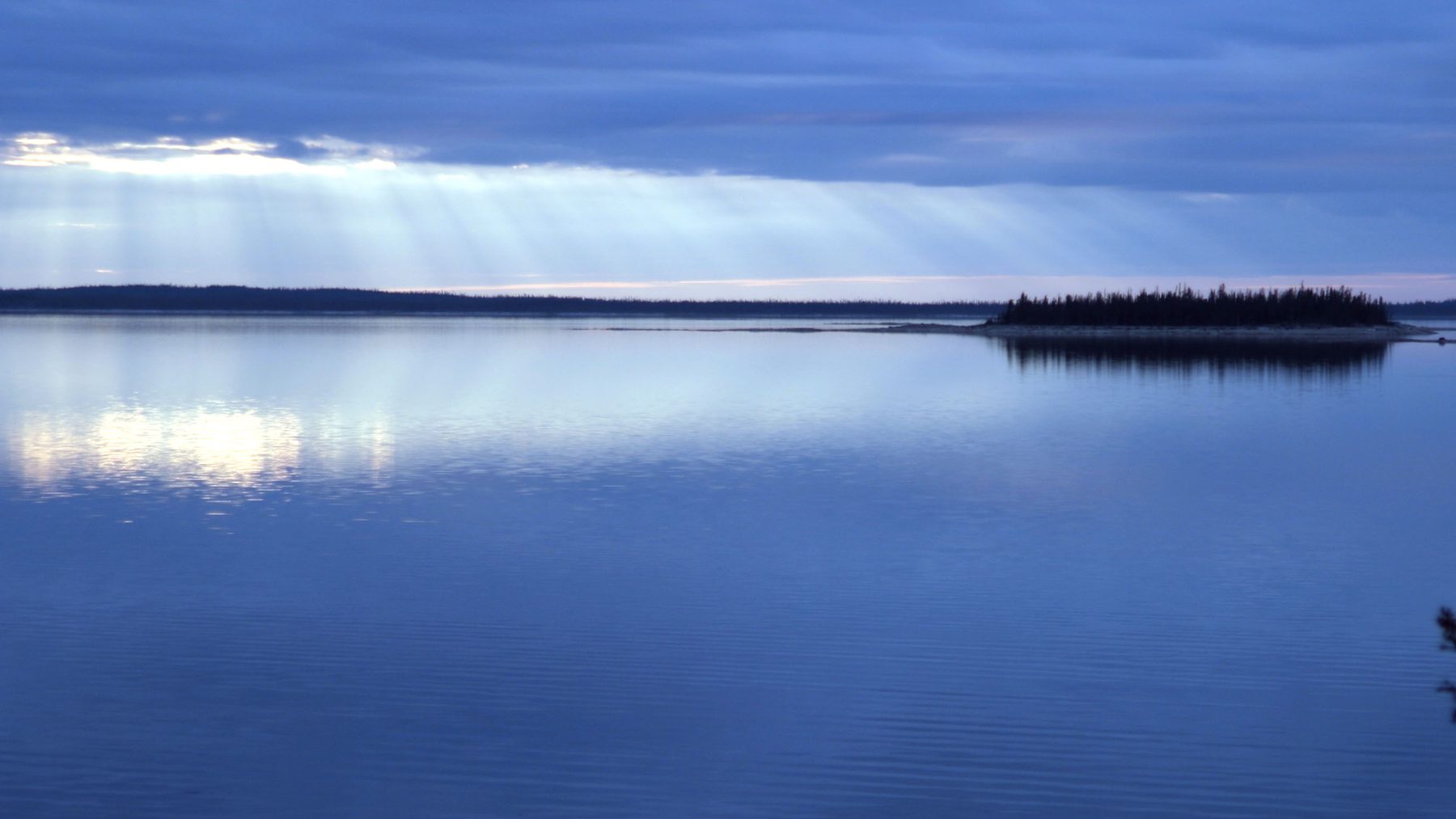
A childhood beside the Black River
Lowe was raised in a Ho-Chunk community near Black River Falls, Wisconsin, where the river and the woods that surrounded it were part of his daily life. Nature was something that he could relate to since he was a child. His mother used to make baskets and his father taught him to identify, prepare and respect the useful wood.
Those lessons later appeared in his art. In this case it was in his sculptures made with organic materials. A curved branch could symbolize a canoe, a river bank or the detailed memory of the water moving without pause, but with harmony.
Turning wood into water
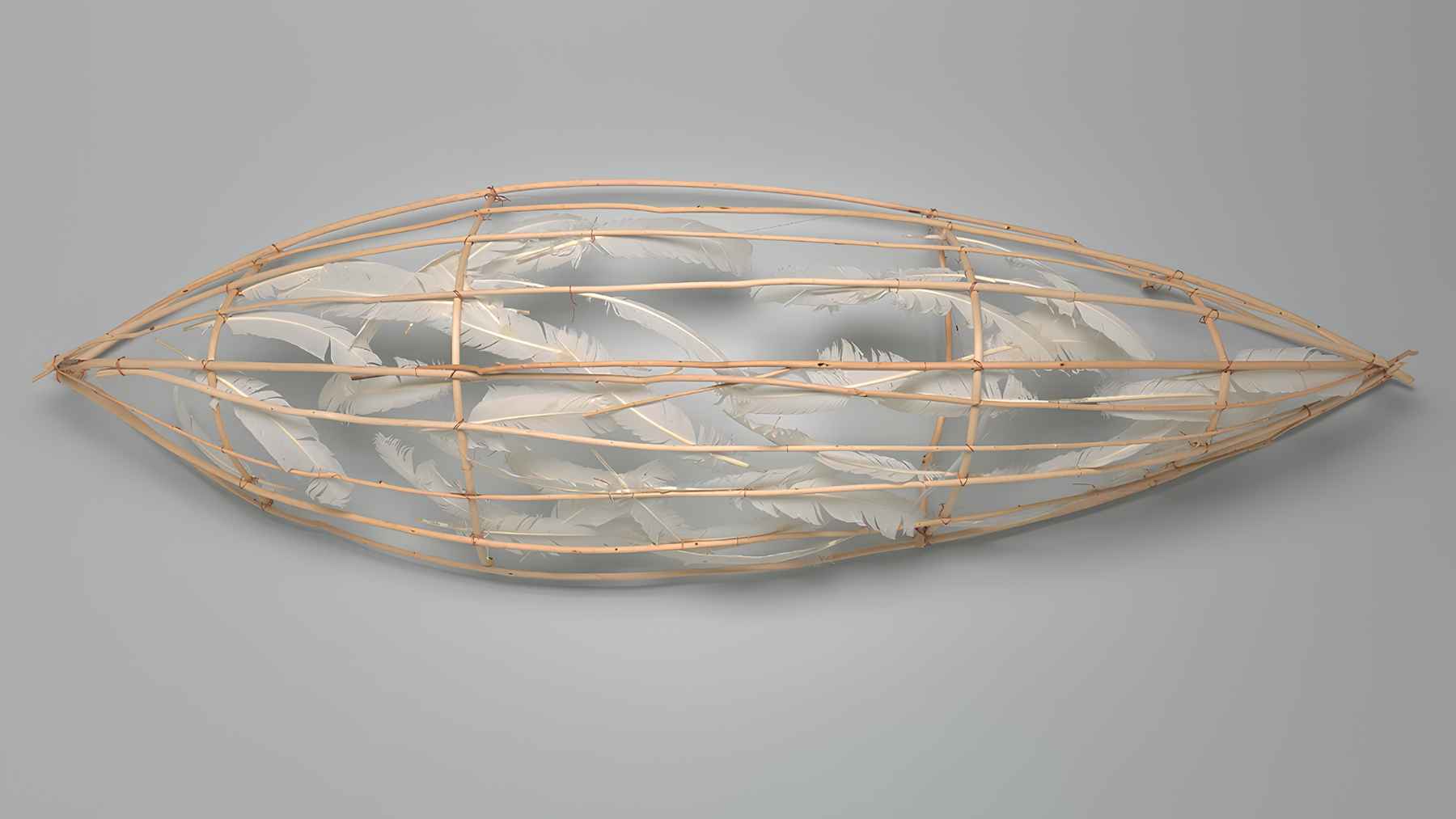
Lowe and his minimalist art give the impression that it can be light enough to the point that it is floating, even when the whole gallery is occupied by these creations. “Feather Canoe” and “Stream II” are works that turn branches into forms that allow spectators to complete with their eyes the movement of the branches.
The way in which he chooses his materials is not something isolated or random. It can be said that he has an “implicit ecology ethic”. During the 1970s, Lowe stopped using plastic in his works because he was really worried about its toxicity. Since then he started prioritizing the use of natural elements under the philosophy “use renewable resources, take only what you need.”
An artist, teacher, and curator
Lowe got his master of fine arts in sculpture from the University of Wisconsin–Madison in 1973 and it was in 1975 that he went back to the university. Here was when he started his long career as an educator and academic leader. He spent his time there teaching sculpture until retiring in 2010. Lets not miss to say that also before he retired, between 2000 and 2008, he even served as the National Museum of the American Indian’s curator of contemporary art.
All these moments are really significant and valuable in his whole personal and professional life. He was not only dedicated to creating pieces for museums, but also accompanied other artists as a mentor. And what is really important and honorable is that he used his role as a curator to open up space for contemporary Native art under American institutions.
Why the retrospective matters now
It is clear that Indigenous tradition and modernism can complement each other and stop being seen as opposing concepts. With all his work, Lowe could combine Ho-Chunk knowledge, family craft, abstraction, and experimentation completely connected and rooted to his specific homeland but “modern enough” to be interpreted openly by any viewer.
Where to see it
“Water’s Edge” is available to be seen in Washington, D.C., until January 18, 2027, before going to the Milwaukee Art Museum. Here it will be from April 9 until August 1, 2027. This exhibition includes monumental works alongside intimate drawings that can make viewers understand more of his fluid style, without leaving aside the importance of a sense of belonging, memory and responsibility with the environment.
The official exhibition page was published on the National Museum of the American Indian website.