
Power outages caused by warmer days in the United States would necessitate current electricity infrastructure to be equipped with smart grid technologies, a power grids executive said.
Bob Gilligan, vice president of General Electric’s digital energy business, claimed that the prevailing heat waves in the United States have forced consumers to turn up their air conditioning, putting stress on the power grid supplying these units with electricity.
Mr. Gilligan added that the intensive use of electricity consequently makes power outages more likely to occur.
“As record-breaking temperatures in the Northeastern United States have consumers turning up their air conditioners, our overburdened electric grid is taking center stage,” said Mr. Gilligan.
“The heat wave is causing spikes in power demand, increasing the probability of service disruptions,” he added.
Power service disruptions have been reported recently in Massachusetts, California and Michigan, among others. The Boston Globe recently reported that approximately 4,000 of utility Nstar’s electric consumers suffered from power outages across the company’s service region, which includes the city of Boston.
Over 2,500 customers of Eastern United States electric company National Grid also experienced service disruptions. Another 2,000 customers of the seaside community Laguna Beach suffered from a power outage recently, the Orange County Register in California said.
The Chicago Tribune also reported that pockets of downtown Detroit were left without electricity as power outages struck the area on Saturday.
Caroline Allen, a spokeswoman for Nstar, told the Boston Globe that transmission lines were subjected to tremendous stress for several consecutive days. She said that such problems with the power grid were expected following several days of extensive electricity consumption.
Mr. Gilligan said smart grid technologies can help alleviate the stress from power grids by ensuring better system management. G.E. (NYSE:
GE
) has been active in this area.
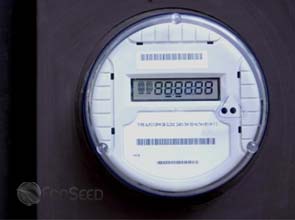
Smart grid, the catchphrase for an electricity network endowed with Internet-like traits through its hallmark two-way communication mechanism, can give utilities the capability to monitor the power grid and respond adequately to increases in electric demand.
These technologies are capable of communicating with individual appliances and their users to inform them of load conditions. Smart grid technologies can equip power grids with demand response support. This feature allows generators to manage spikes in power demand more intelligently.
“Investing in smart grid technologies can enable utilities to better manage fluctuating consumer demand and keep the [air conditioning] on without adding more generation and transmission capacity,” Mr. Gilligan said.