
New Zealand is becoming a prime location for significant investments in renewable energy, analyst say, because of its vast resources and a few policy improvements.
“New Zealand is blessed with abundant renewable options of world class resource – high and consistent wind speeds, very hot geothermal fields, good water resources, good wave potential,” said Peter Apperley, corporate ventures manager at Meridian Energy Limited, the largest state-owned electricity generator in the country.
At 70 percent renewable energy generation, which includes large hydro and geothermal, New Zealand is currently considered one of the most sustainable in terms of electricity generation.
Wind, geothermal and hydropower compose majority of the country’s renewable energy industry, competing directly with gas and coal power. Hydropower accounts for most capacity.
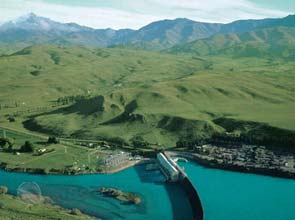
Nearly 24 gigawatt-hours of hydropower electricity was generated in 2009, approximately 57 percent of the country’s annual total electricity generation. The country’s Waitaki hydropower plant alone generates 7,600 GWh of electricity annually, supplying 18 percent of total power.
Located on the geothermal-rich borders of the Pacific and the Indo-Australian Plate, New Zealand sources most of its geothermal power from within the Taupo Volcanic Zone, a geothermal field in the North Island.
In 2009, the country’s installed geothermal capacity of 627 MW provided nearly 11 percent of the country’s power supply.
At the end of 2009, the New Zealand’s wind industry stood at 496 MW. Meridian Energy itself established the 90.75-megawatt Te Apiti wind farm in Manawatu Gorge, one of largest in the country.
“New Zealand has grown strongly off the back of its wealth of hydro energy resources. This has been a source of competitive advantage over the years,” Mr. Apperley said.
“The key thing is diversity of supply options – not having all eggs in one basket – both in terms of renewable technologies, but also in terms of locations.”
New Zealand has established a target to source 90 percent of its total power generation from renewable energy sources by 2025. This total is more ambitious than most national renewable energy goals.