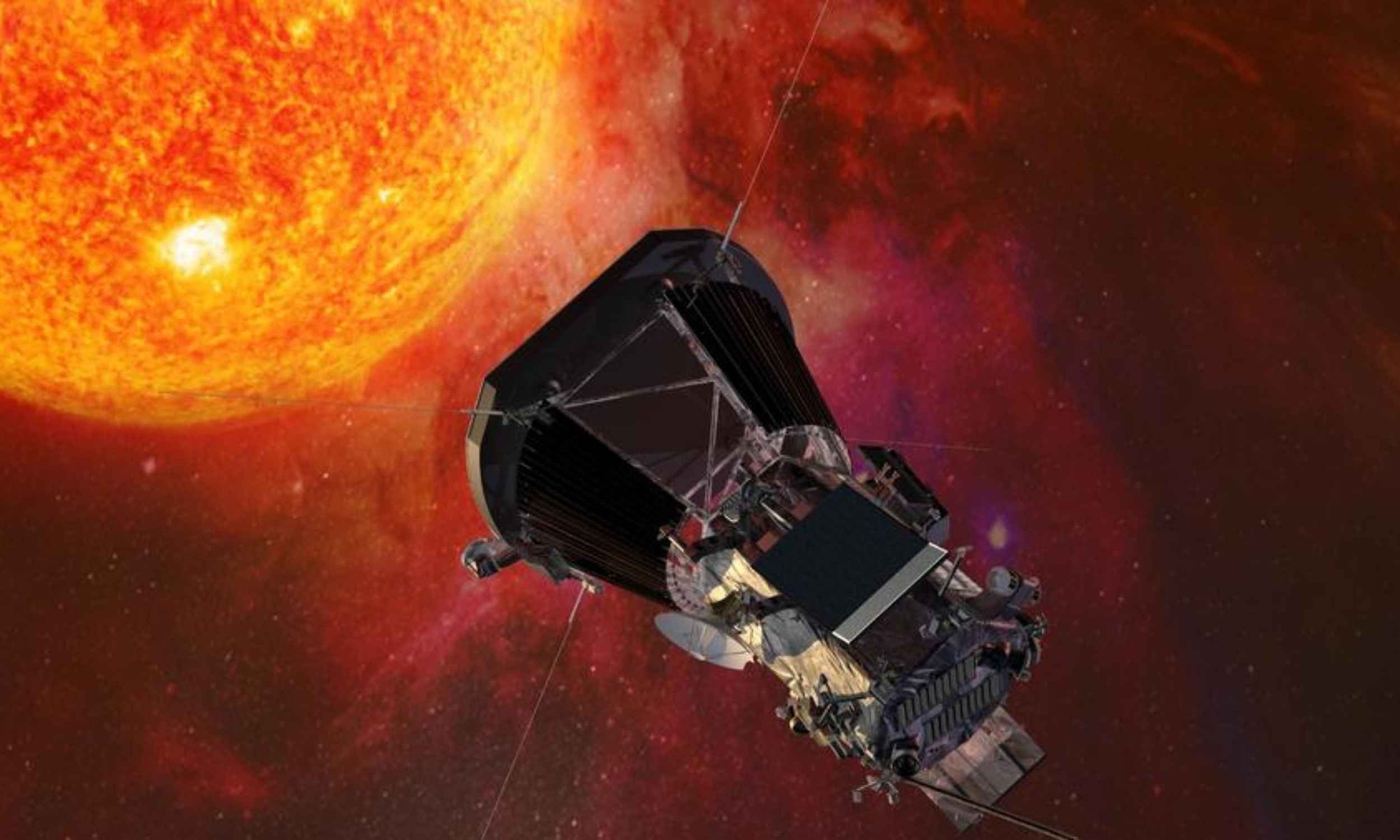
What happens when a spacecraft skims the atmosphere of our star, in a region hotter than a blast furnace and far beyond any astronaut’s reach? On New Year’s Day, we started to find out.
After flying just about 3.8 million miles above the solar surface on December 24, NASA’s Parker Solar Probe checked in with Earth and confirmed that all its systems and science instruments are healthy and working normally. This brief status tone, followed by a stream of detailed telemetry beginning January 1, means humanity’s closest ever dive into the Sun’s atmosphere was a success.
According to NASA, the spacecraft flew through the outer solar atmosphere at roughly 430 thousand miles per hour, once again breaking its own record as the fastest human made object.
It did this while passing only about 6.1 million kilometers from the solar surface, close enough that small changes in the Sun’s activity can mean the difference between a relatively smooth ride and a storm of charged particles.
During this closest approach, Parker operated on its own. Solar plasma and the geometry of the orbit cut off radio contact, so the team at Johns Hopkins Applied Physics Laboratory had to wait until after the flyby to hear a simple “I am ok” signal.
The detailed telemetry that arrived at the start of the year confirmed that Parker followed its preloaded commands and kept its instruments taking measurements as it tore through the corona.
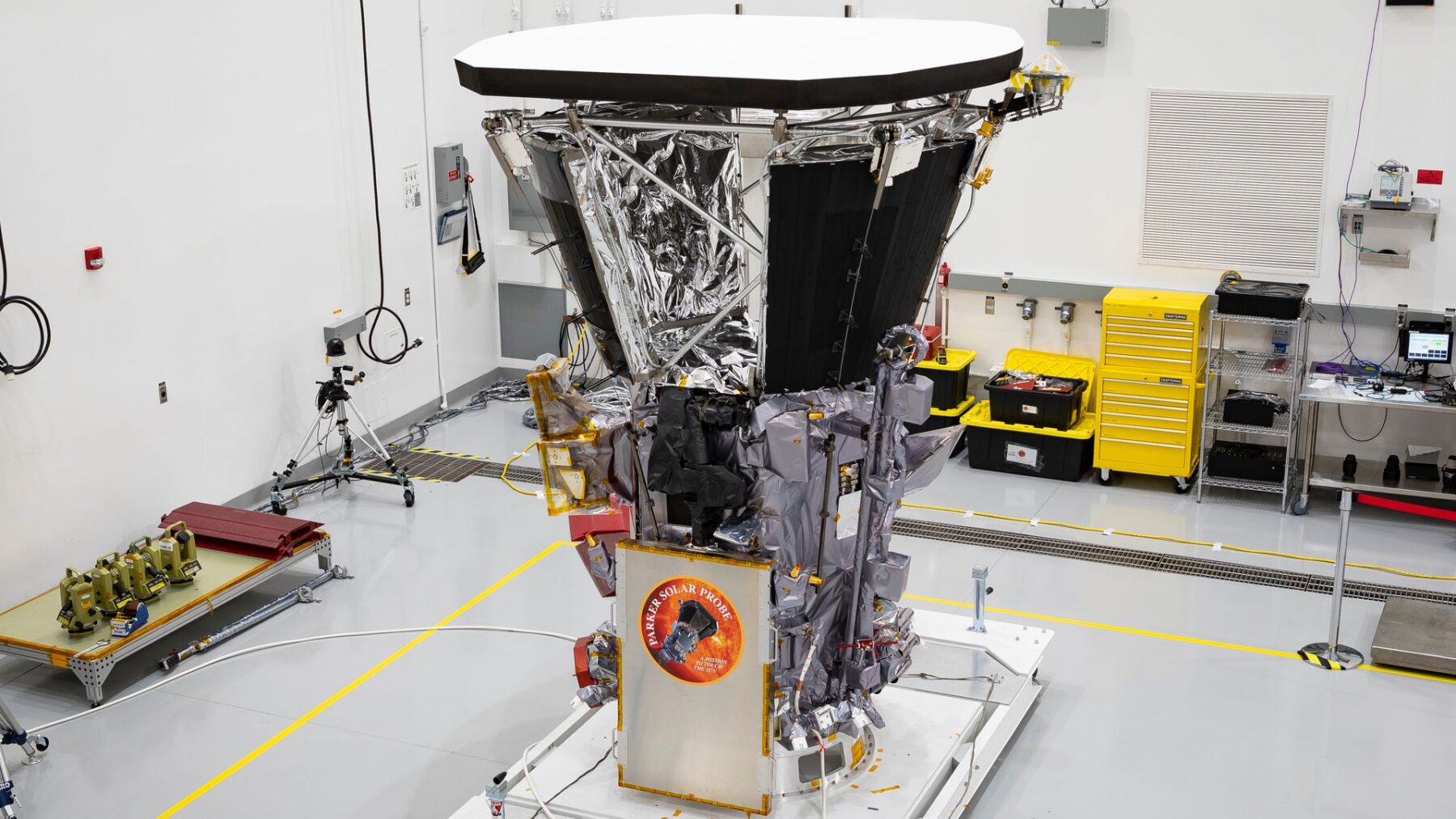
All of this is happening in an environment that would instantly destroy an unprotected spacecraft. The Sun’s outer atmosphere reaches temperatures of hundreds of thousands to several million degrees Fahrenheit, yet Parker’s carbon composite heat shield keeps its instruments near room temperature.
Engineers designed that shield to shrug off temperatures well above 1,400 degrees Celsius while the probe flies through thin but extremely energetic plasma.
For scientists, the real excitement begins now. As heliophysics director Joe Westlake put it, “The data that will come down from the spacecraft will be fresh information about a place that we, as humanity, have never been”. In other words, every data packet is a first.
So what are they looking for in all that “fresh information”? To a large extent, Parker exists to solve two linked puzzles. First, why the corona gets so much hotter than the visible surface of the Sun. Second, how the solar wind forms and escapes the star’s gravity to flood the solar system with charged particles.
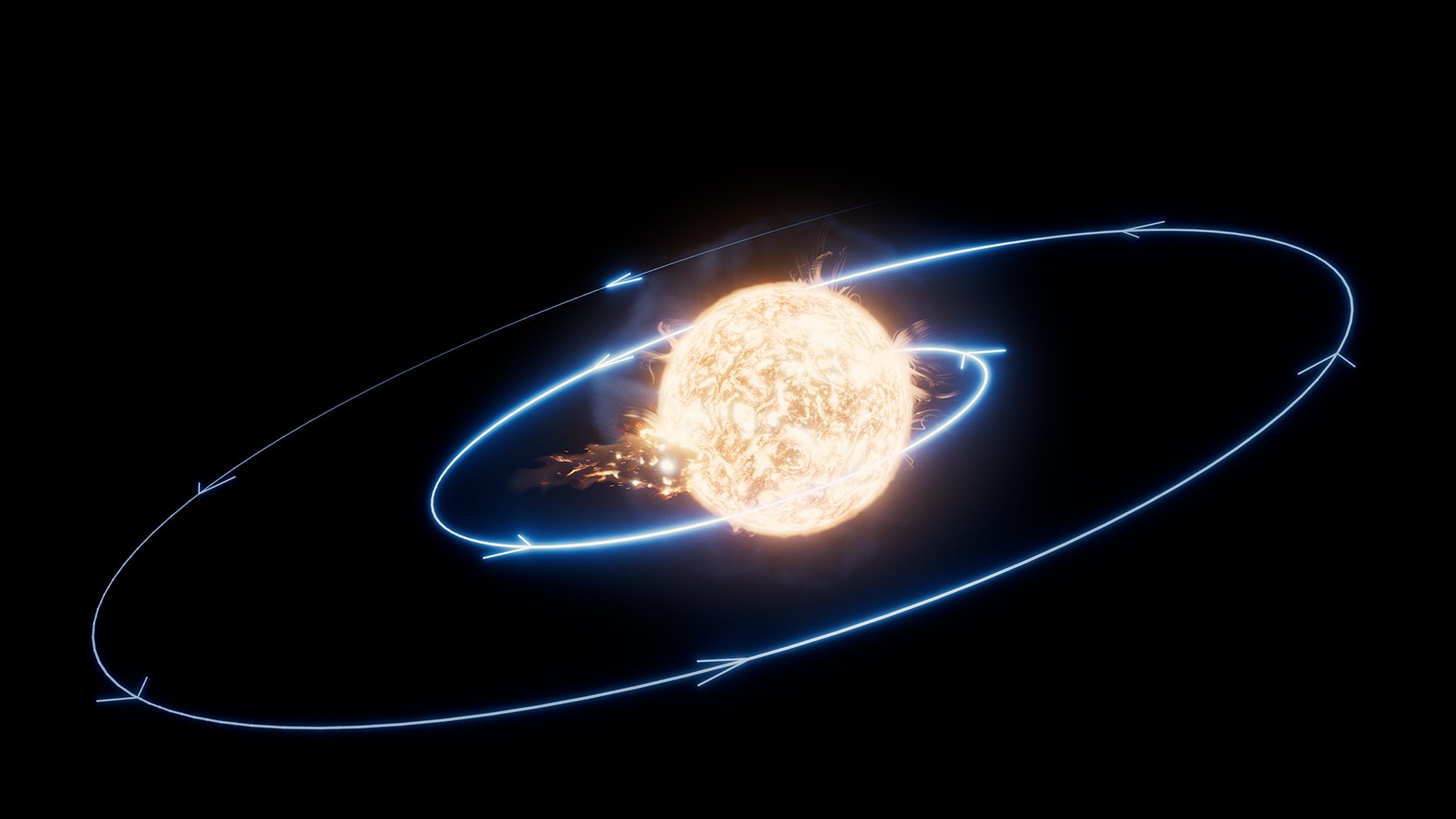
Recent results hint at how transformative these close passes can be. Using data from Parker, researchers have already built the first detailed maps of an invisible boundary called the Alfvén surface, the point at which solar plasma stops looping back on the Sun and joins the solar wind.
Those maps show that the boundary becomes more jagged and turbulent when the Sun is more active, which matters directly for the strength and timing of solar storms that can reach Earth.
Other Parker data and images from its WISPR camera reveal how bursts of solar material called coronal mass ejections can merge and interact as they move outward. When those eruptions line up the wrong way with Earth, they can disturb our planet’s magnetic field, drive spectacular auroras, and sometimes strain power grids, communication systems, and GPS.
Think of the satellite that guides your electric car to a charger, or the high-voltage lines feeding the wind farm that keeps your lights on. All of that depends on reliable space weather forecasts.
That is where Parker connects to everyday life. Better understanding of the solar wind and the Sun’s magnetic outbursts helps grid operators, airlines, satellite companies, and climate monitoring missions plan ahead for disruptive events.
In practical terms, it is a way to protect the digital and electric backbone of a world that is leaning more and more on renewables, electric mobility, and space-based Earth observation.
The current flyby is not the end of the story. Parker will repeat nearly the same close distance and record speed on at least two more passes, planned for March and June 2025, staying in this tight orbit around the Sun for several more years. Each pass adds another layer to a long-term portrait of our star at a time when solar activity is ramping up.
At the end of the day, this mission is doing something very down to Earth. It is turning a daring dive into a star into practical knowledge that can help keep our technology, and the low-carbon systems we depend on, more resilient in the face of an active Sun.
The official statement was published by NASA.