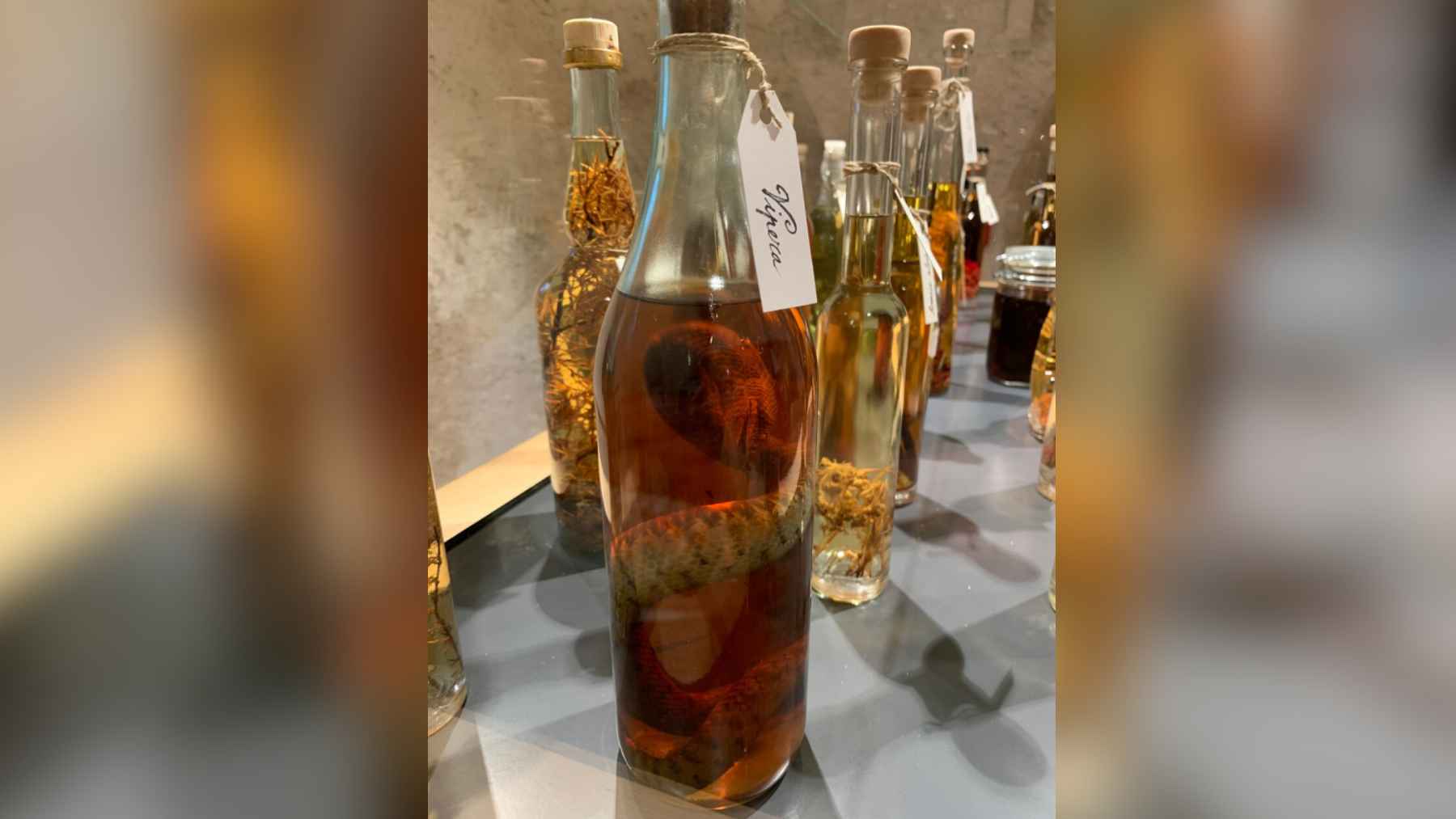
Walk into a mountain hut in the Alps and you might spot a strange bottle on a shelf, clear liquor with a coiled snake inside. The drink is often called “viper grappa,” made with grappa, a strong Italian grape spirit, and today catching a wild viper for alcohol is illegal in many parts of the Alps and can be risky.
Behind that bottle is a paper trail that reads like a warning label. A historical estimate says one pharmacy in Padua or Venice could require 600 to 800 vipers in a single year in the early 1700s, a number repeated in recent research. So how did a snake end up being treated like medicine in the first place?
A bottle with a story
In northern Italy, journalist Samuele Doria wrote that regulars at Alpine huts and old-style taverns sometimes still run into these bottles, tucked between other herbal spirits. It is the kind of thing people photograph after a long hike.
The bigger story is what the bottle represents. Luca Faoro, a curator at METS, the ethnographic museum in San Michele all’Adige, traced the tradition through recipes and local records, including a preserved bottle in the collection, and published the findings in Agricoltura trentina.
Venom as a “cure”
For centuries, vipers were treated as a kind of walking ingredient list. In both official pharmacy books and folk medicine, people believed viper flesh, and sometimes venom, could act as an antidote, meaning something that protects you from poison.
A famous example was theriac, a mixed drug that could contain dozens of ingredients and was marketed as a near-universal remedy. A medical history review on PubMed Central notes that Nero’s physician Andromachus the Younger helped popularize versions that used viper flesh, and the product later became big business in places like Venice.
Hundreds for one pharmacy
The number that stands out is the supply needed to keep the trade going. The essay reports that, at the start of the 1700s, supplying a single pharmacy in Padua or Venice for one year could take 600 to 800 vipers, often captured in mountain areas.
That turns “snake in a bottle” from a bar oddity into a supply chain. If one shop needed that many animals, collectors and sellers had a reason to keep hunting season after season, especially in late spring and early summer when recipes demanded fresh snakes.
When pharmacology changed
In 1896, an anonymous article titled “The Viper” appeared in the Almanacco Agrario, a Trentino farming publication documented in a Fondazione Edmund Mach digital archive. The writer complained that viper bites were common in the warm season, and not only among inexperienced tourists.
His explanation was blunt. He argued that progress in pharmacology, the science of medicines, had convinced doctors to drop viper-based cures around forty years earlier, so hunting stopped because it was no longer profitable, and the snakes then spread.
The recipes, in plain words
The old preparations were closer to kitchen work than modern medicine. Some recipes focused on female vipers caught in late spring, then skinned, with the meat dried and pressed into troches, small dried pills meant to be swallowed.
The most notorious “cure” was viper wine, described as wine left with a trapped snake for about a day before being poured into a fresh bottle. The same source even specified a wide-mouthed flask weighing no more than about 6 pounds, and claimed the drink was ready right away, a claim that does not come with proof.
Snakebites and first aid
The 1896 author framed the issue as a workplace hazard. He wrote that mountain laborers, people cutting hay, hauling wood, or working near stone, were often more exposed than vacationers who wandered off the trail.
Some of his first-aid advice now reads like a time capsule, including tightening a cord above the bite, cutting the wound, and trying to suck out venom, plus drinking hard liquor in large quantities. Modern guidance is different, and the CDC warns people not to cut or suck a snakebite and to get medical help quickly instead of relying on folk remedies.
From hunted to protected
Today, the asp viper, the species most often linked to these Alpine bottles, is listed as protected fauna under the Council of Europe’s Bern Convention appendices. The European Environment Agency’s EUNIS database notes the species falls under Annex III, a list of protected wildlife where countries can regulate or restrict capture.
In practical terms, that means the old “medicine” trade runs into modern wildlife law, not just changing tastes. It also reflects a broader shift away from using wild animals as ingredients and toward treating them as part of an ecosystem, even when they make people uneasy.
The main historical work behind this reporting was published in Agricoltura trentina.