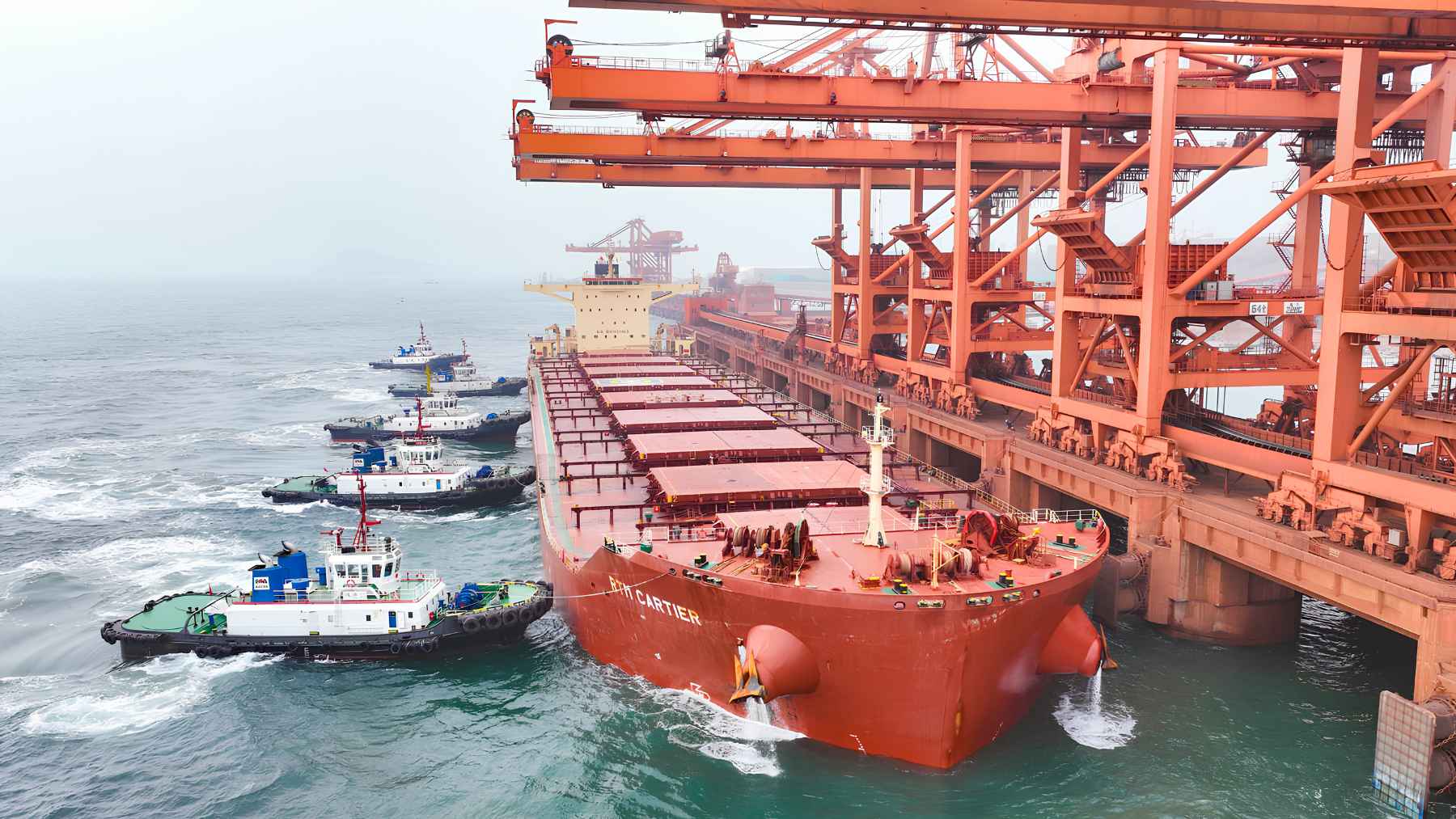
A single bulk carrier does not usually make environmental news. But when the RTM Cartier reached the Port of Dalian on March 25 with Guinea’s first all-SimFer cargo from Simandou, it did more than deliver iron ore to China. It showed that one of the world’s most important untapped high-grade iron ore deposits has moved from promise to market.
The load was 201,500 metric tons, or about 222,000 U.S. tons, sourced only from blocks 3 and 4 of the Simandou project, and it gives steelmakers a new supply of high-quality ore. For Guinea, it is a chance to turn a long-delayed mine into jobs, exports, and leverage. For the climate, the story is more complicated.
A shipment with a long shadow
SimFer is the joint venture between the Government of Guinea, Rio Tinto, and the Chinalco-led Chalco Iron Ore Holdings consortium. Its first all-SimFer shipment followed an earlier joint SimFer and Winning Consortium Simandou cargo that arrived at Rizhao in January 2026. That detail matters, because this was not only a boatload of ore.
It was proof that a full chain is starting to work. The ore began in Guinea’s Simandou mountain range, moved by rail to Morebaya, and then traveled to the RTM Cartier before heading to China. In practical terms, the mine, the rail link, the port operation, and the Chinese receiving system are finally connected.
Why this ore matters?
Iron ore is not glamorous. Still, it sits behind bridges, electric cars, wind turbines, apartment towers, and the everyday steel that holds modern life together. The trouble is, steel is also one of the planet’s dirtiest industries.
The International Energy Agency says the iron and steel sector directly emits about 2.9 billion U.S. tons of carbon dioxide per year, equal to roughly 7% of energy-sector CO2 emissions. Coal still meets around 75% of the sector’s energy and feedstock demand. That is why high-grade ore gets so much attention in climate discussions.
Simandou’s ore is prized because it grades around 65% iron, placing it in the premium segment used for less carbon-intensive steel. Does that make it a climate solution by itself? Not quite. Better ore can help, but deep cuts still depend on cleaner power, hydrogen, recycling, and carbon capture.
China gets first access
China being the first major destination was no surprise. Chinese companies have been deeply involved in Simandou’s ownership, financing, and infrastructure. China also remains the world’s dominant iron ore customer.
Reuters reported that Simandou is 75% Chinese-owned and that China consumes more than 705 of the steelmaking material globally. That gives Beijing a strong reason to welcome new supply from Guinea, especially as it tries to reduce reliance on long-established suppliers such as Australia and Brazil.
The Dalian arrival also came with a practical twist. SimFer said the ore is crushed twice in Guinea and then a third time after arrival in China, helping control size, moisture, and product consistency before it moves to steelmakers. It is not flashy, but anyone who has ever watched a supply chain snarl up knows that small details can decide whether a big project runs smoothly.
Guinea gains a new lever
For Guinea, Simandou is much more than a mine. It is a rare chance to connect remote mineral wealth with ports, railways, state revenue, and industrial ambition. At full scale, Rio Tinto says Simandou is expected to export up to 120 million metric tons per year, or about 132 million U.S. tons, with SimFer contributing half.
That includes more than 370 miles of multi-user railway and port infrastructure, a huge undertaking in a country where infrastructure has often limited economic growth.
SimFer said its rail spur is mechanically complete and operational, while its mine and port were 73% and 75% complete respectively during the first quarter of 2026. The ramp-up is expected to take 30 months toward roughly 66 million U.S. tons a year from SimFer.
But big mines bring big responsibilities. Rio Tinto says the partners have committed to international standards including the International Finance Corporation Performance Standard framework, which covers biodiversity, labor rights, and community impacts. On the ground, those promises will matter as much as the shipping milestones.
The green steel question
Here is the tricky part. High-grade iron ore can support cleaner steelmaking, but mining it still means digging into landscapes, moving material across hundreds of miles, and shipping it across oceans. A greener steel supply chain is not created by ore quality alone.
The IEA warns that steel emissions must fall sharply to align with its Net Zero Emissions by 2050 scenario. It also says deeper progress will require new technologies such as electricity-based steel production, hydrogen, and carbon capture. In plain English, the ore helps, but the furnace matters too.
That is why Simandou is being watched far beyond mining circles. It could feed cleaner steel, challenge older supply routes, and give Guinea a stronger voice in a market long dominated by other countries. Or, if handled poorly, it could become another example of resource wealth that moves faster than environmental safeguards.
What happens next?
SimFer says the project is now exporting product to global markets, with the first iron ore leaving Guinea in December 2025 and a full cargo reaching China in March 2026. Chris Aitchison, Managing Director of SimFer, called the ongoing exports “a major achievement for the partnership and for Guinea.”
The next test is not just whether more ships arrive. It is whether Guinea captures durable benefits, whether local communities are protected, and whether steelmakers use this premium ore as part of a real decarbonization plan. At the end of the day, a cleaner steel future will not be built by one shipment.
Still, this one matters. A ship left Guinea, reached China, and turned Simandou from a long-running industrial dream into a producing global asset.
The press release was published on SimFer.