A small house in northern Italy is raising a big question for construction. What if part of a home could be printed from the soil beneath it, instead of being assembled from truckloads of conventional bricks and blocks?
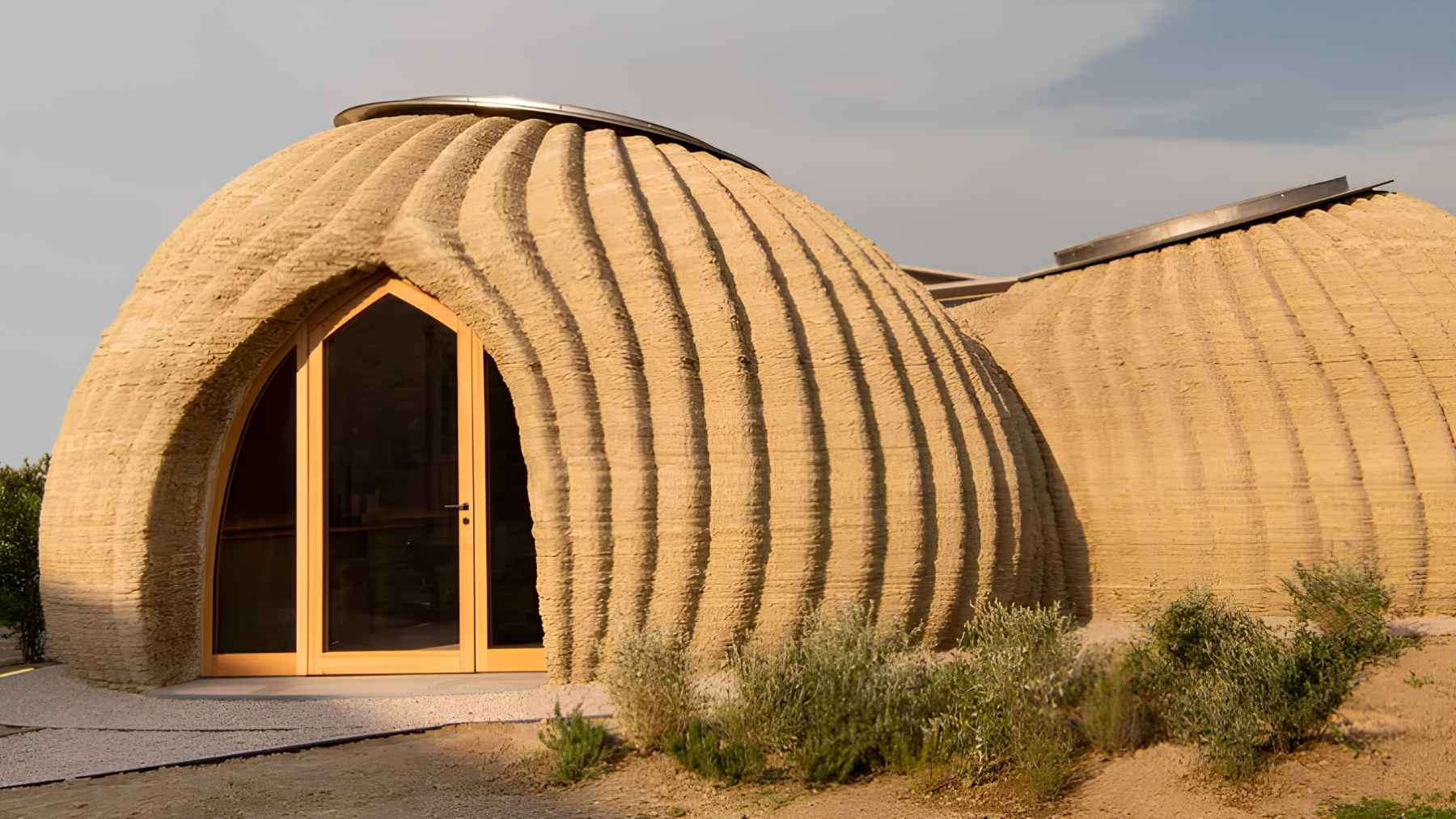
The prototype is called TECLA, a roughly 646-square-foot dwelling made from local raw earth in Massa Lombarda, near Ravenna. Created by Mario Cucinella Architects with the Italian 3D-printing company World’s Advanced Saving Project (WASP), the project was completed in 2021 and shows how digital tools can reshape one of humanity’s oldest building materials.
The ground became the supply chain
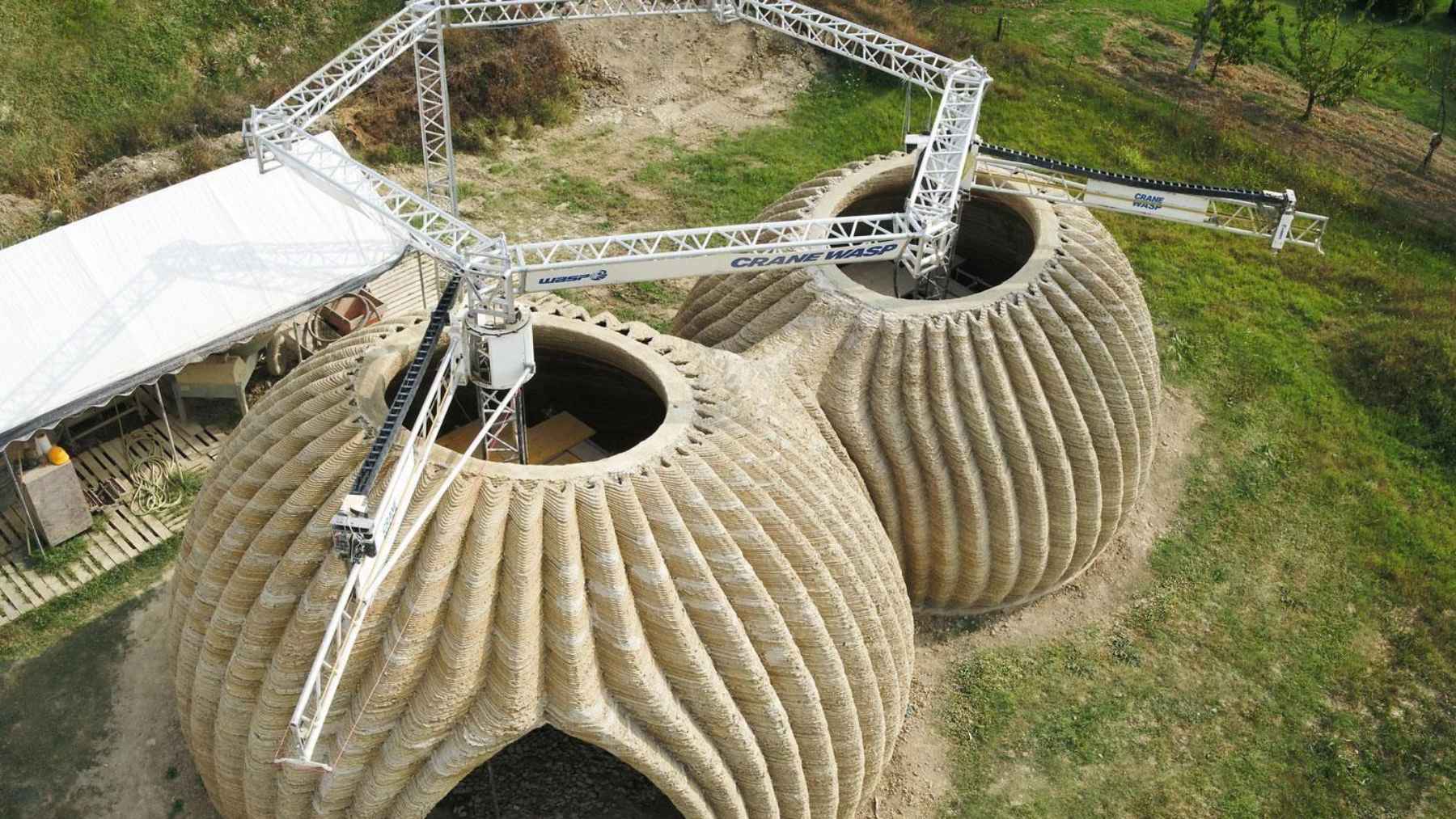
TECLA does not look like a typical house. It is made of two rounded, connected domes, with curved walls that give it a futuristic shape while still recalling ancient mud homes.
The key idea is simple enough. Instead of bringing in stacks of traditional bricks, the team used raw earth from the local area and shaped it through a large 3D printer. The site itself became part of the supply chain.
That matters because construction is not just about buildings. It is also about trucks, dust, cutoffs, discarded packaging, and piles of broken material that anyone who has passed a busy work site will recognize.
How the house was printed
The printing system used synchronized robotic arms to place layers of earth-based material one on top of another. Think of it as a giant pastry bag, but guided by computer instructions instead of a human hand.
According to WASP, TECLA involved about 200 hours of printing, 350 layers, and roughly 93 miles of material extrusion. The company also lists about 7,000 machine commands and around 2,100 cubic feet of natural material used for the structure.
Each layer was about half an inch thick. That may sound thin, but layer after layer, the material built up into walls, a roof, and an outer shell. Slowly, mud became shelter.
Why the domes matter
The domes are not just there to look dramatic. A curved shell spreads weight more evenly than many flat surfaces, which helps the building stand as one continuous form.
Inside, the prototype includes a living area, a sleeping area, and a bathroom. Some furniture elements were molded together with the structure, which blurs the usual line between walls, finishes, and furnishings.
That choice has a trade-off. Built-in features can make the home faster to complete, yet they can also make rooms less flexible later. A printed bench is clever, but you cannot move it around like a couch.
The waste problem behind it
The timing of this experiment is important. A 2026 report from the UN Environment Programme and the Global Alliance for Buildings and Construction says buildings and construction account for around 37% of global carbon dioxide emissions and nearly half of global material extraction.
In the United States alone, the U.S. Environmental Protection Agency estimated that construction and demolition debris reached 600 million tons in 2018. That was more than twice the amount of municipal solid waste generated that year.
So, a house like TECLA is not just a design curiosity. It points to a practical issue. If builders can use more local material and waste less on site, the effect could be felt far beyond one small dome-shaped home.
Not every soil will work
Still, there is a catch. Local earth is not magic dust. It has to be tested, mixed, and adjusted before it can pass through a printer and hold its shape.
The material must be soft enough to flow through the machine, but firm enough to stay in place after it comes out. That balancing act is one of the hardest parts of this kind of construction.
Software also plays a major role. The printer has to control speed, wall thickness, and the path of each layer while the fresh structure is still supporting its own weight.
Ancient mud meets robotics
Mud building is thousands of years old. People have long used earth, clay, straw, and other local materials to make homes suited to their climate.
What makes TECLA different is the precision. The same basic material is now shaped by digital modeling, climate studies, and robotic arms. It is old knowledge with a new tool in its hand.
The name TECLA comes from “technology” and “clay,” which captures the project’s central idea. It is not trying to make every house look like a spaceship. It is asking whether future homes can borrow more from the ground under our feet.
What still has to happen
For all its promise, TECLA remains a prototype. It is not a mass-market house that can simply be copied in every city, desert, or rainy suburb.
Local laws, soil quality, weather, structural testing, labor skills, and access to large printers all matter. A method that works in one Italian technology park may need serious changes before it works somewhere else.
Mario Cucinella described the completed structure as “no longer just a theoretical idea,” and that is probably the fairest way to view it. Not a finished answer to the housing crisis, but a working clue.
A small house with a bigger lesson
At the end of the day, TECLA’s biggest lesson may be about where building materials come from. Modern construction often depends on long supply chains, heavy transport, and standardized products that arrive from far away.
This prototype flips that habit, at least to a large extent. It suggests that some future homes could be designed around the land, not just dropped onto it.
That does not make printed mud houses a universal solution, but it does make TECLA a useful experiment in a world where the construction sector is under pressure to cut waste, reduce emissions, and build smarter.
The official project work has been published by Mario Cucinella Architects and WASP.