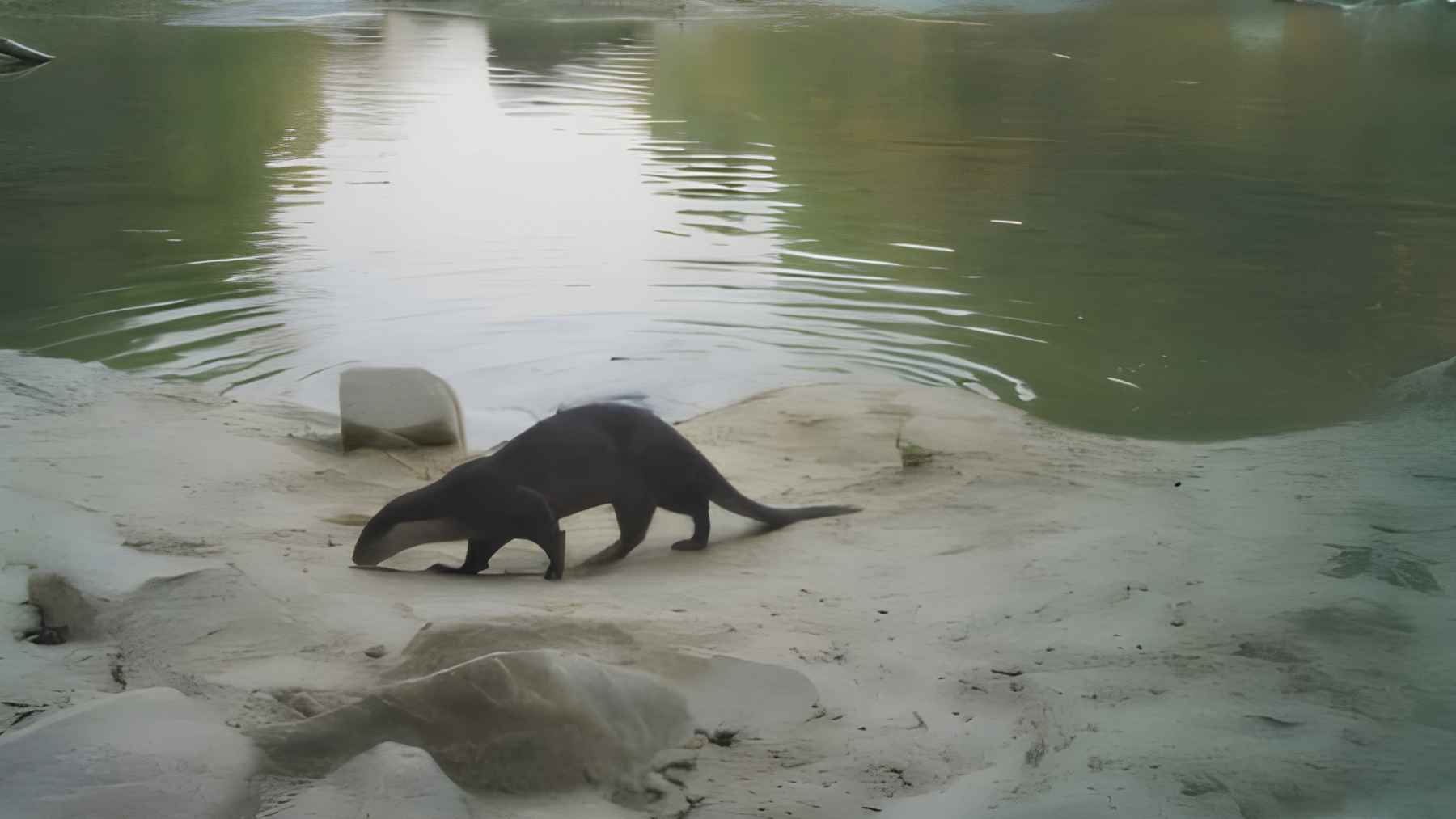
Camera traps set up to study tigers in northern India have delivered an unexpected discovery. Instead of only recording big cats, researchers captured the first confirmed photographic evidence of smooth-coated otters living inside Nandhaur Wildlife Sanctuary in Uttarakhand.
The finding matters because these otters are not just cute river animals. They are top freshwater predators, and their presence suggests that at least parts of the sanctuary’s river system still have clean water, enough fish, and quiet banks where wildlife can survive.
A surprise in tiger country
The cameras were originally placed for a tiger survey, not an otter search. That is what makes the discovery so useful, since it shows how much can still be missed even in protected landscapes that scientists already study closely.
The work was led by Nishant Bhardwaj of the Wildlife Institute of India, with Hritik Nautiyal, Harish Guleria of the Zoological Society of London, and Bilal Habib. The journal page describes the record as the first photographic evidence of smooth-coated otters from Nandhaur Wildlife Sanctuary.
So what did the cameras actually catch? Short clips and images showed several otters moving along the water’s edge, first near a small pool and later among large river rocks. It was a small glimpse, but a meaningful one.
What smooth-coated otters are
Smooth-coated otters are medium-sized mammals that split their time between land and water. Adults can weigh about 24 pounds and stretch more than 35 inches from nose to tail, with a sleek body built for swimming.
They usually live in vocal family groups. These groups hunt fish, shrimp, frogs, crabs, insects, and sometimes birds, using whistles and sharp calls to stay in contact.
In simple terms, they are river specialists. When a family of otters is moving through pools and rocky channels, it often means the waterway still has food, shelter, and enough space for animals that need both land and water.
Why the sighting matters
Smooth-coated otters are listed as Vulnerable on the global Red List, and the International Union for Conservation of Nature (IUCN) Otter Specialist Group notes that their threats include poaching, habitat loss, accidental trapping, the pet trade, and pollution. Their range is broad, but it has been shrinking in many places.
That is why a few seconds of footage can matter. For a species that is shy, often active at night, and easy to overlook, a confirmed camera record gives conservationists a solid starting point.
The otters also tell a bigger story about freshwater health. If the fish vanish, the banks are disturbed, or the water becomes too polluted, animals like these are often among the first to disappear.
Rivers need quiet edges
The Nandhaur record points to more than one animal passing through. The cameras photographed family groups using calm pools and more turbulent rocky sections, which suggests the sanctuary’s rivers may offer several useful habitats.
That does not mean the whole landscape is safe. Otters need riverbanks where they can rest, raise young, and escape disturbance, and those needs can clash with fishing, roads, livestock movement, and other human activity.
At the end of the day, a river is not just the water in the channel. It is also the mud, boulders, vegetation, and quiet corners along the edge.
Earlier studies add context
The new record fits with earlier research showing that smooth-coated otters can influence river life through what they eat. A study in Kerala examined their feeding habits and their importance for fish populations, while later research in Himalayan foothill rivers found that habitat quality and human disturbance shape where otters are likely to appear.
That background helps explain why this sighting is not just a wildlife checklist update. It adds another piece to the map of where the species survives in India’s northern river systems.
It also raises a simple question. If cameras set for tigers found these otters in only a short survey, what else might be moving through Nandhaur’s waterways without being recorded?
More surveys are needed
The researchers argue that systematic otter surveys are now needed across the Nandhaur landscape. Wider camera networks, track surveys along riverbanks, and interviews with local fishers could help scientists understand how many otters are there and where they travel.
That kind of work is especially important because India gives the smooth-coated otter the highest level of legal protection under Schedule I of the Wildlife Protection Act. Effectively, harming or capturing one without permission is treated as a serious offense.
For now, the discovery is a reminder that even familiar forests can still surprise us. Tiger country, it turns out, may also be otter country.
The official study has been published in the Journal of Threatened Taxa.