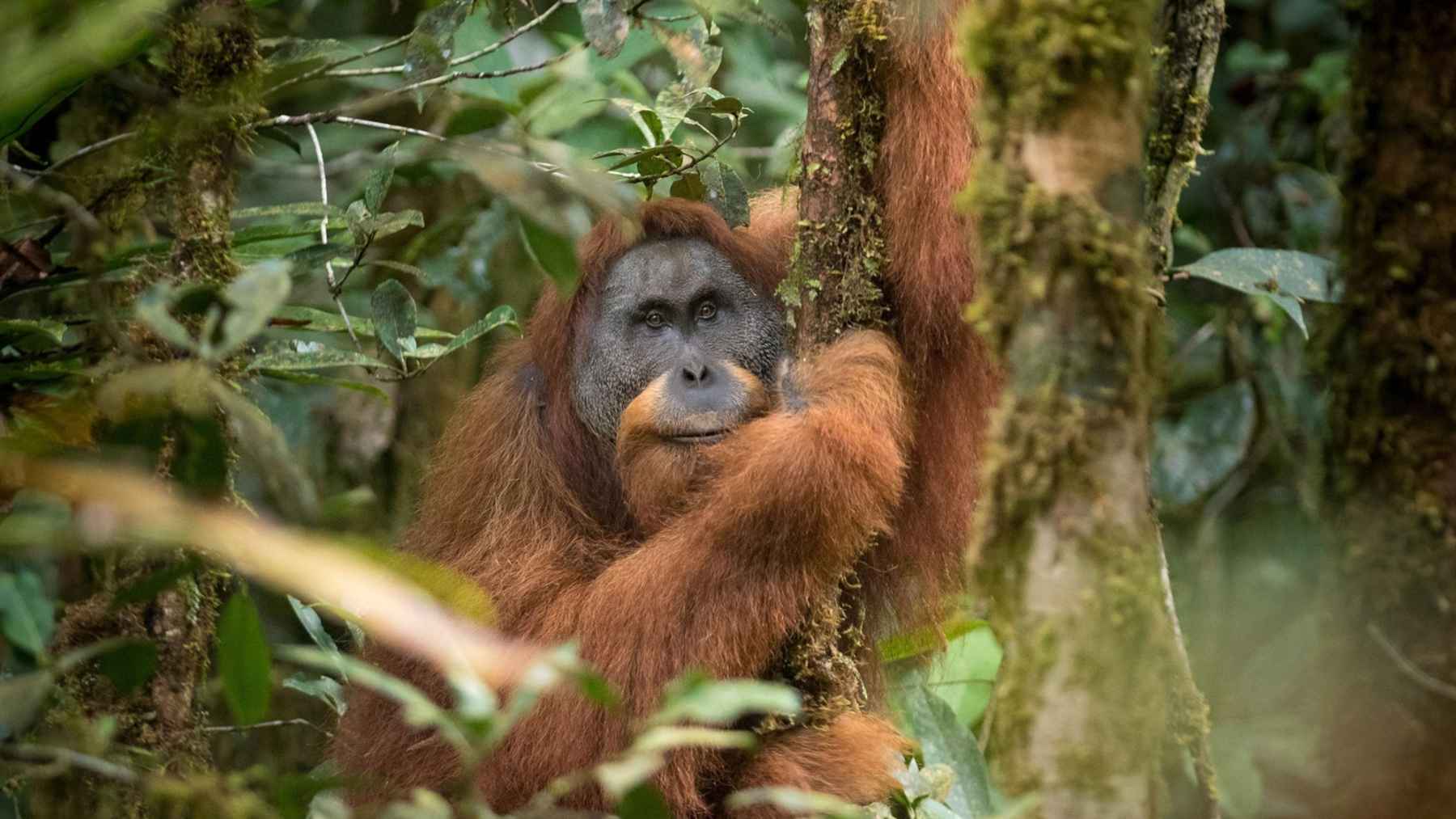
The world’s rarest great ape may have just suffered a brutal blow from one extreme weather event. A new study says torrential rain from Cyclone Senyar in November 2025 triggered thousands of landslides in Indonesia’s Batang Toru ecosystem, likely killing about 58 Tapanuli orangutans, a critically endangered species with fewer than 800 individuals left in the wild.
That number may sound small at first glance. But for an animal already boxed into a few forest blocks, losing dozens of individuals in a matter of days is not just sad. It is a warning about how climate change can turn from a slow-moving background threat into a sudden disaster of mud, broken trees, and vanished canopy.
A rare ape with little room to lose
The Tapanuli orangutan (Pongo tapanuliensis) was recognized as a separate species in 2017 and is found only in the Batang Toru landscape of North Sumatra. The International Union for Conservation of Nature lists it as Critically Endangered and calls it the rarest great ape in the world.
These orangutans live mostly in the forest canopy, where branches are not just scenery but roads, shelter, and access to food. When forest is split by roads, mines, dams, or landslides, daily life becomes harder. Imagine your neighborhood sidewalks suddenly ending at cliffs and mud pits.
How one storm became a landslide disaster
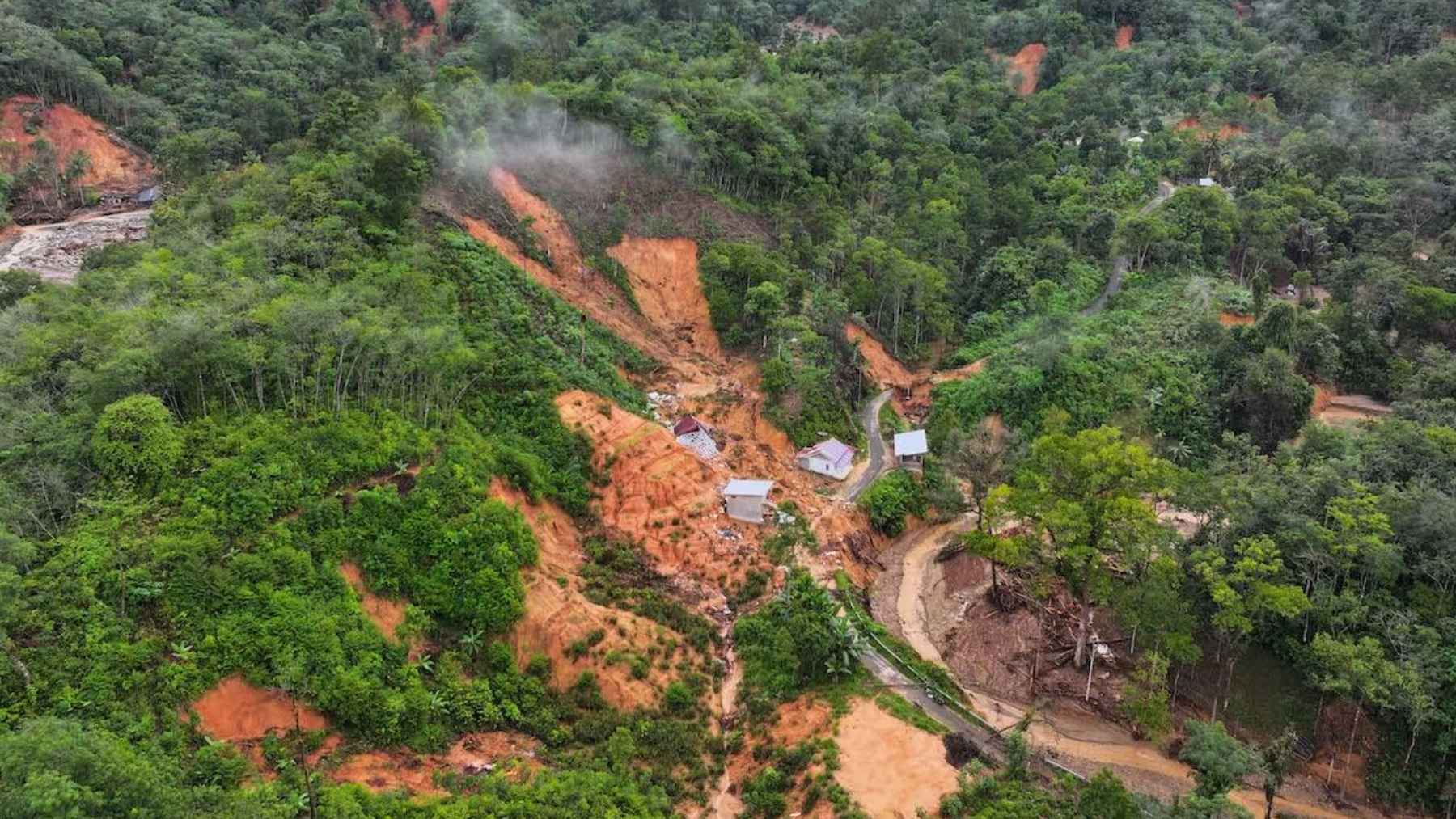
A landslide happens when soil, rock, trees, and debris lose their grip on a slope and rush downhill. In Batang Toru, researchers said the failures were relatively shallow but extremely fast, turning into destructive debris flows that left wildlife little time to react.
Using satellite images, the research team mapped more than 50,000 landslide scars in the West Block of Batang Toru. They estimated that about 20,500 acres of forest were affected, amounting to nearly 12 percent of the forest cover in that key area.
Counting the orangutans that may have died
The researchers overlaid the mapped landslides with estimates of where orangutans were living. That method led to the central estimate of 58 animals in affected areas, equal to about 11 percent of the West Block population and roughly 7 percent of the species’ total wild population.
Erik Meijaard, lead author and chief scientist at Borneo Futures, said animals caught in steep, rugged terrain during a fast collapse would have had “very minimal” chances of survival. In practical terms, many were likely buried, drowned, struck by falling trees, or fatally injured rather than simply pushed into nearby forest.
Climate change is part of the story
The study used climate attribution, a method that compares today’s weather with computer simulations of a world without human-driven warming. The team concluded that human-caused climate change increased the rainfall intensity linked to Cyclone Senyar by between 9 and 50 percent, alongside natural climate patterns such as La Niña and the Indian Ocean Dipole.
That does not mean climate change created every raindrop. It means the storm likely carried more rain than it otherwise would have, and once rainfall crosses a dangerous threshold, even primary forest can fail to hold steep slopes in place. That’s where conservation gets harder.
Why 58 is such a dangerous number
Tapanuli orangutans reproduce slowly. Females usually give birth only once every six to nine years, and earlier research cited by the authors suggests that sustained extra losses above 1 percent a year could push the species toward extinction.
The real toll could also be higher than 58. The estimate counts direct landslide impacts, not deaths from hunger, injuries, canopy collapse, or the longer-term loss of food trees. Researchers warned that vegetation in the damaged zones may take years to recover, forcing survivors to travel farther and spend more energy just to eat.
Old threats did not vanish
Before the storm, Batang Toru was already under pressure from habitat fragmentation and development. The IUCN previously called for a moratorium on projects that could affect the species, noting that some critical parts of its range remained open to energy infrastructure, mining, and logging.
The Martabe gold mine and the Batang Toru hydropower project have both drawn scrutiny in the region. According to the provided source material, some operations were paused after the November 2025 disaster, but concerns remain over future activity, including a proposed open-pit mine expansion of about 124 acres that would require more tree clearing.
Researchers call for faster protection
The researchers are urging stronger protection for the Batang Toru ecosystem, including expanded habitat, better connections between isolated forest blocks, and wildlife bridges where roads cut through orangutan range. Serge Wich, a primatologist at Liverpool John Moores University, said reconnecting the western and eastern areas could help animals disperse and maintain genetic exchange.
Panut Hadisiswoyo, founder of the Orangutan Information Centre, said he had not yet seen concrete plans to expand habitat or rehabilitate damaged landslide areas. Indonesia’s forestry ministry told Mongabay it supports collaboration to restore degraded habitat and protect remaining natural forest, though the provided material notes that it did not directly address the estimate of 58 dead orangutans.
Friederike Otto of Imperial College London said the findings show how tightly climate change and biodiversity loss are linked. And in the end, that may be the hardest part to ignore. Saving the Tapanuli orangutan now means protecting forest, reconnecting habitat, limiting new damage, and planning for storms that may hit harder in a warmer world.
The official study has been published in Current Biology.