For generations, Giant’s Causeway has sat between myth and science. The legend says the Irish giant Finn McCool built the stone path to reach his Scottish rival, but new research points to something even larger than folklore (a volcanic event that reshaped part of the North Atlantic world).
Scientists with the Geological Survey of Northern Ireland (GSNI) and the British Geological Survey now say Northern Ireland’s volcanic rocks formed in a far shorter window than previously believed.
Instead of stretching across about 13.5 million years, the region’s volcanic activity appears to have been concentrated into roughly 5.5 million years, placing Giant’s Causeway inside a much sharper timeline of Earth history.
A legend meets lava
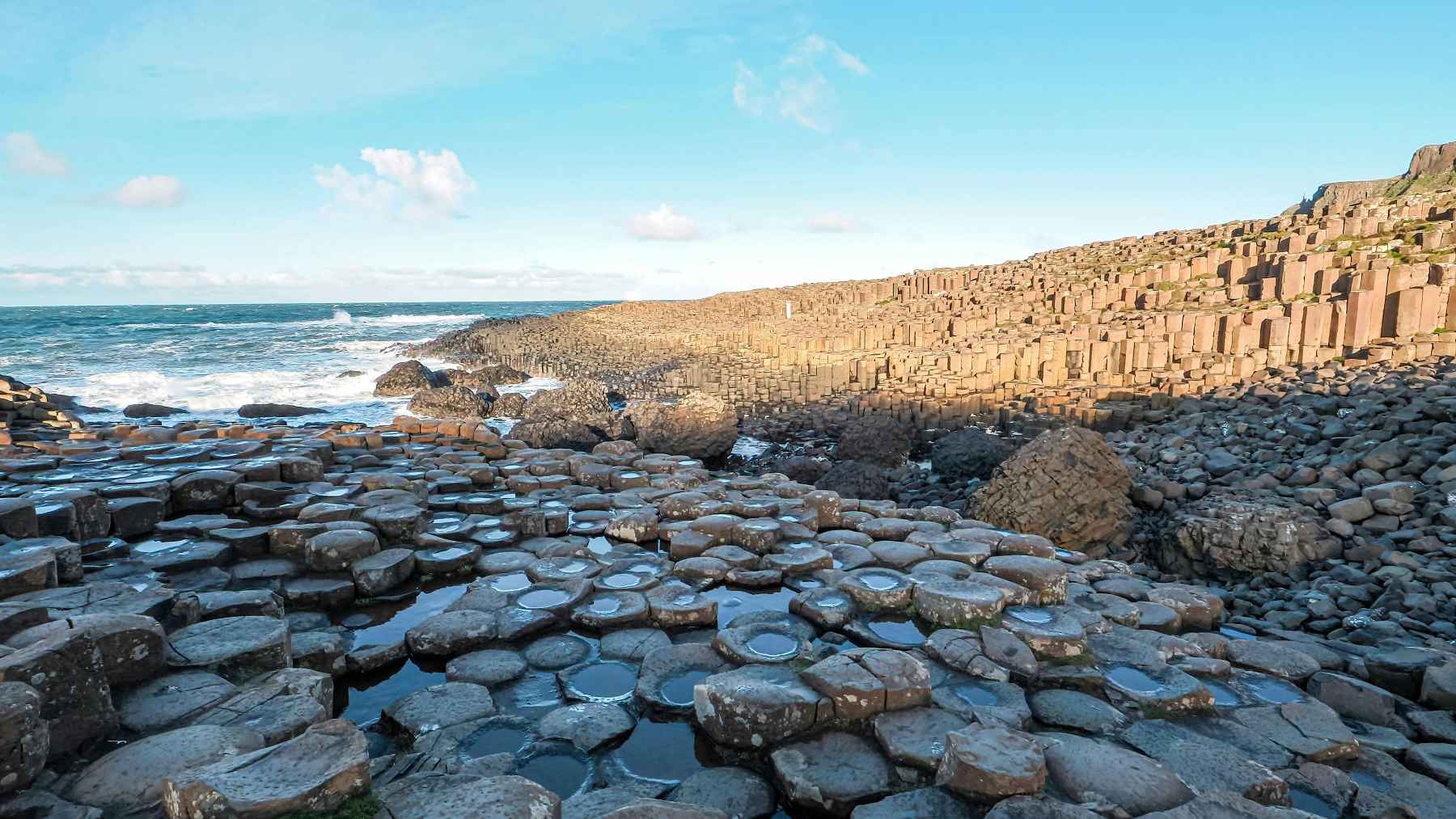
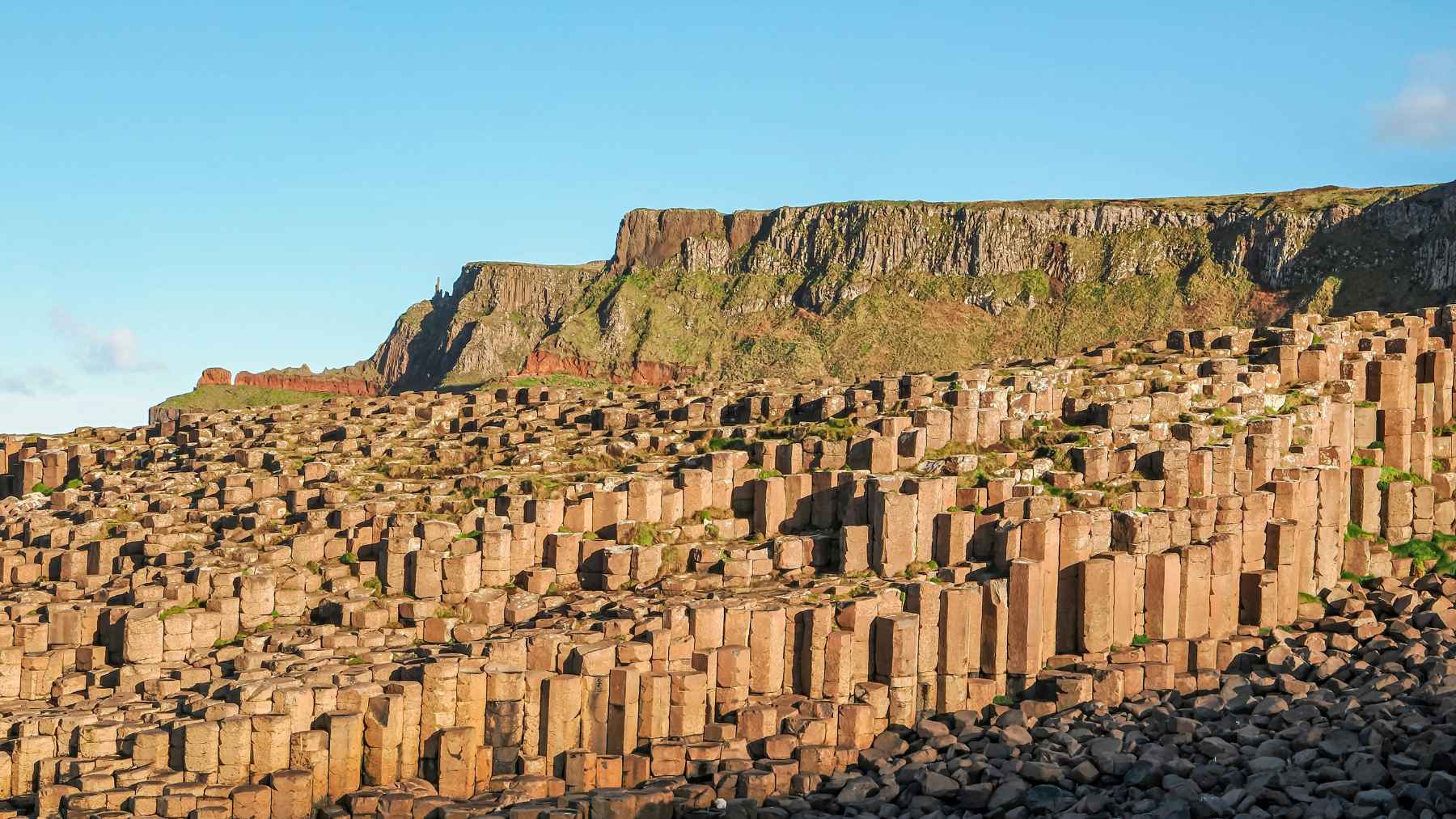
The Giant’s Causeway, located on the coast of County Antrim about 60 miles from Belfast, is made of around 40,000 basalt columns. Many are famously hexagonal, giving the shoreline the look of a giant staircase slipping into the sea.
The real story begins around 60 million years ago, when molten rock pushed up through cracks in Earth’s crust.
As thick lava cooled, contracted, and fractured, it created the tightly packed columns that now draw visitors from around the world.
The myth still matters, of course. It gives the place its name and its charm. However, science is now adding a new layer to the story, and it is much bigger than one coastline.
A faster volcanic pulse
“For decades, it was believed the region’s volcanic activity, responsible for the Giant’s Causeway, stretched over 13.5 million years during a time period we refer to as the Paleogene,” Prof. Mark Cooper, GSNI Chief Geologist, said in the British Geological Survey statement.
“Our research shows that this activity was far more concentrated, with geological processes acting much faster than previously thought.”
That does not mean each stone column took millions of years to cool. Effectively, the study is narrowing the timing of the wider volcanic episode that built the rocks of Northern Ireland, including the Antrim Plateau, the Mourne Mountains, Slieve Gullion, and the Giant’s Causeway.
Why does that matter? Because it links Northern Ireland more clearly to the North Atlantic Igneous Province, a major volcanic system whose traces are found across the North Atlantic region, including rocks as far away as Greenland.
A global connection
“Cutting-edge analysis has allowed us, for the first time, to place the volcanic activity that led to the formation of the Giant’s Causeway within a much more precise global context,” Dr. Simon Tapster, a geochronologist at the British Geological Survey, said in the same announcement.
That means the causeway is not just a photogenic coastal landmark. To a large extent, it is a surviving page from a much larger geologic chapter, when lava, shifting crust, and tectonic movement helped shape the North Atlantic.
The findings also help explain why similar volcanic rocks appear in places such as Scotland, the Faroe Islands, Greenland, and other North Atlantic landscapes.
The causeway may look local when you are standing on it with sea spray in your face, but its story is continental in scale.
How the columns formed
So, how did nature make something that looks almost engineered? The answer lies in cooling lava.
When lava cools, it shrinks. That shrinkage creates stress in the rock, and the cracks spread in patterns that often form straight-sided shapes. Hexagons are especially efficient, which is why the causeway looks like a stone honeycomb.
Not every column is perfectly six-sided. Some have four, five, seven, or more sides, but the overall effect is so orderly that it has puzzled and amazed visitors for centuries. It is easy to see why older generations reached for giants before geologists reached for lab instruments.
Tourists are now part of the story
The Giant’s Causeway is not only a scientific site. It is also one of Northern Ireland’s most visited natural attractions, with 678,233 visits recorded in 2025 by the Association of Leading Visitor Attractions.
That popularity brings attention, income, and global recognition, but it also brings pressure, the kind that can start with something as small as a coin from a pocket.
The National Trust has warned that visitors have been wedging coins into cracks in the basalt columns. It may seem like a harmless travel ritual, like tossing a coin into a fountain, but on this coastline the damage can be real.
Small coins, big damage
According to the National Trust, coins trapped in the cracks corrode and expand, causing the basalt to flake, stain, crack, and crumble. Saltwater spray makes the problem worse, especially when coins contain layers of different metals that break apart as they rust.
Dr. Cliff Henry, the National Trust’s Nature Engagement Officer at the North Coast, urged visitors to stop the practice.
“We know some may want to leave a token of their visit, but the coins are causing damage and we’re urging visitors to stop the practice and to leave no trace so that this natural wonder remains special for future generations,” he said.
A conservation project has been working to remove coins carefully, but some are so corroded that taking them out could cause even more harm. One masonry specialist warned that just six coins can create enough pressure to lift about 6.6 U.S. tons of stone.
Why this discovery matters
At first glance, the new volcanic timeline may sound like a detail for specialists. Yet it changes how scientists understand Northern Ireland’s place in one of Earth’s major volcanic stories.
It also reminds us that famous natural landmarks are not frozen museum pieces. They are still changing, shaped by waves, weather, salt, visitors, and now by the careful work of geologists and conservation teams.
The takeaway is simple. Giant’s Causeway was not built by giants, but its real origin is still giant in scale. And keeping it intact may come down to something very ordinary (leaving the coins in your pocket).
The study was published in Geology.