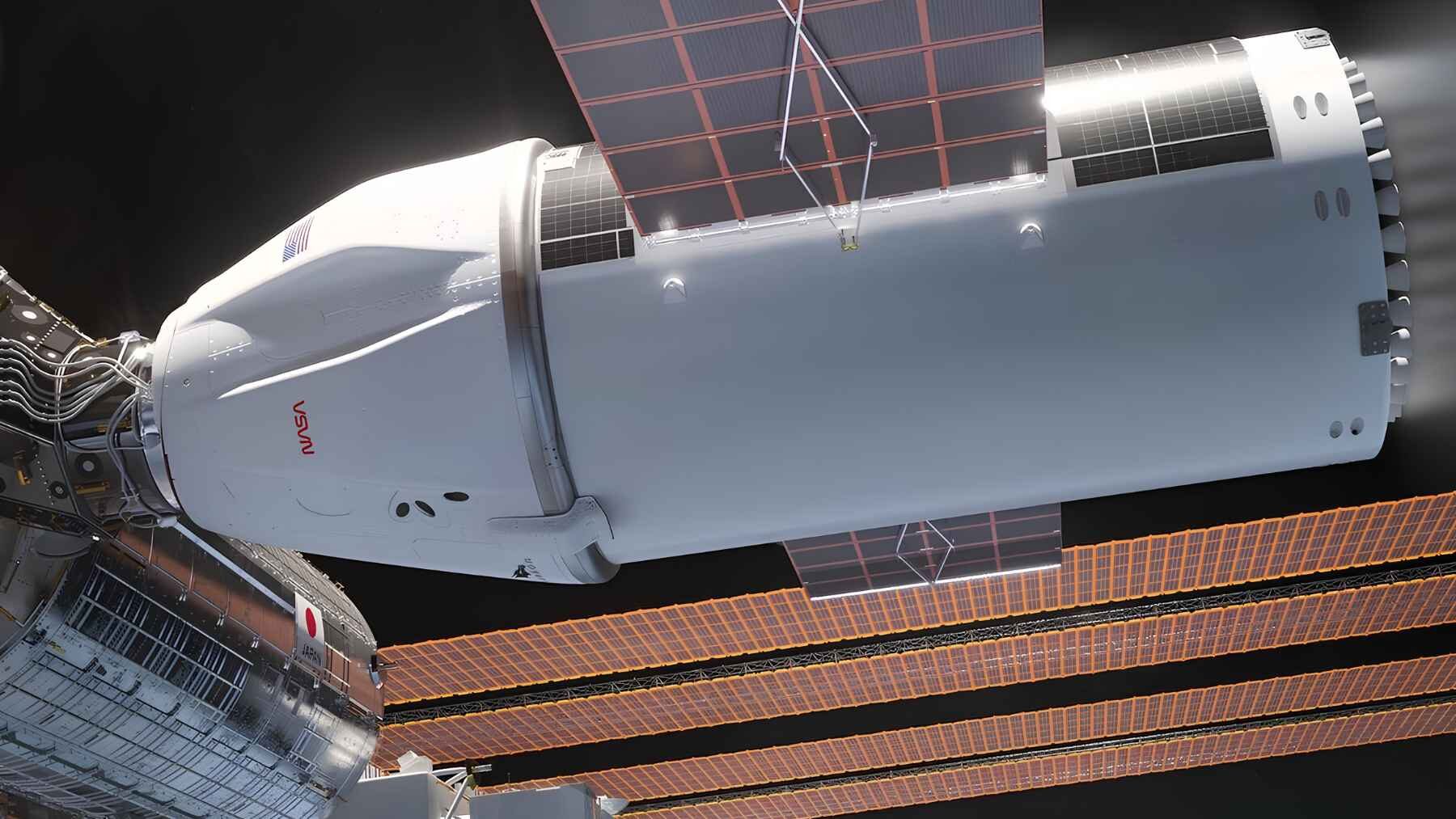
For over 25 years, the International Space Station has served as a laboratory, workplace, and home above Earth. Now, NASA is spending hundreds of millions on a spacecraft designed for a singular, destructive purpose: dragging the massive 945,000-pound complex out of orbit and crashing it safely into a remote ocean corridor once its final crew departs.
“Point Nemo” often gets the headlines; however, NASA has not announced a bullseye on that single coordinate. The real plan is to choose an uninhabited ocean corridor and control the debris footprint as the station breaks apart during reentry.
A spacecraft for the last push
NASA selected SpaceX in June 2024 to develop and deliver the U.S. Deorbit Vehicle under a contract worth up to $843 million, while the launch service will be purchased separately. NASA will own and operate the spacecraft, which is also expected to be destroyed with the station.
Ken Bowersox, then NASA’s associate administrator for space operations, said the selection would support a “safe and responsible transition in low Earth orbit.” The vehicle is based on a modified Cargo Dragon, and NASA’s latest performance report says the project completed a planned Project-Level Design Review in November 2025.
How the descent will work
The ISS will not simply be shoved toward Earth in one dramatic maneuver. NASA plans to use natural atmospheric drag for much of the descent, combine it with propulsion already available at the station, and command a large final burn only after the crew is safely home and the ground track is aligned over an empty ocean region.
The latest joint planning describes a strategy involving the U.S. vehicle and two Russian Progress spacecraft. The Progress vehicles and the station’s Service Module would also provide a backup if the new spacecraft were delayed or unavailable.
NASA’s August 2026 update says Russia is now planning to operate its segment through 2030, matching the broader end-of-decade timeline. That cooperation matters because the station remains deeply interconnected and no single partner can currently operate its portion independently.
Point Nemo is not the target dot
NOAA places Point Nemo in the South Pacific at 48 degrees 52.6 minutes south and 123 degrees 23.6 minutes west, about 1,670 miles from the nearest land in three directions. It is the ocean point farthest from land, but NASA’s public plan names a remote ocean target rather than that exact coordinate.
What about the popular claim that passing astronauts can be the nearest humans? Taken together, the figures explain how the comparison can briefly work because Point Nemo lies within the ISS orbit’s 51.6-degree inclination — the steep angle at which the station’s path tilts relative to Earth’s equator — placing astronauts hundreds of miles away during a close pass while people on land are much farther away.
The timing is everything. The station continues racing around Earth, so the comparison may be valid during one pass and meaningless a few minutes later.
Why not save the ISS?
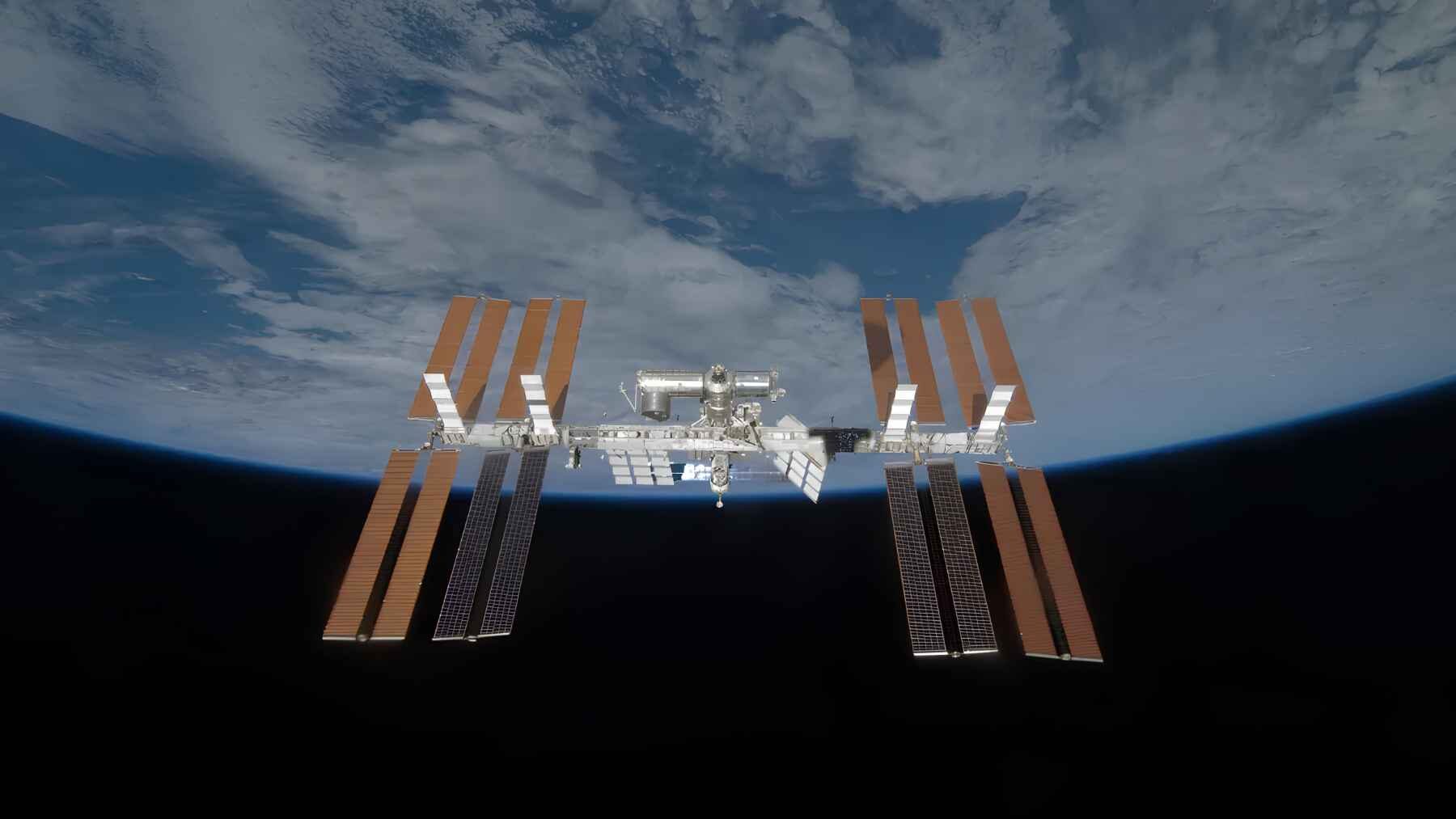
The station was assembled in orbit, not designed for disassembly and return. NASA says its original construction required 27 shuttle flights, multiple partner missions, 13 years, and 161 spacewalks, while no current spacecraft has a cargo bay capable of bringing its large modules home.
Parking the station higher is not a simple museum solution either. NASA estimates that reaching an orbit intended to last 100 years would require more than twice the velocity change needed for a controlled deorbit, while higher regions would expose the aging structure to a more dangerous debris environment.
Some smaller equipment may still return for museums or technical study. The station itself, however, is too large, interconnected, and difficult to dismantle safely.
What will survive reentry
NASA expects the breakup to happen in stages. Solar arrays and radiators should separate first, followed by modules and truss sections, before the remaining structures fragment as their outer skins melt and internal hardware encounters intense heating.
Most material should burn, melt, or vaporize. However, dense and heat-resistant components are expected to reach the ocean. NASA’s environmental assessment found that no substantial long-term effects were expected, yet that conclusion does not mean every component will disappear, which is precisely why the debris footprint must remain far from populated areas.
The final crew changes everything
Humans have lived continuously aboard the ISS since November 2000. Once the final crew closes the hatches and departs, the station will keep circling Earth for a time, but it will no longer be a home or workplace, only a large uncrewed object awaiting its last sequence of commands.
NASA wants commercial destinations operating in low Earth orbit before the ISS is retired so research and human activity can continue elsewhere. Whether that transition is seamless or not, the deorbit mission has a narrower duty — keeping control of the old station until its surviving debris can be directed away from people.
The date remains a plan
Late 2030 is the current target in NASA and Roscosmos planning, not a fixed appointment with a published day and hour. Flight controllers will refine the final ground track and debris corridor closer to the event, after the crew is home and the station is ready for its decisive reentry burn.
That is the less dramatic but more important story. A responsible space mission is not finished when the science ends, but when its operators can also manage what happens to the hardware afterward.
The latest official update was published on NASA.