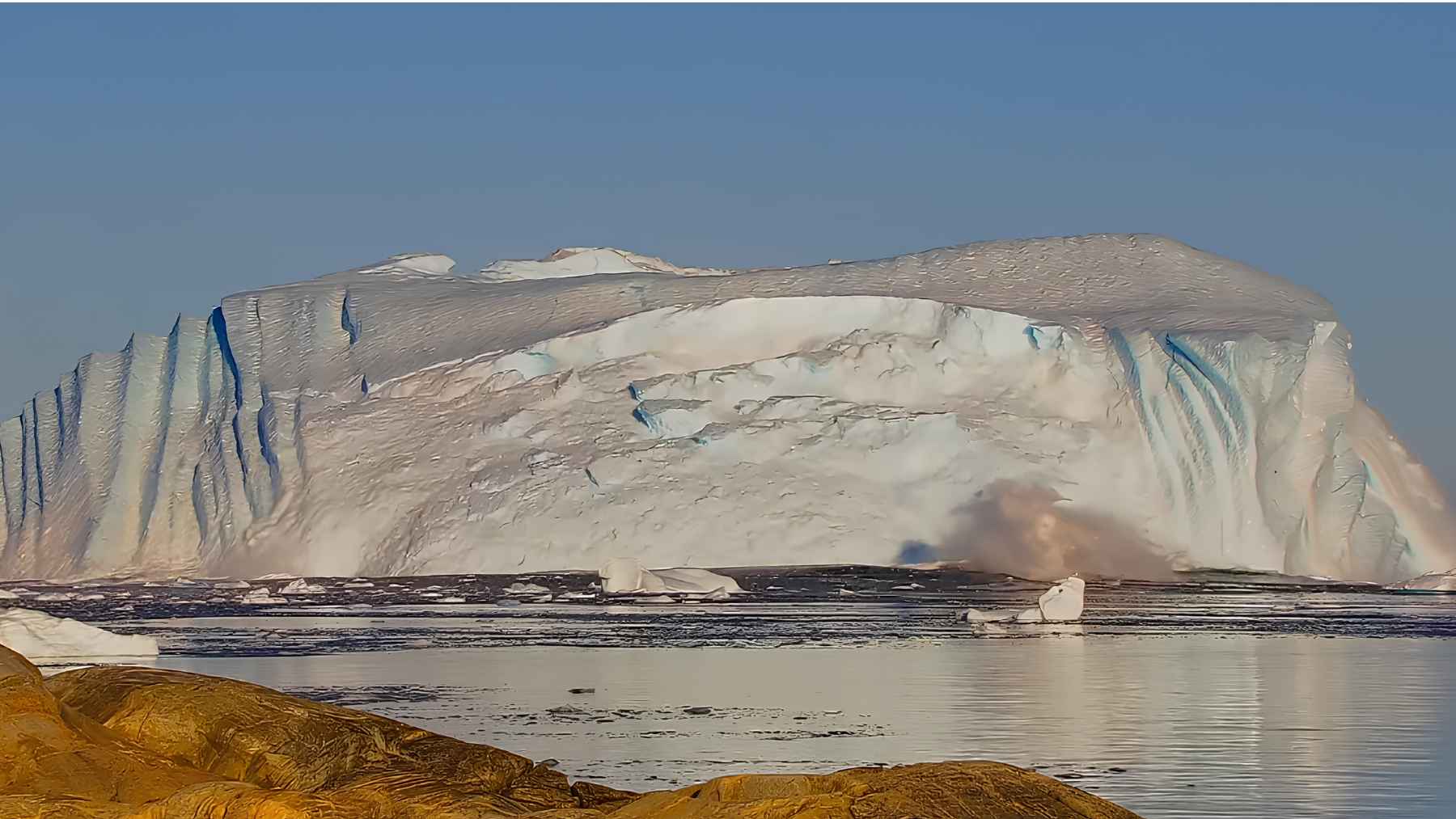
Have you ever wondered what would happen if a huge piece of ice lost its balance? On July 25, 2026, a giant iceberg broke apart on the shore near Ilulissat, Greenland. Cameras captured the moment when the enormous block of ice lost its balance and fell onto the water, creating waves around it.
Greenland is the largest island in the world, and has one of the only two ice sheets on Earth. It was not long before the images, taken with a high-definition camera, spread online, offering a truly rare insight into how icebergs change shape after melting and breakage. These pictures also demonstrate that larger changes will continue occurring across Greenland’s ice sheet.
A sudden twist
A camera was placed near the entrance of Ilulissat Icefjord, and recorded almost 55 minutes as pieces of ice fell from it. Eventually, the remaining iceberg rolled over and revealed parts of ice that had been below the surface.
Big icebergs are often stuck in the mouth. When they melt or crack, they pass to the Disko Bay. The team in charge of filming this event said that it is not known when the iceberg separated from the glacier.
The physics behind their movement
The reason why icebergs float is because seawater beneath them pushes upward. Approximately seven-eighths of its total mass is usually hidden below the water, so changes underwater can also cause it to lose its balance.
As it starts melting and cracking, it may lose its stability and shift to a different position. Research by Douglas MacAyeal and Dorian Abbot of the University of Chicago and Olga Sergienko of Princeton University demonstrated that this type of movement can create dangerous waves in Greenland fjords.
The origin
Located around 155 miles north of the Arctic Circle, Ilulissat Icefjord carried ice from Sermeq Kujalleq, one of the fastest and most active glaciers on Earth. According to UNESCO, it produces approximately 10% of Greenland’s calved ice. It also produces more icebergs than any other glacier outside Antarctica.
Calving means when big pieces of ice break from a glacier and enter the sea. Some of these pieces move fast, but the bigger blocks usually get trapped in shallow water near the fjord entrance until they gradually melt and fracture.
Its link to climate change
Was this a result of climate change? This is not enough evidence to establish that, and also, melting, calving and capsizing are all natural processes.
To get a clear picture, we need long-term data. According to NASA satellite measurements, from 2002 to 2025, Greenland has lost about 291 billion U.S. tons of ice per year. This adds about 0.03 inches to global sea level every year.
The National Snow and Ice Data Center states that the sheet covers 656,000 square miles, which represents around 80% of Greenland. If it all melted, it would raise sea level by approximately 24 feet. Researchers do not forecast this might happen in the near future, it just shows the impact that these rolling icebergs actually have.