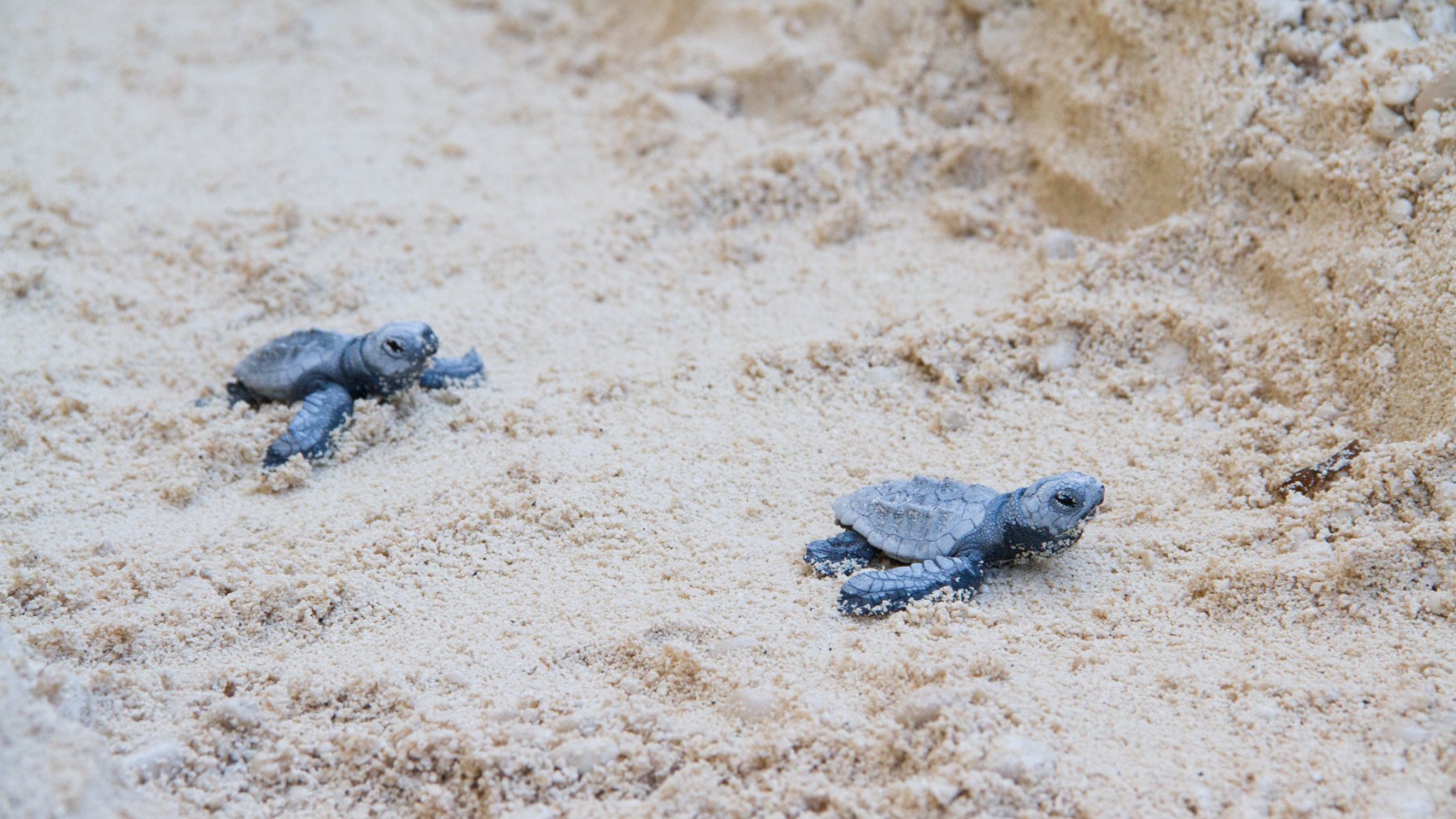
A backyard swimming pool in the Florida Keys became an unexpected rescue scene when homeowners discovered 64 baby sea turtles in the water. All were taken to The Turtle Hospital for care and later released into the ocean, giving a dangerous detour a hopeful ending.
But the pool was only the final stop in a journey that had gone wrong. The hospital attributed the hatchlings’ predicament to artificial lighting, which can draw newly emerged turtles away from the sea. The incident shows how something as ordinary as nighttime lighting can turn a coastal neighborhood into an obstacle course.
An unusual rescue, even for turtle specialists
The homeowners called The Turtle Hospital after finding the hatchlings in their chlorinated pool. Even general manager Bette Zirkelbach was struck by the number of animals involved. “It’s the most I’ve seen in a swimming pool, for sure,” she told The Dodo.
Staff cleaned the turtles, administered fluids and checked their swimming ability. All passed their swim tests, and a few days later, Zirkelbach released them into the Gulf Stream. The hospital identified the rescued turtles as loggerhead hatchlings in its release update.
How a porch light can point the wrong way
How does a turtle mistake a backyard for the ocean? Hatchlings instinctively respond to visual cues, including the brighter, open horizon over the water and the darker silhouettes of dunes and vegetation inland. On an undeveloped beach, those cues generally point them toward the surf.
Artificial lights can overwhelm that natural guidance, pulling hatchlings inland instead. Contrary to a familiar explanation, they are not simply following the moon, and they can find the sea during different lunar phases. A bright porch lamp or beachfront building can effectively become a false signpost.
A short detour can have serious consequences
The Florida Fish and Wildlife Conservation Commission (FWC) says disorientation from artificial lighting causes thousands of hatchling deaths in Florida each year. Turtles that fail to reach the ocean quickly can become dehydrated, while birds, crabs and other predators also threaten them. A wrong turn is more than lost time.
FWC also gathers disorientation reports statewide to help identify lighting problems and guide changes on nesting beaches. Those reports connect individual discoveries to a wider conservation effort, rather than treating each stranded turtle as an isolated accident. The practical question is not just how to rescue the next hatchling, but how to prevent another wrong turn.
Turtle-friendly lighting takes more than a colored bulb
For coastal residents and vacation renters, the simplest starting point is to switch off unnecessary outdoor lights and close beach-facing curtains after dark. In its July 2026 guidance, FWC also urged beachgoers to avoid flashlights, cellphone lights and flash photography at night. That vacation photo can wait.
Where lighting is needed for safety, FWC recommends three linked measures, summarized as “low,” “long” and “shielded.” Fixtures should sit as low as practical, use only the brightness needed and direct light downward, with the bulb or glowing lens hidden from the beach. “Long” refers to wavelengths of at least 560 nanometers, in the amber, orange or red range.
The combination matters more than a reassuring label on a bulb’s packaging. Choosing an appropriate wavelength does not cancel out poor placement or excessive brightness, so FWC’s certified wildlife-lighting guidance addresses all three factors. The practical aim is to light a walkway without lighting the turtles’ route.
What to do when hatchlings need help
A turtle heading normally toward the surf is different from one stranded in a pool or wandering through a parking lot. FWC advises watching naturally emerging hatchlings from a distance and allowing them to reach the water themselves. Do not pick them up for a closer look or interrupt their crawl.
For a stranded or distressed turtle in the Florida Keys, call The Turtle Hospital’s 24-hour hotline at (305) 481-7669, or contact FWC statewide at (888) 404-3922. Be ready to describe the location and the animal’s condition, and follow responders’ instructions rather than attempting your own release. The hospital says turtles should not be handled without authorization.
The broader lesson is not that every pool will fill with hatchlings, but that preventing a wrong turn is better than relying on a rescue afterward. For these 64 turtles, professional help made the difference between remaining stranded and reaching the sea.
The official rescue and release update was published on The Turtle Hospital’s Facebook page.