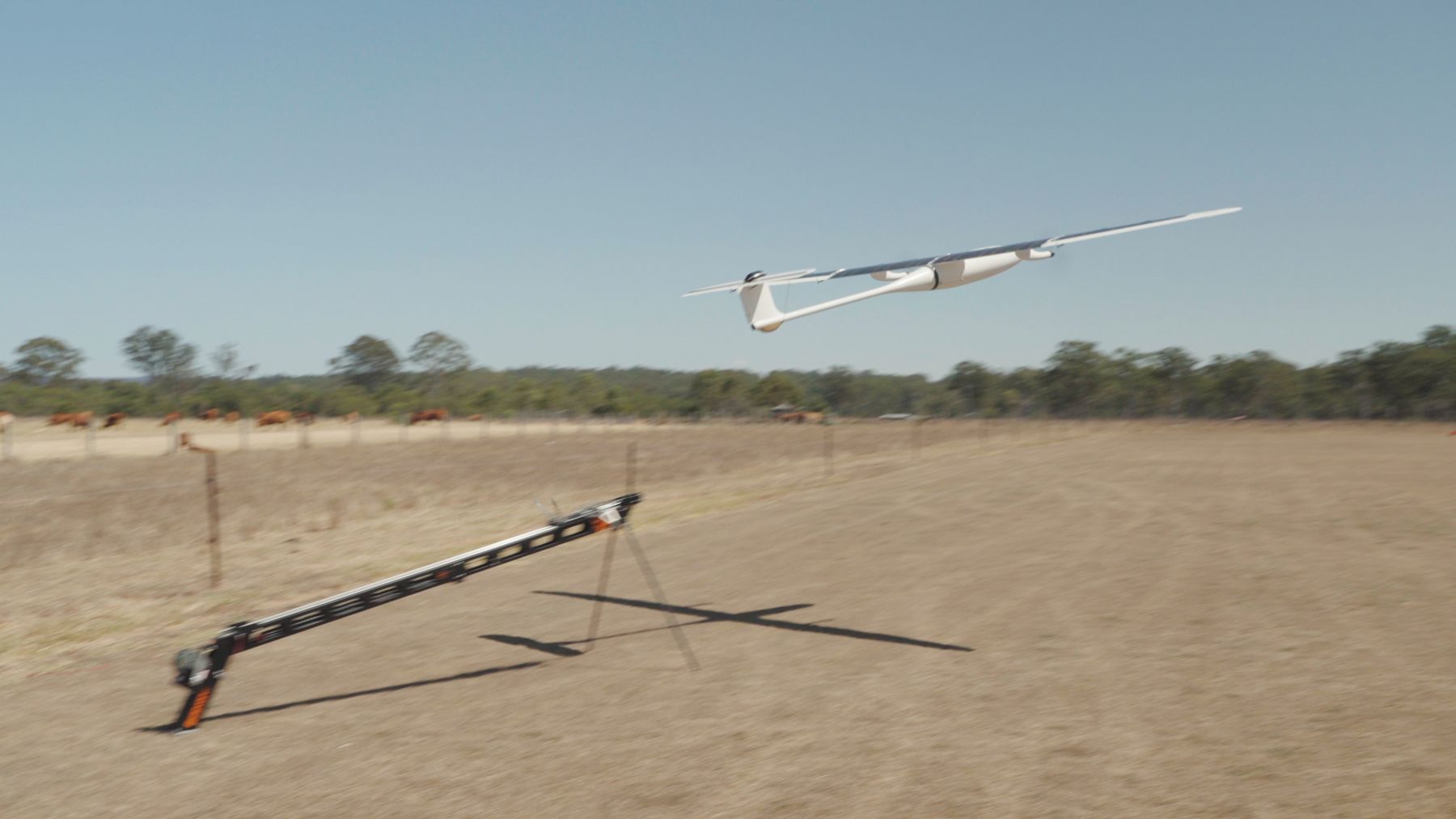
On its longest test flight, over Queensland in Australia, a drone called Pegasus ran on one lithium-sulfur battery pack for almost 2 hours. It went more than 46 miles (75 kilometers) and landed with battery capacity to spare, Li-S Energy, the Brisbane company that made the pack, said in an announcement on September 30, 2026.
The pack held 382 watt-hours. By the company’s own calculation, on a same cell weight basis, its cells “delivered 80% more range and flight time than would have been achieved by an equivalent high-performance professional lithium polymer UAV battery pack.”
Three companies built one aircraft
Pegasus is a twin-motor plane with a 16-foot (5-meter) wingspan. V-TOL Aerospace did the airframe and power systems. Li-S Energy made the battery packs and the battery management system, or BMS, which monitors the cells and manages how they charge and discharge.
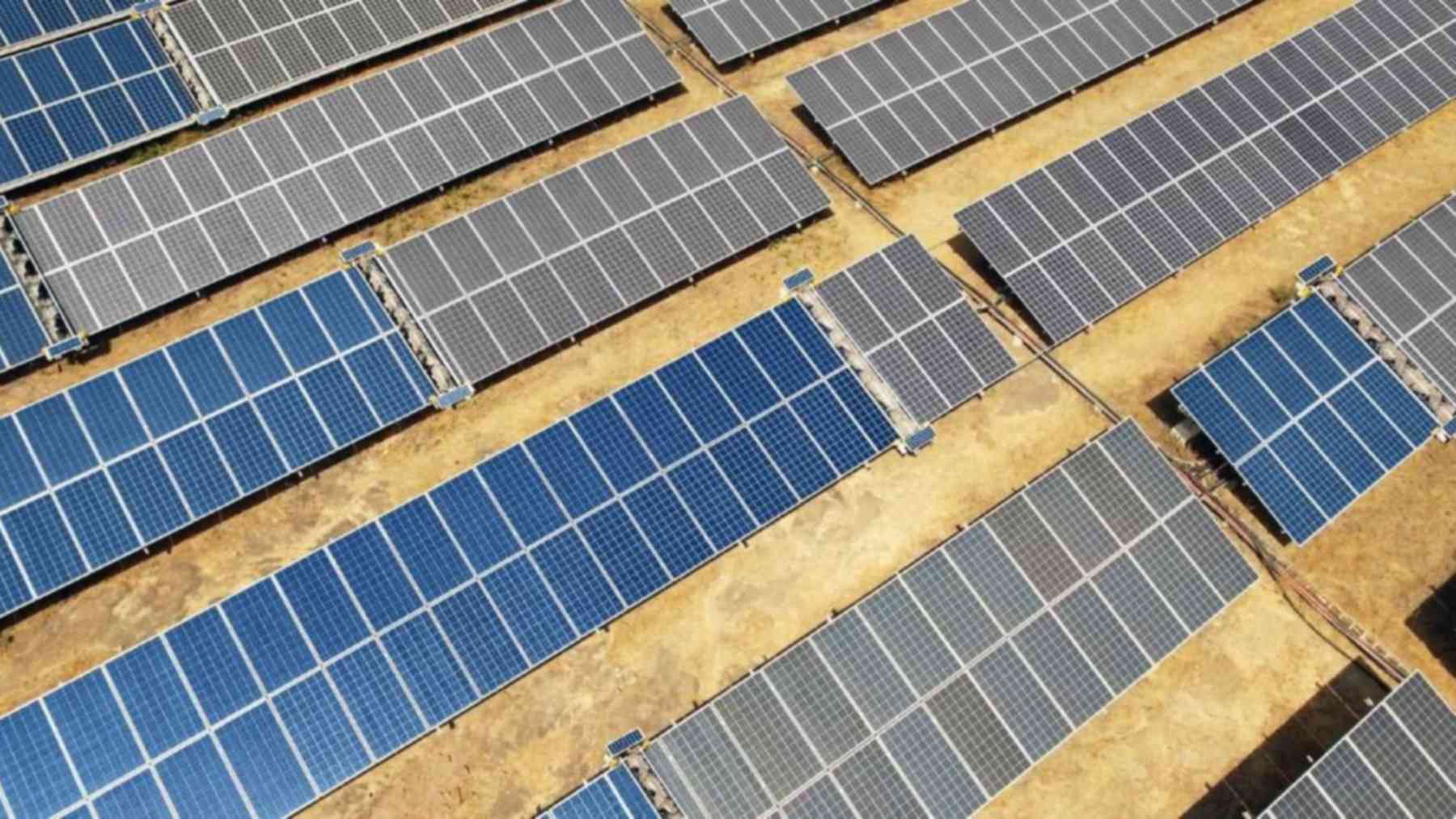
Halocell Energy made the solar array that runs along the wings, producing its cells with a roll-to-roll process at its plant in Wagga Wagga, New South Wales. The cells are perovskite, which can be made as a thin film that bends. Most rooftop solar panels use rigid silicon.
“Seeing our ultra-lightweight perovskite cells take to the air on the Pegasus is a proud moment for the Halocell Energy team, whose skill in fabricating flexible solar modules for such a demanding application has been outstanding,” said Paul Moonie, Halocell’s founder and chief executive officer. “Each flight builds the data and experience we need as we continue to develop higher output modules for aerospace applications, and we are delighted to stand alongside Li-S Energy and V-TOL Aerospace in an all-Australian collaboration delivering this platform.”
It started as a stratosphere project
The three firms signed their agreement in October 2023. The goal then was a drone that could fly in the stratosphere at up to 21 kilometers (about 69,000 feet) for weeks at a time, Australian Defence Magazine reported.
“We are bringing together three innovative Australian companies to build autonomous drones with wide-ranging capabilities,” Dr. Lee Finniear, Li-S Energy’s chief executive, said at the time. “This allows us to not only demonstrate the benefits of Li-S Energy cells in practical high-altitude aircraft, but potentially build a new sovereign capability for the Australian aviation industry.”
He went further in comments carried by Aerospace Testing International. “Our lithium-sulfur battery technology is ideally suited to this type of aerospace innovation, and we see a real opportunity to power the electric aviation revolution.”
“All three partners are at the cutting edge of their respective technologies, and the combination of all three offers some exciting opportunities to test the limits of what is currently possible,” said Mark Xavier, V-TOL’s managing director, that week. “The V-TOL launch product, Pegasus I, will offer a small fixed-wing long-range platform to conduct hi-resolution surveys of linear infrastructure and broad acre farming. The larger Pegasus II aircraft will be developed to provide a low-cost high altitude multi-purpose capability.”
Halocell’s first test cells reached V-TOL’s Rocklea facility in November 2023. Dr. Kye Morton, V-TOL’s chief technology officer, saw room for a lot more of them. “Due to the nature of the cells, the entire aircraft can be skinned with the perovskite solar solution, effectively doubling the surface area that can generate energy for the Li-S batteries,” he said.
Moonie had been thinking about aircraft even before the deal. “We’re getting interest from the satellite industry, drones, IOT devices,” he told the Daily Advertiser, the newspaper in Wagga Wagga, in August 2023. At full production, he said, the plant could print 200,000 square meters (about 2.15 million square feet) of panels a year. “We’ll have a large reel to reel production, where we can print it just like money or a newspaper.”
In June 2024 the project won a grant of just over A$1.35 million from Australia’s Commonwealth Government through the Emerging Aviation Technology Partnership program. The partners matched it.
A smaller drone flew first
In November 2024, Li-S Energy put a 12-cell pack weighing 550 grams (about 1.2 pounds) into a single-motor drone with a 2.4-meter (7.9-foot) wingspan. The flights added up to 30 minutes on that one pack, with no recharge in between, and the pack was only partly drained at the end, pv magazine reported.
“The cell parameters from our production line are very consistent, which, when combined with our semi-solid-state chemistry, means that balancing the cells in the pack has been far less complex than with traditional lithium sulfur chemistries,” said Dr. Steve Rowlands, Li-S Energy’s chief technology officer. “Whilst we are still engaged in production development and expect to continue to improve our cell performance over time, this is a milestone achievement to show how our technology can be integrated successfully into a UAV.”
The Pegasus airframe started its own flight tests in September 2025, at a flying field in southeast Queensland. “To our great satisfaction, Pegasus is performing beyond design expectations and attribute this result to great team work by our aeronautical engineers,” said Robert Hughes, V-TOL’s chief operating officer and project lead for Pegasus.
“The test results bode well for the next phase of our EATP project,” Xavier said then. “I congratulate Rob and our CTO Dr Kye Morton for their technical leadership in delivering a high performance platform to work with.”
The fine print on the 80 percent claim
On Pegasus, the cells weighed about 2.4 pounds (1.1 kilograms). For comparison Li-S Energy picked a Tattu 16000 mAh 6S lithium polymer pack, “one of the most widely used commercial batteries for large professional UAVs,” which stores 355 watt-hours and weighs about 4.1 pounds (1.85 kilograms).
The comparison is a calculation, not a second flight. A footnote in the release says it “excludes weight of pack housing and BMS in each case and assumes flight time scales linearly with cell energy,” so the Tattu figure is an estimate rather than something measured in the air.
In a lithium-sulfur cell, sulfur does the job that metals like nickel and cobalt do in a regular lithium-ion battery. Li-S Energy says its cells “offer around twice the energy density of conventional lithium-ion,” and it builds them for defense, drones and aviation, “where weight is critical.” Others are chasing the same chemistry, among them a Chinese team that used dragon fruit peels to make a lithium-sulfur battery material. In Florida, a separate group flew a crewed electric plane on solid-state batteries.
On its own news page, V-TOL says the flight used “a single Li-S Energy battery pack and a first-generation array of Halocell solar panels.” Its power system “enabled in-flight switching between various powertrain configurations.” And on noise: “Compared with existing liquid-fuel solutions, the Pegasus platform is nearly inaudible during close-to-mid-range operation.”
Two packs and longer flights come next
Pegasus has room for a second battery. With two packs and Halocell’s newer solar panels, Li-S Energy says it expects the platform “to be capable of flight missions of five to eight hours and 250 kilometres,” or about 155 miles. V-TOL’s own target is “an endurance of up to 8 hours, and then beyond 24 hours.”
“With the exponential growth of drones and uncrewed systems in both commercial and military applications, flight endurance and sovereign capability are critical to Australia’s future in this sector,” Finniear said after the flight. “Today, with our partners, we have shown what Australian innovation and collaboration is capable of. The EATP Pegasus drone is the result of two years of work by the teams from V-TOL Aerospace, Halocell and Li-S Energy, proving that Australia has the sovereign capability and the unique technology to be leaders in this field.”
The companies talk about mapping, surveillance, and agricultural, utilities and environmental monitoring. Drones already do field work such as dropping insects on invasive strawberry guava in Hawaii. Li-S Energy filed two patent applications during the project, one for the BMS and one for the pack design.
“The Pegasus flew exactly as our team designed it to,” said Mark Xavier, managing director and chief executive officer of V-TOL Aerospace. “Our airframe and power systems performed faultlessly throughout the flight, and pairing them with Li-S Energy’s new lightweight pouch cell battery system gives the platform an endurance advantage operators will immediately recognise. I am proud of what our engineers have delivered, and our focus now turns to the pathway from successful trials to commercial platform sales.”
What the flight does not prove yet
All of this comes from the companies. There is no peer-reviewed paper or independent test, and the release gives no figure for how much power the solar cells added or how many charge cycles the battery can take. The five-to-eight-hour figure needs hardware that was not on the plane that flew.
According to the announcement, “the flight data will now be analysed by the partners to characterise platform performance and inform the assessment of the platform’s commercial potential.”
The full announcement was published by Li-S Energy through PR Newswire on September 30, 2026.
Li-S Energy has also posted a one-minute video of the flight on its YouTube channel.
Photo: V-TOL Aerospace