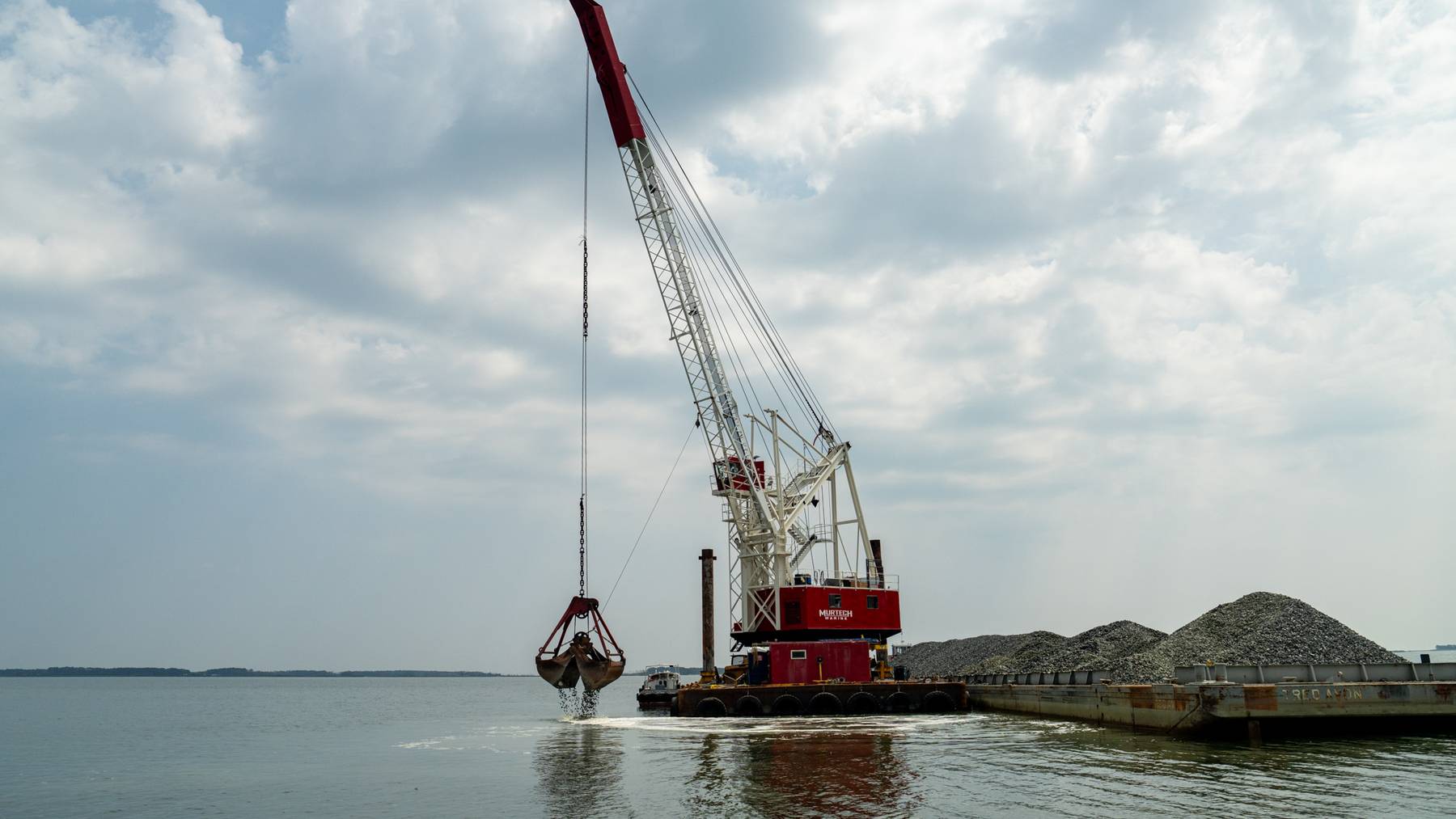
A $10 million NOAA grant is paying for more than 70 acres (28 hectares) of new Chesapeake Bay oyster reef at Maryland’s Hooper Strait Oyster Sanctuary. A crane on a barge is now laying the reef’s stone base. A NOAA feature story on October 19, 2026, calls it the first step in a new phase of bay restoration. The Chesapeake Bay Program aims to restore or conserve at least 2,000 more acres of reef by 2040.
NOAA’s Office of Habitat Conservation gave the money to the Maryland Department of Natural Resources in 2024. It came from the Infrastructure Investment and Jobs Act, through the Community-Based Restoration Program. In the agency’s feature story, Stephanie Westby, NOAA’s oyster restoration coordinator for the Chesapeake Bay, stressed the scale. “This is the largest amount of funding NOAA has directed toward a reef-base construction project to date,” she said.
Ten tributaries finished first
Hooper Strait follows a decade of work under the 2014 Chesapeake Bay Watershed Agreement. That deal set a goal of restoring oyster populations in 10 bay tributaries by 2025. Maryland took five rivers. Virginia took five, plus a bonus sixth.
By the end of 2025, partners had actively restored about 1,900 acres (770 hectares) of reef. Before they began, they counted some 500 acres of healthy reef that already existed. Together, the 10 tributaries now hold more than 2,400 acres, according to the NOAA Chesapeake Bay Office.
Disease, overfishing and poor water quality have left only about 1 percent of the bay’s native oysters, NOAA estimates. In Maryland, 99 percent of 6-year-old restored reefs met at least the minimum density and biomass thresholds. Eighty-three percent reached the higher target. A 2025 state stock assessment found that Maryland’s oyster population had more than tripled since 2005.
Harris Creek alone now holds 343 acres (139 hectares) of healthy reef. Partners planted 2.49 billion seed oysters there at a total cost of $29.06 million.
How the stone base goes down
The contractor is Murtech, a small, veteran-owned marine firm from Maryland. Its crane swings out from a barge and drops a dump truck-size load of stone on the bottom. When the crane reaches the edge of its range, a tugboat pushes the barge forward.
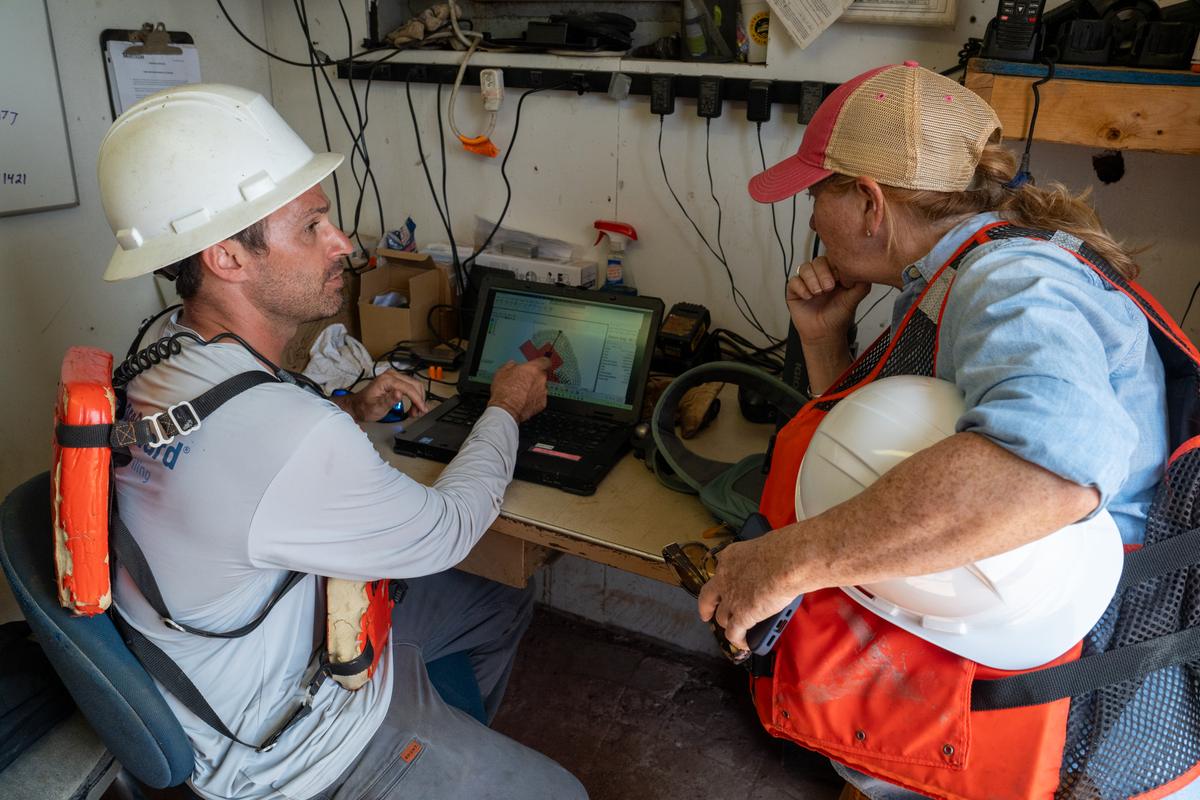
Crews are placing about 1,669 tons of stone per acre (roughly 3,700 metric tons per hectare). That builds a base 12 inches (30 centimeters) high. GPS aboard the vessel tracks where each load lands. Hydrographic surveys map the reef so the crew can check its height and shape as it grows.
Tanner Jennings, Murtech’s general manager, said people might think his crew just throws stones overboard. In fact, “there’s a lot of precision engineering, surveying, and technical skills required,” he said. Before this job, Murtech built more than 150 acres of reef in the St. Mary’s and Manokin River sanctuaries.
Jennings and many of his coworkers grew up on Maryland’s Eastern Shore. Watermen and seafood businesses there depend on the bay. He told NOAA his crew normally builds infrastructure. On this job they work more exposed to the elements, with big barges, big boats and big cranes. “It’s more risk, but more reward,” he said.
Why oyster larvae need hard ground
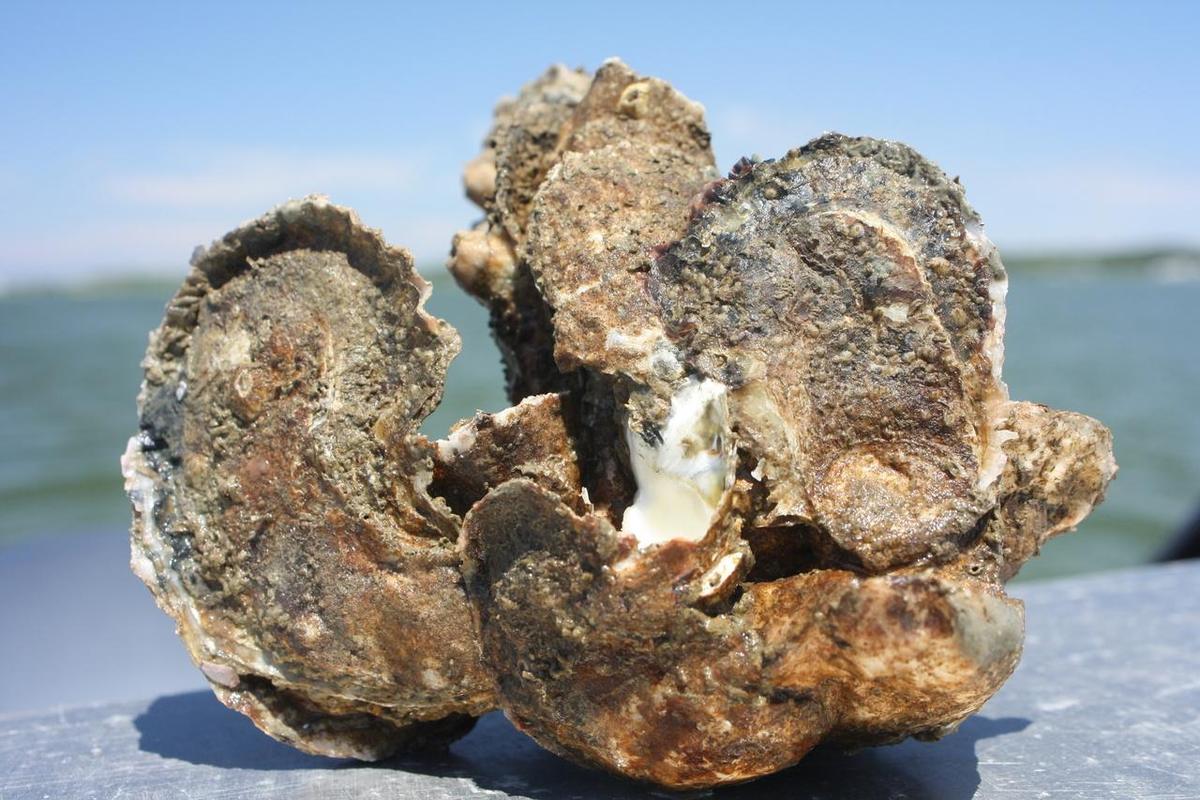
Male and female oysters release sperm and eggs into the water, where fertilization happens. The larvae drift with the currents and then sink. To survive, they must land on something hard, like an old reef or a stone. NOAA says the Chesapeake lacks enough of that bottom.
“If oyster larvae don’t have a hard structure to attach to, they will land in the mud and die,” Westby said. Hooper Strait already has working reefs nearby. Plenty of larvae already drift through it.
Maryland bars harvest in the sanctuary, so its oysters can grow large. Laurinda Serafin, oyster restoration manager for the Maryland Department of Natural Resources, said bigger oysters tend to be female and produce more eggs. That raises “the reproductive potential of the entire region,” she said.
Stone in 2027, spawning oysters by 2028
If construction stays on schedule, crews should finish placing stone at Hooper Strait by spring 2027, NOAA says. Larvae from nearby reefs could start settling on the base that year. Those oysters could begin reproducing by 2028.
Over time, new generations will turn the stone into a three-dimensional living reef. NOAA expects fish, crabs and other bay species to use it. Oysters also filter water while they feed. It is part of the case for projects like Britain’s concrete reef cubes and efforts to save the European native oyster.
For Maryland, the 70 acres are only a start. The state plans to restore 400 acres (162 hectares) at Hooper Strait. It also wants about 700 acres (283 hectares) in the Herring Bay and Nanticoke River sanctuaries, as funding becomes available.
The 2,000-acre goal for 2040
The Chesapeake Executive Council approved a revised watershed agreement on December 2, 2025. It has four goals and 21 outcomes. Its oyster outcome calls for at least 2,000 additional acres (809 hectares) of restored or conserved reef by 2040. Most should sit in restoration focus areas.
On September 17, 2026, a Bay Program goal team reviewed slides that split the target. Roughly 1,100 acres would go to Maryland and 900 to Virginia. Partners are still identifying the sites. The outcome also commits them to maintain the reefs built under the 2014 agreement.
Oyster shell is in high demand and low supply, NOAA says. So builders use stone for most Chesapeake reefs, while hatcheries still need shell to raise juvenile oysters. Elsewhere, groups recycle shell from restaurants, as in Florida’s shell programs.
What is still uncertain
NOAA says scientists can’t separate the effects of restoration from other factors, such as better environmental conditions. So the reefs can’t take sole credit for Maryland’s growing oyster population. The same goes for Virginia’s recent 35-year harvest high.
The 2027 and 2028 dates assume the schedule holds. Jennings said the bay can go from flat calm to a 65-mile-per-hour (105-kilometer-per-hour) squall in moments. Maryland’s larger plans also still need money.
The Bay Program’s own analysis for 2040 lists more risks. They include funding for restoration, monitoring and hatchery seed, plus permits and the supply and cost of reef material. Shifts in temperature, salinity, disease and oyster reproduction are on the list too.
Photo: Molly Feltner/NOAA