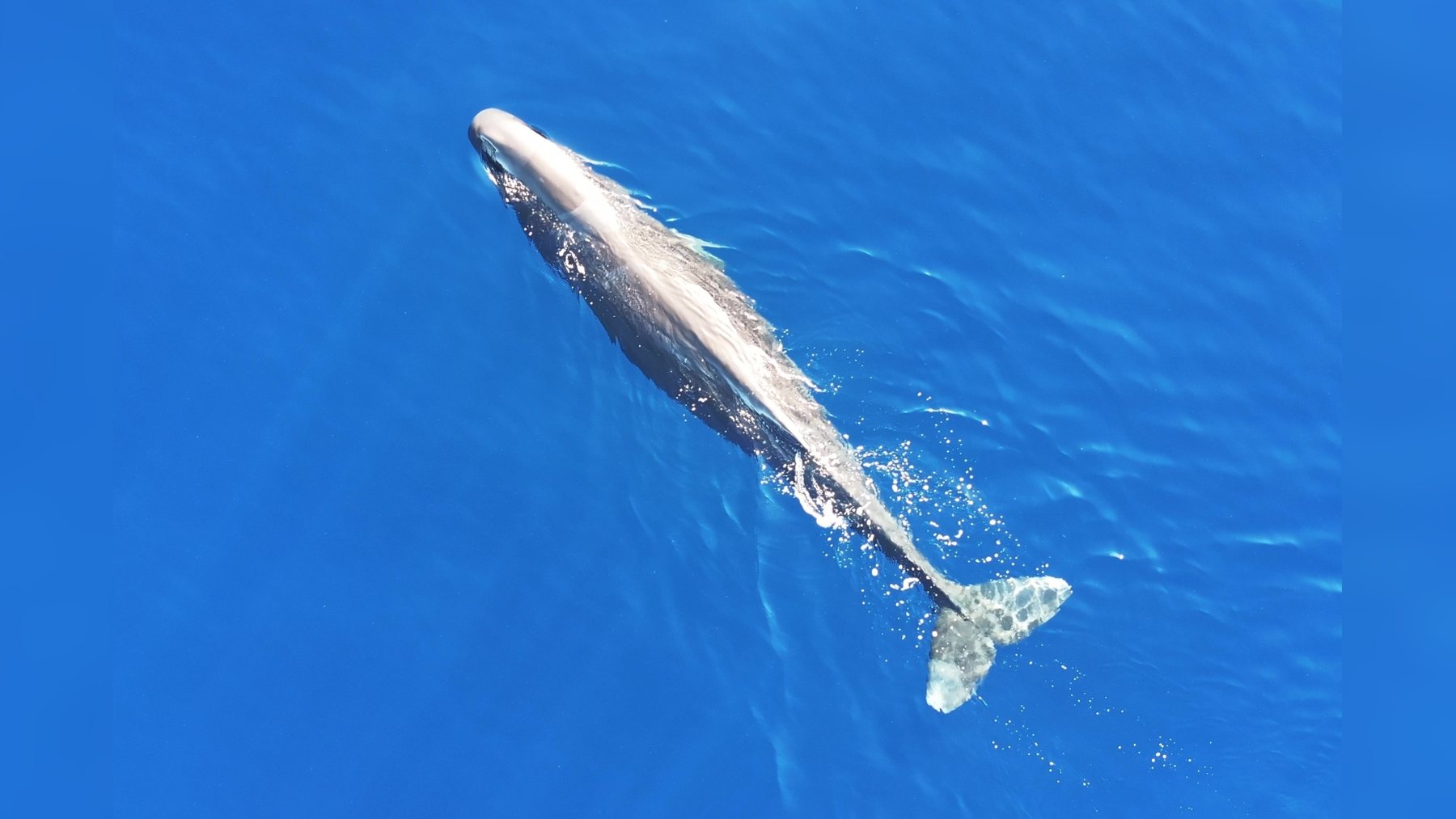
Could someone really disappear down a whale’s throat and live to tell the story? An exceptionally large male sperm whale might be capable of swallowing a slender person, according to specialists, but that anatomical possibility comes with important limits.
Shane Gero, a whale biologist with Project CETI, says he knows of no documented case of a sperm whale swallowing a human. The key distinction is between entering an animal’s mouth and reaching its stomach, an environment where survival would be extraordinarily unlikely.
A possibility with limits
Joy Reidenberg, a comparative anatomist at the Icahn School of Medicine at Mount Sinai, told Science News that an exceptionally large adult male could potentially swallow a person. She described a whale measuring about 59 feet or longer, larger than most individuals people encounter.
That does not mean every sperm whale has a human-sized passage to its stomach. Reidenberg’s anatomical research explains that the species’ voice box sits toward the left, leaving a wider food channel on the right, an adaptation that helps accommodate large prey.
A diver also comes with extra bulk. Gero told Popular Science that a scuba tank and other equipment would make swallowing a person even less plausible, so a whale’s overall length cannot settle the question by itself.
Dinner happens far below us
Sperm whales are hunters of the deep ocean, where squid and fish are ordinary meals. According to NOAA Fisheries, their feeding dives routinely reach 2,000 feet and can last 45 minutes, putting much of that activity far beyond recreational scuba diving depths.
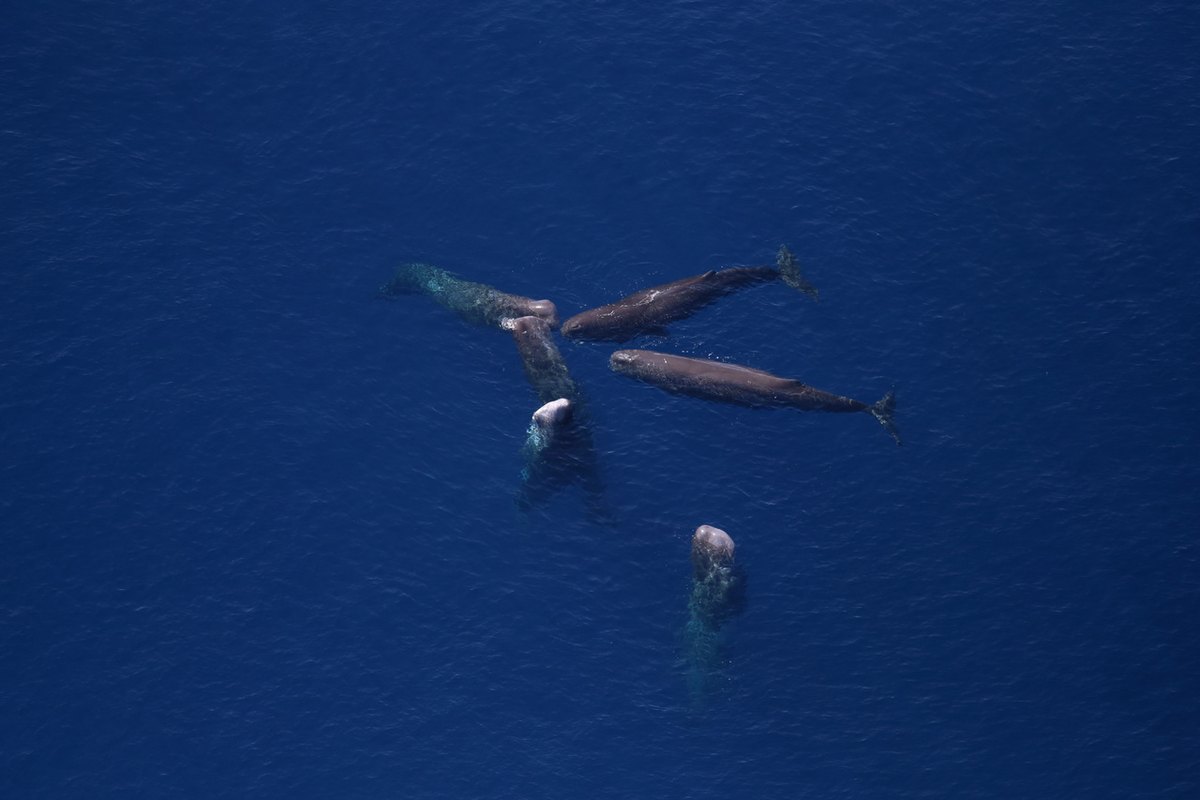
How do they find dinner in the dark? They send out clicks and listen for returning echoes, using a biological sonar system called echolocation to locate objects around them.
As a whale closes in on prey, its clicks can accelerate into a rapid buzz. To researchers listening through underwater microphones, those changing sounds provide clues about when an animal is hunting.
A mouthful is not swallowing
The dramatic encounters people hear about often involve baleen whales, including humpbacks, rather than sperm whales. These animals strain small prey from seawater through fringed plates called baleen, and their enormous mouths do not lead to equally roomy throats.
Someone briefly caught in a feeding whale’s mouth has not necessarily passed into its digestive tract. Discussing such incidents, Gero told Popular Science, “I wouldn’t call that swallowed.” He added, “I would call that a mistake by both the mammals involved.”
For another example, Science News describes a wildlife photographer briefly caught by a Bryde’s whale off South Africa in 2019 before being released. Such an encounter shows how someone can get in the way of a feeding animal without becoming its intended meal.
Danger begins before the stomach
None of this makes entering a whale’s mouth safe. Water, powerful movements, and the animal’s sheer size could cause drowning or serious injury before swallowing even became an issue.
Gero suggests that an animal trying to get rid of an unfamiliar object could make abrupt, involuntary movements. Those movements could badly injure a person even if the whale was attempting to expel them.
That is why the word “accident” matters here. An animal does not need to mistake someone for food, or behave aggressively, for a close encounter to have devastating consequences.
Four chambers offer no refuge
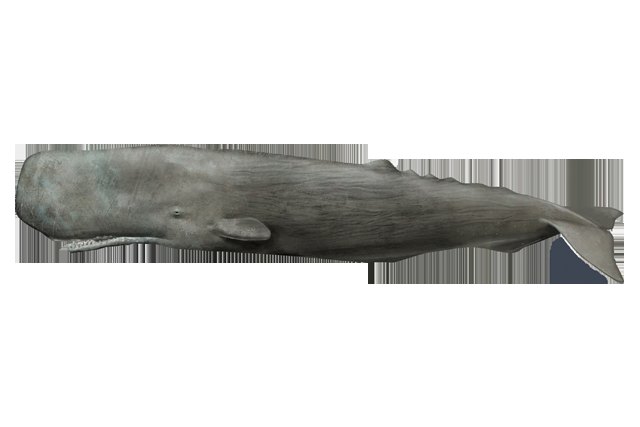
A sperm whale’s stomach has four chambers, a structure also described in a 2022 anatomical study published in the Journal of Anatomy. Reidenberg explains that the first chamber has thick muscular walls that help break down food.
Those muscles do work that chewing teeth would otherwise perform. Sperm whales typically have 20 to 26 large teeth on each side of the lower jaw, while upper teeth rarely emerge through the gums, according to NOAA.
But could a swallowed person simply wait to be released? The stomach provides no supply of breathable air, and its digestive environment is built to process animal tissue, not shelter a living passenger.
Escape is not a realistic plan
The air a whale breathes goes to its lungs through its respiratory passages. Its stomach is part of a separate digestive route, so the fact that whales breathe air does not create an oxygen-filled room inside their bellies.
Reidenberg also describes slippery internal surfaces that would offer little to grip. A breathing supply alone would not remove the dangers posed by injury, muscular contractions, and digestive conditions.
There is no documented human survival episode here from which to calculate an escape window. Describing a precise number of survivable minutes would turn speculation into a claim the evidence cannot support.
The threats whales actually face
The practical takeaway is to give these animals space, even though people are not their normal prey. For someone watching from a boat or hoping for an underwater photograph, curiosity should not become a reason to crowd a wild whale.
Sperm whales themselves face well-established dangers, including vessel strikes, fishing-gear entanglement, underwater noise, and swallowed marine debris. NOAA identifies all of these as conservation concerns for a species still recovering from commercial whaling.
Understanding how these animals actually feed helps keep an extraordinary predator from becoming a fictional monster. The official species profile, last updated September 22, 2026, was published on NOAA Fisheries.
Photo: NOAA Fisheries/Melissa Cook, Permit #27867