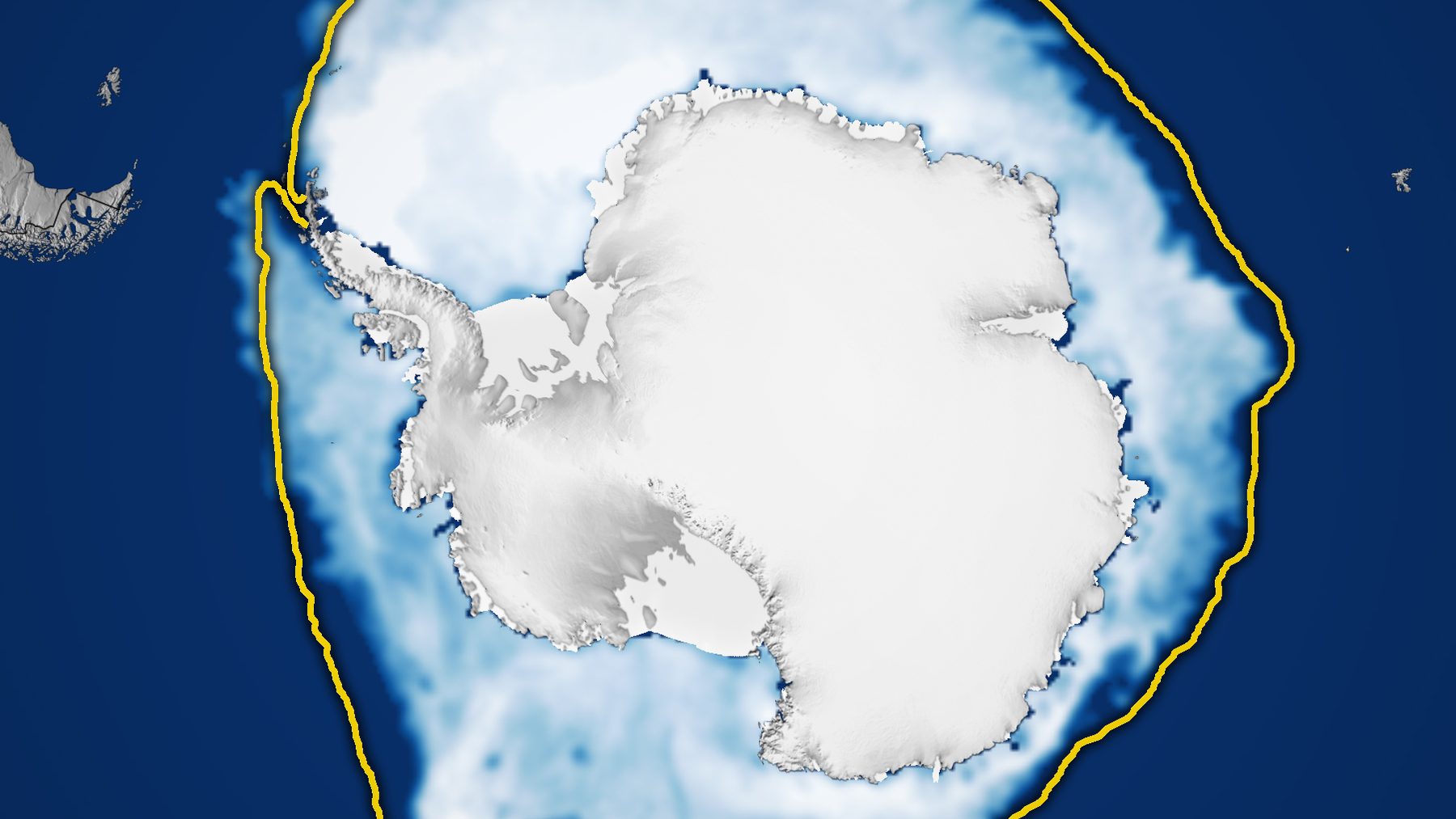
British Antarctic Survey geologists drilled through the Filchner-Ronne Antarctic ice shelf to collect seafloor mud. Their camera found a boulder covered in sponges and other fixed animals instead, about 162 miles (260 kilometers) from open water. The analysis appeared on February 15, 2021, in Frontiers in Marine Science.
The footage dates from 2016 and was shot under 2,860 feet (872 meters) of ice. According to the authors, it is the first community of stationary animals ever recorded on rock far beneath an ice shelf. The authors say nobody yet knows what those animals eat.
A sediment corer that hit rock
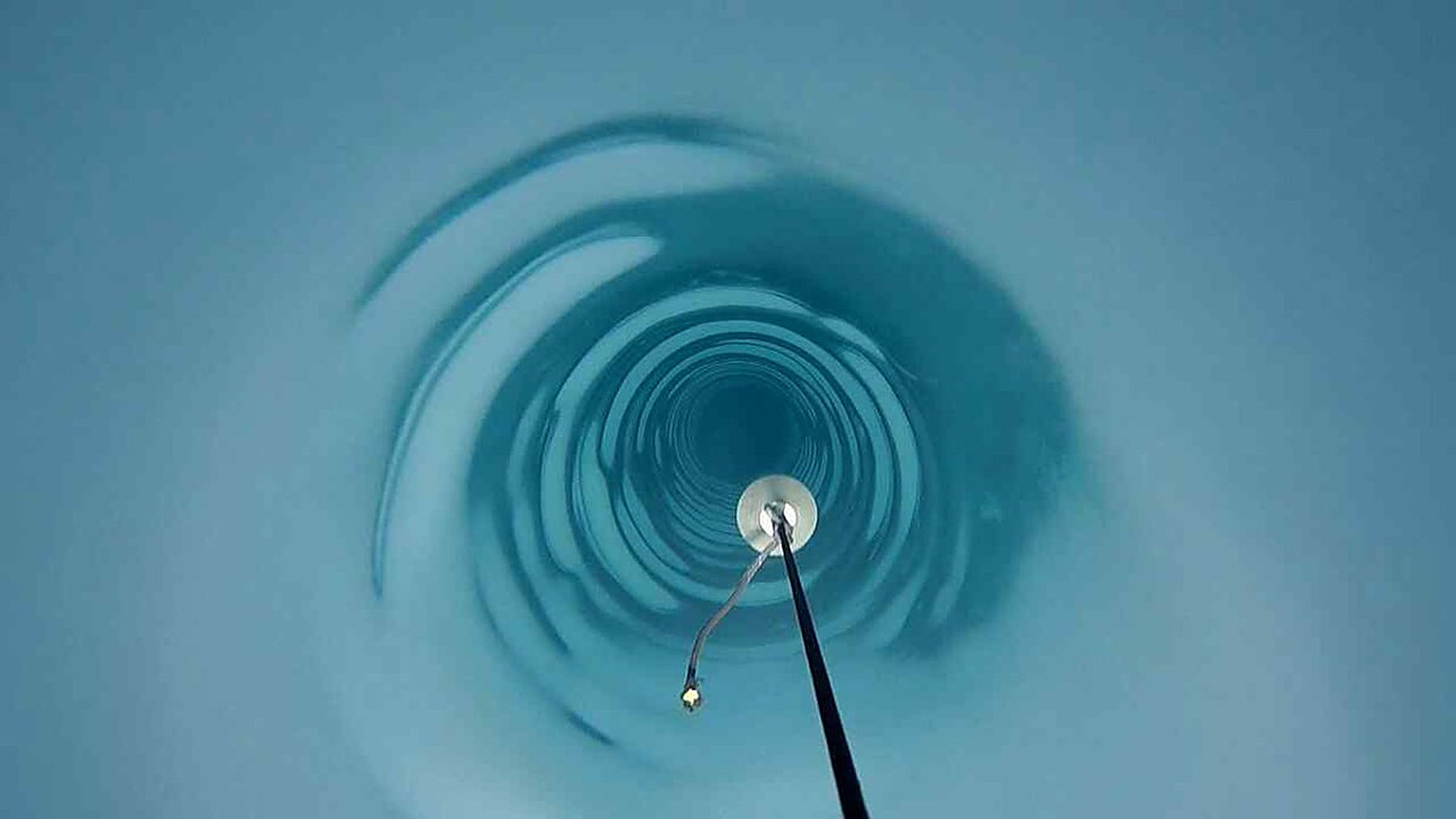
The team melted its access holes with a hot water drill in the southern summers of 2015-2016 and 2016-2017. A GoPro camera in a pressure housing rode above a gravity corer. That is a weighted tube built to punch into soft mud and bring back a sample.
At a borehole called FSW2, near Berkner Island, the corer fell through 1,549 feet (472 meters) of seawater. It kept striking something hard. Geologist James Smith, part of the drilling team, recalled the moment in the agency’s February 2021 announcement.
“We were expecting to retrieve a sediment core from under the ice shelf, so it came as a bit of a surprise when we hit the boulder and saw from the video footage that there were animals living on it,” he said.
By comparing it with the corer, the scientists estimated that the dark gray rock is about 38 inches long, 27 inches wide and 30 inches tall. It probably rode out on the ice from mountains upstream before melting free.
Fifteen sponges on one boulder
Most of the life clung to the sides of the boulder, while its top carried a thin coat of silt. The researchers counted one stalked sponge about 3.5 inches long. They also found 15 sponges without stalks, the largest about 2.6 inches wide.
The biggest group was a set of 22 stalked organisms that the video could not resolve. They made up 58 percent of everything counted. The paper lists sponges, sea squirts, hydroids, barnacles and tube worms as candidates.
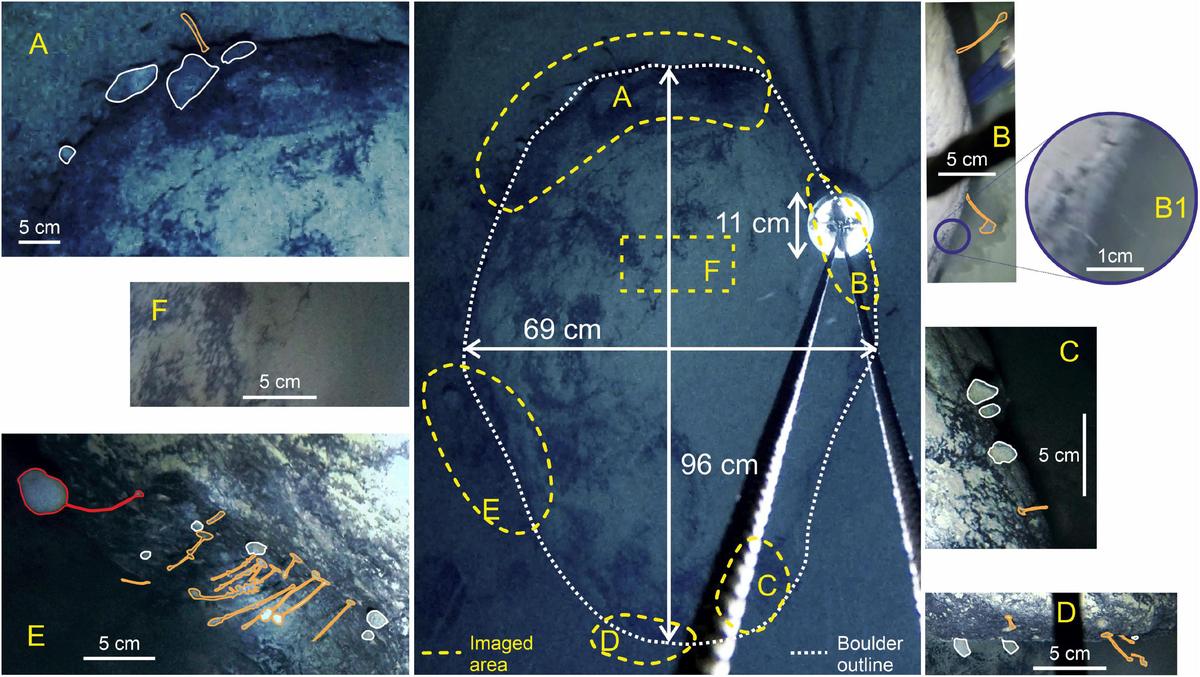
A few might be carnivorous sponges, a group that snares tiny animals rather than filtering water, the authors write. Lead author Huw Griffiths, a biogeographer at the British Antarctic Survey, called the find “one of those fortunate accidents that pushes ideas in a different direction.”
Currents flowing the wrong way
On most of the Antarctic seafloor, filter feeders live off “marine snow,” bits of dead plankton and waste sinking from the bright surface. Beneath hundreds of yards of floating ice, nothing grows overhead, so any meal must arrive sideways on a current.
In a straight line through the water, the boulder sits 162 miles from the ice front. The local current, though, runs the opposite way. Following the two main flows of salty shelf water, the authors place the animals 388 to 932 miles downstream of the nearest sunlit water.
At FSW2 that current may reach 0.8 feet per second, by one model estimate, and the GoPro caught a haze of silt drifting past the rock. Is any of it food? The team could not tell, and the paper also points to water draining from under the ice sheet as a possible supply line.
Eight boreholes, one tennis court
Ice shelves cover more than 579,000 square miles of the Antarctic continental shelf, the British Antarctic Survey says. Until the Filchner holes, people had looked at that seafloor through just eight boreholes, most drilled for geology. Added up, those glimpses covered roughly a tennis court.
Those earlier holes found fish, amphipods and other mobile scavengers up to 435 miles under the Ross Ice Shelf. The same dark world holds the glass squid filmed after an iceberg broke away. No fixed animals, however, had been seen more than 124 miles from an ice front.
Rocks dropped by ice also serve as homes for seafloor animals in the Arctic. The authors call such stones “islands of hard substrate in a sea of mud.” By their rough estimate, boulders like this one could lie as little as 0.6 miles apart under ice shelves.
If the ice shelf collapses
The Filchner-Ronne is Antarctica’s second largest ice shelf, spread over about 162,000 square miles of seabed. Further north, the Larsen A and Larsen B ice shelves collapsed in 1995 and 2002. Scientists reached those sites at least five years later.
A community adapted to very little food could be especially vulnerable to a collapse. If it is just a thinned-out branch of the wider Weddell Sea fauna, open water and plankton might help it thrive instead. Either way, Griffiths and his colleagues warn that climate change and ice shelf collapse leave little time to study these ecosystems.
No animal has been sampled
Every result in the paper comes from video, and that limits what the team can claim. Without specimens or DNA, it cannot tell glass sponges from demosponges. It also cannot say whether any are sponges new to science.
The age of the community is unknown too, although some living sponges are thought to be thousands of years old. Griffiths said that “our discovery raises so many more questions than it answers.” The study suggests testing water and mud for environmental DNA to identify the residents.
Reaching them is the real obstacle, Griffiths explained, since the animals live “under 900 m of ice, 260 km away from the ships where our labs are.” At the time, his team expected to need new tools before it could learn what they eat.
The full study was published in Frontiers in Marine Science.
Photo: British Antarctic Survey