In 1978, the Town of Yarmouth, Massachusetts, began building an artificial reef from roughly 1,500 bundles of old car tires. Decades later, divers counted the most fish where the tires lay thickest.
Yarmouth’s Department of Natural Resources built the reef in Nantucket Sound with help from the Massachusetts Division of Marine Fisheries (DMF). The state calls it the first permitted artificial reef site in Massachusetts. The 127-acre site lies 2.2 miles (3.5 kilometers) south of the Bass River, in about 32 feet (10 meters) of water.
Bundles of three to five tires
According to a 2012 project narrative filed by the state, each unit held three to five tires. Workers ballasted them with concrete and strapped them together. About 1,500 units went down in 1978, and another 1,000 followed in 1994.
The aim was to give fish and lobsters places to hide. That part of the Sound has little natural structure on the bottom. Since then, the site has become one of the busiest fishing spots off the Yarmouth coast, the narrative says.
In August 2009, DMF hired a firm to map the reef with side-scan sonar. This tool builds a picture of the seabed from sound echoes. The scan found 719 targets, although it could not separate a cluster of units from a single one.
1,175 fish along seven lines
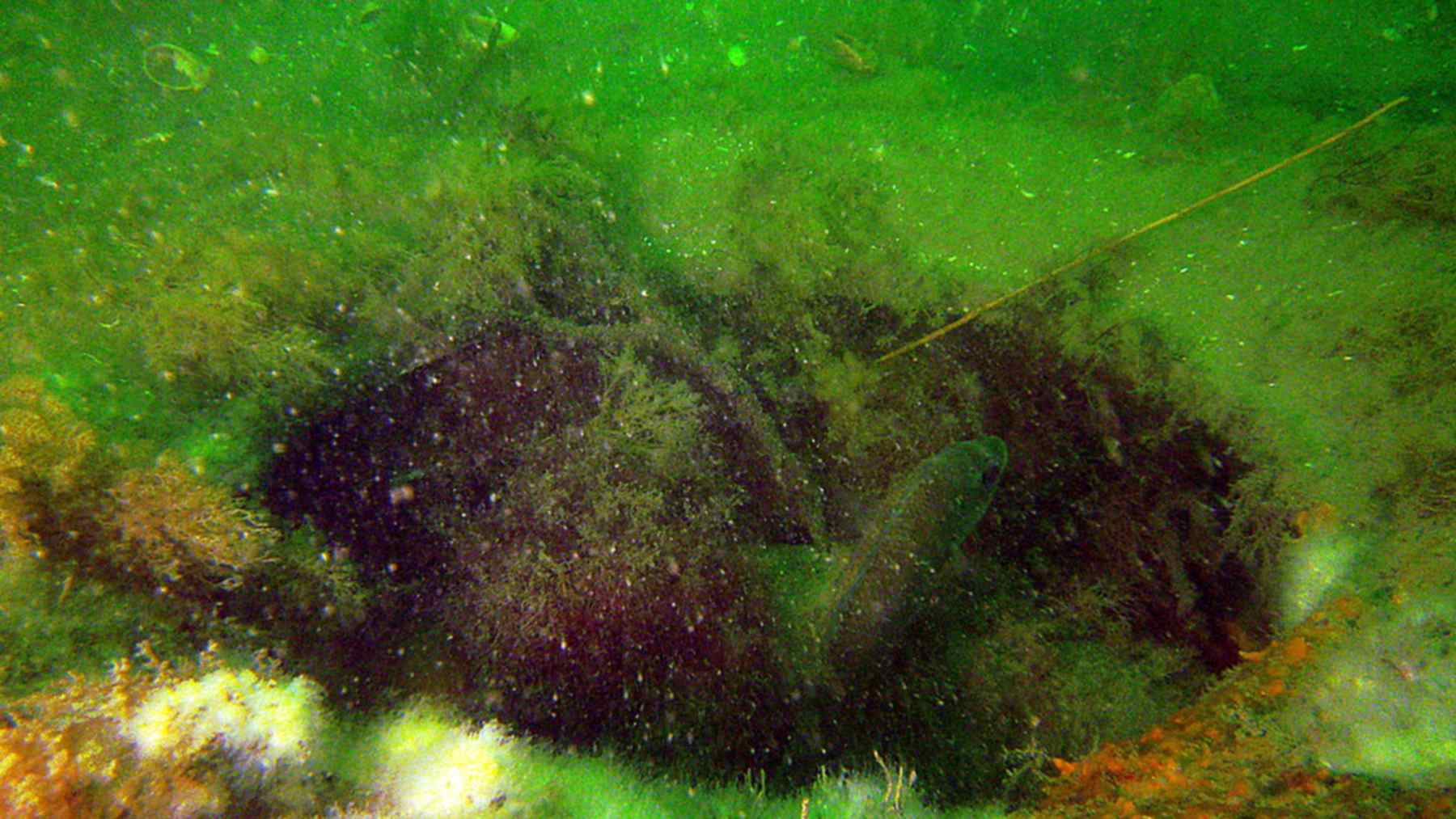
Divers then swam seven survey lines, each 100 meters (328 feet) long. They logged 1,175 fish from 11 species, plus 10 kinds of invertebrates.
Black sea bass, with 487 fish, and scup, with 401, led the count. They were the only species seen on every line. The two lines through the densest tire patches held the most fish and species, a pattern also seen with black sea bass around offshore wind turbines.
On the open sand, divers found different residents. Winter flounder and northern sea robin turned up only on lines with no tires at all.
The state wrote that the reef “has remained relatively stable and functional for over 30 years.” In the deeper southwest corner, some units had settled into soft sediment. Many had been in place for 20 years or more and still held fish.
A crevice for a lobster
According to NOAA Fisheries, American lobsters can live in many habitats as long as there is a burrow or crevice for cover. Young lobsters are especially vulnerable to predators.
Even so, the 2012 dive count found just one American lobster across all seven lines. Divers also noted a spider crab, a quahog and a few other small bottom dwellers. Today, the state’s species list for the reef includes lobster, blue mussel, tautog, longfin squid and sand tiger shark.
Tires fall off the approved list
The 2012 narrative was written to reopen the site for new material. “Tire units are no longer considered approved materials,” it says. In their place, it lists clean concrete, natural rock and manufactured units such as Reef Balls.
NOAA’s National Artificial Reef Plan, amended in February 2007, calls vehicle tires problematic. It grants that concrete may give them enough ballast to stay put. Still, “the Plan recommends that tires not be used as artificial reef materials.”
Florida shows the risk. Its tire reef from the early 1970s ended up as an ecological disaster. The Yarmouth records describe weighted bundles that mostly stayed in place, but they report no tests for chemicals leaching from the rubber.
Granite from a drive-in lot
DMF and the town reopened the site with new permits in 2014. On October 1, 2019, two Coast Guard vessels lowered 140,000 pounds (about 63,500 kilograms) of retired concrete buoy sinkers onto the reef, at no cost to the state.
Starting on January 6, 2020, a barge and tug brought more loads out from Fall River. They included over 500 cubic yards of granite blocks from an old drive-in movie site in South Yarmouth and a demolished railroad bridge in Dennis. A local fishing club, the Cape Cod Salties, helped secure the stone.
That January, 2,210 cubic yards of material reached the reef. DMF’s Mark Rousseau wrote that the site was “expected to resemble natural structured habitat over time.”
The state’s reef page now lists 22 deployments since 2014. More than 17,000 tons of donated material have added over 10 acres of structured habitat. Today’s reef is much more than the original tires.
Extra fish, or borrowed fish?
From June to September 2019, Simonetta Harrison of Northeastern University and Rousseau set out baited underwater cameras. They filmed the 41-year-old Yarmouth reef, a 4-year-old reef off Harwich, a natural reef and bare sand.
Species richness and diversity were largely uniform across the Sound. Fish reached the cameras 93.4 percent faster at the artificial reefs than on bare sand. Reef fish were 103.7 percent more abundant at Yarmouth than at Harwich.
Yet the key question stays open. “Whether the observed increases in richness, diversity, and abundance are due to fish production or simply attraction is of particular interest to fisheries managers,” the authors write. No survey so far shows whether the tires added fish to the Sound or just pulled in fish from nearby.
The authors suggest watching new reefs for more than five years and closing them to fishing for a while. Their study was published in Estuaries and Coasts in 2020.
Photo: Massachusetts Division of Marine Fisheries