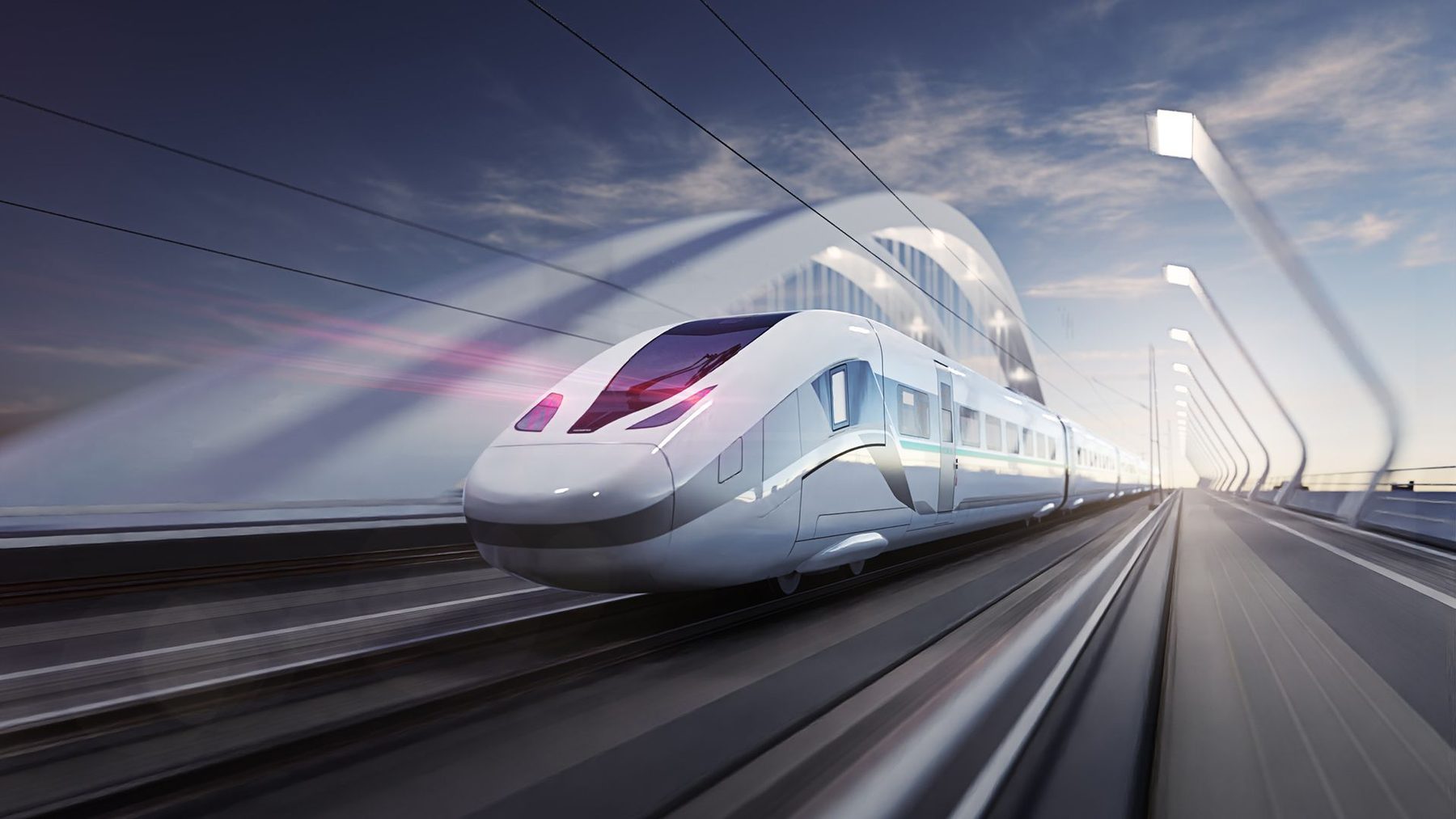
Siemens Mobility and VinSpeed, a member of Vietnam’s Vingroup, announced a turnkey contract for Vietnam’s first high-speed rail lines on September 22, 2026. The deal is valued at up to 1 billion euros. According to the Siemens announcement, it covers 10 Velaro Novo trains for two routes, a 121-km (75-mile) line from Hanoi to Quang Ninh and a 54-km (34-mile) line from Ben Thanh to Can Gio.
Siemens also says the signaling setup will be a world first. No national high-speed rail network has yet run Automatic Train Operation over the European Train Control System, the company says. Its two announcements on Vietnam give no date for the first passenger service.
Tracks for VinSpeed, systems for Siemens
Under the contract, VinSpeed takes on project development, track construction and civil works. Siemens Mobility acts as technology partner. It will supply the trains along with communications and electrification, and the work will proceed in phases.
The Hanoi route has four stations and runs to Ha Long, in Quang Ninh. Two stations serve the line from Ben Thanh, in Ho Chi Minh City, to Can Gio. Together the projects add up to 175 km (about 109 miles) of route.
All of this grew out of a framework agreement from late 2025. The December 17 release already put Siemens in charge of designing, supplying and integrating the trains and key subsystems. At that stage the company was also exploring maintenance services.
Seven cars and 760 seats
Each Velaro Novo trainset measures 200 meters (656 feet) and carries 760 seats across seven cars. Top speed is 350 km/h (217 mph). Siemens describes it as a distributed-power electric multiple unit, a train whose motors sit along its length instead of in one locomotive.
Passenger space comes largely from what the manufacturer calls an “empty tube” design. Its Velaro Novo product page says the cars have no underseat containers or electrical cabinets inside, and it lists each car at 28.75 meters (94 feet). Siemens claims at least 10 percent more capacity than earlier generations.
That same page puts the train at about 15 percent lighter than previous Velaro generations, a saving of more than 70 tons. In December, the company added that the design copes with steep gradients and suits Vietnam’s varied terrain.
Michael Peter, CEO of Siemens Mobility, opened his statement with “Vietnam is entering an exciting new era of mobility.” He said the trains use 30 percent less energy than previous models, and he called the package “a truly sustainable and efficient transport solution.”
Automatic operation over ETCS signaling
The European Union Agency for Railways describes ETCS as “a cab-signalling system that incorporates automatic train protection.” Vietnam’s trains would use its Level 2 version. Automatic Train Operation comes on top, handling how each train speeds up and brakes.
Siemens says the combination will automatically optimize the spacing between trains. It also expects better precision and lower energy use from intelligent control of speed, acceleration and braking. Other operators are chasing similar gains by different means, as in Inner Mongolia, where seven coal trains ran in formation over a radio link.
From two routes to a network
Pham Thieu Hoa, CEO of VinSpeed, said the signing “marks an important step in realizing VinSpeed’s high-speed rail lines in Vietnam.” He also sees it as groundwork for an integrated high-speed transport system across the country.
Siemens has worked in Vietnam since 1993 and keeps offices in Hanoi, Da Nang and Ho Chi Minh City. The company frames these two lines as preparation for a future long-distance network. Its release names no route beyond this pair.
Cleaner rail is taking different forms around the world. India has launched a hydrogen-powered train, and Switzerland has placed solar panels between the tracks of a working line.
Opening dates remain unpublished
Neither Siemens release gives a delivery schedule, expected ridership or journey times. The December announcement did say the lines “will cut travel times,” but it offered no numbers. The September text leaves the phases undefined.
Money raises similar questions. The figure of 1 billion euros is a ceiling, with no breakdown by line and no price for the civil works VinSpeed will carry out itself.
Efficiency figures come from the manufacturer alone, and the wording shifts between documents. December’s release says up to 30 percent in one passage and about 30 percent in another, while September’s quote gives a flat 30 percent. No release names the older train used for comparison or estimates the emissions these lines would avoid.
The world-first label is likewise Siemens’ own description. The announcements also do not say whether drivers will stay in the cabs once automatic operation begins.
The contract details were published by Siemens Mobility in a press release dated September 22, 2026.
Image: Siemens Mobility