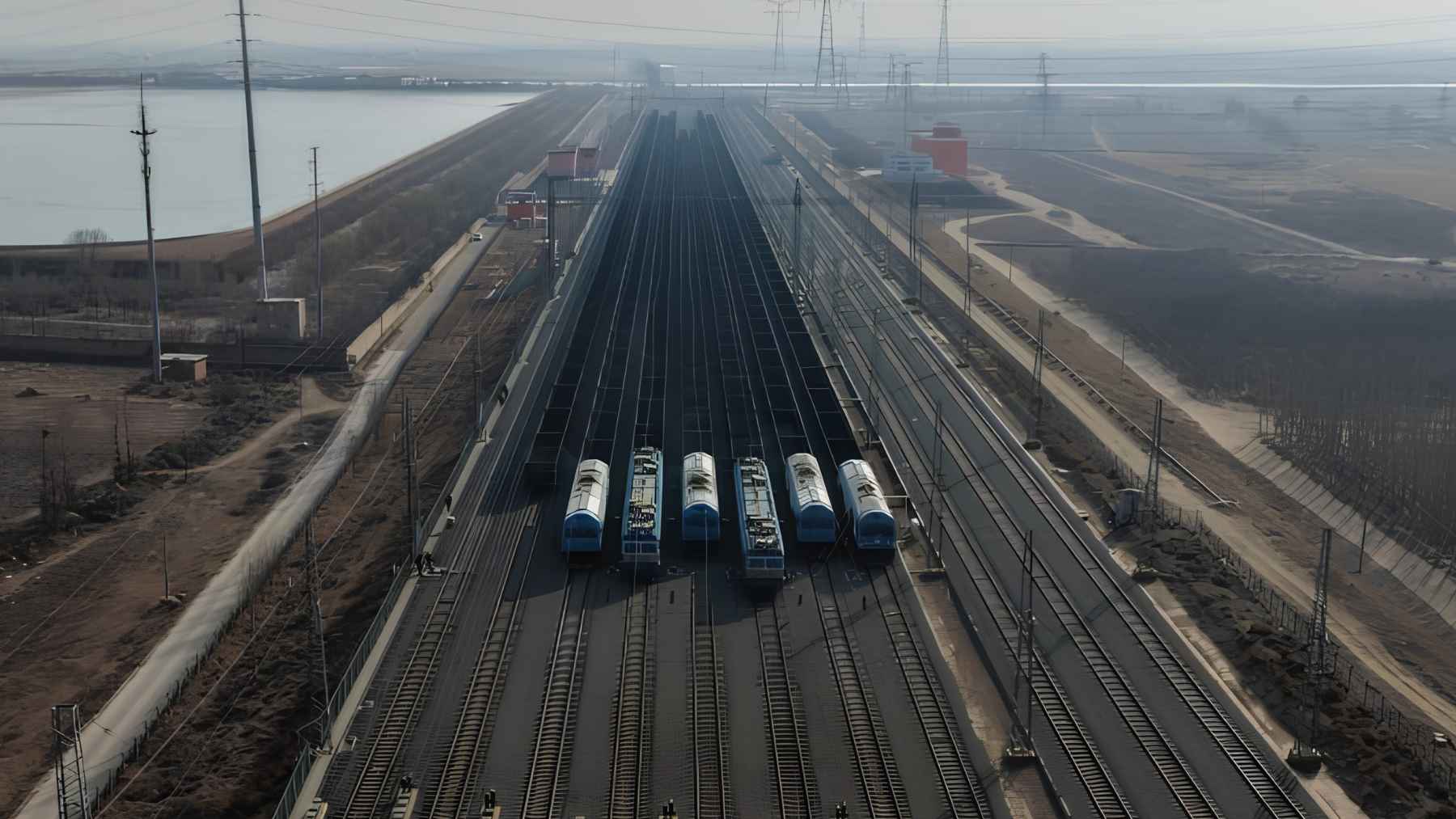
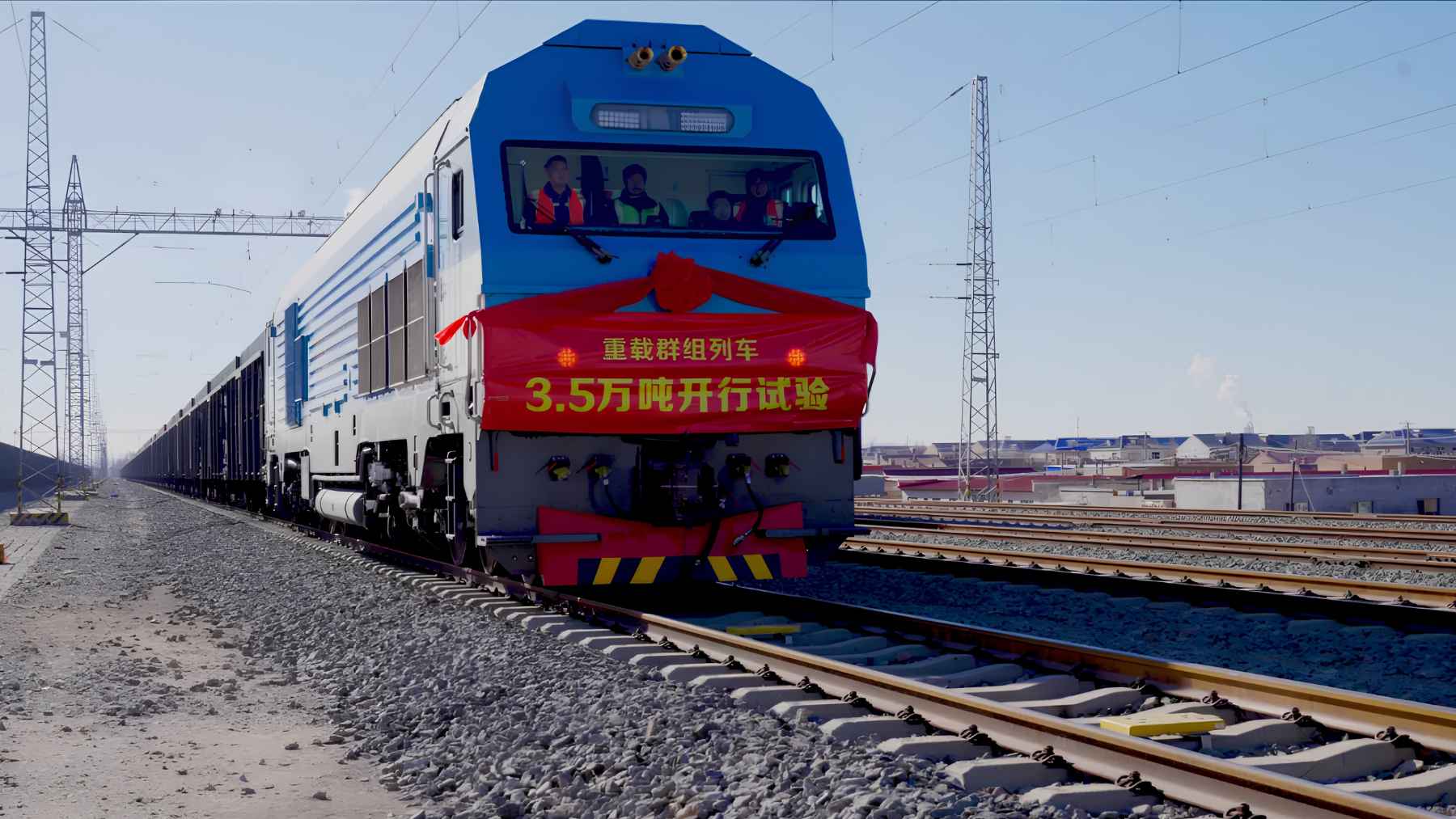
On December 8 of the year 2025 seven heavy-haul coal trains, in a close formation, moved together across inner Mongolia even though they were not physically coupled to each other thanks to a new technology that was put to work. Each of these trains is controlled through a wireless system that is called “virtual coupling“.
As it is known, the freight corridors are quite congested, and with this new system the future for transportation could really change. Baoshen Railway officials say that this type of technology could increase capacity by more than 50 percent. But the key point is here: this would not bring bigger costs.
Still, the used cargo in the test for this new system was coal, which really brings a complicated environmental concern. All this can be efficient, but what is the limit?
A radio link that became a coupler
The way this technology works is very interesting and striking. Zhang Guozhen, project lead at the CRSC Research & Design Institute Group expressed that each train “knows” exactly what the rest are doing, not by physical contact…. but by radio waves.
A great example is if the lead train stops, the order or the command is transmitted to the rest of the group in milliseconds. So, this would cause the rest of the units to reduce their speed almost instantaneously.
Why shorter gaps matter so much
If we were talking about conventional railways, a wide separation is definitely needed because the physical signaling system must guarantee enough for safe stopping and avoid collision risk. The heavy freight also brings another problem: the fact that a very long mechanically connected train behaves like a chain of springs with forces building through the couplers as the slack stretches and compresses during acceleration, braking and changes in grade, which could in turn be dangerous if the trains are bumped towards each other.
The important detail is that the cards inside of each of the seven freight trains were still physically coupled, but the seven complete train units were not coupled to one another, so virtual coupling is replacing exactly that mechanical link between trains, rather than making every steel coupler disappear.
More freight without pouring more concrete
As everything we do in our modern lives the costs the project could cut matter a lot. At present day the Baotou-Shenmu Railway handles about 180 million metric tons of freight per year, according to the website Xinhua. As mentioned previously the railway officials calculate that virtual coupling could lift that capacity by more than 50 percent while also avoiding major track or station expansion. Liu Zhaohui of the CHN Energy Baoshen Railway summed up the idea by saying, “The beauty lies in using intelligence instead of iron.”.
That matters beyond the balance sheet though. Building new rail corridors requires more steel, concrete, land and years of construction, so getting more use of already existing infrastructure relieves the pressure on all fronts. Still it is important to take into account that the available data from the tests still do not quantify the energy savings or CO2 reduction per ton of freight moved. That is something we will analyze later.
The coal contradiction cannot be ignored
As was said before, these trains transported coal. So a system that has the ability to change the corridor into one that is more productive will make the movement of more coal easier. Remember that coal is a fossil fuel whose combustion releases large amounts of carbon dioxide into the atmosphere.
If you still have doubts, it is important to say that this technology itself does not burn coal. To make it clear, it is a railway control system that can optimize the transport of other types of heavy freight. And this is no small matter, since it can add an environmental value (depending, of course, on what and how the extra capacity is used and if those efficiency gains reduce the need for new infrastructure)
The human factor may be the hardest test
Train driver Shi Haogang said that seeing a train so close can be “a bit terrifying” at the beginning. This reaction is quite expected… Remember that in his whole working life he was trained to understand short distances as a danger. But it is not only distance that will change. Also, they will have to learn how to use the new software and get used to what they see through the windshield.
Still today there are some remaining questions that worry the community. What about the performance in severe weather, unstable communications and long-term reliability?
What happens next to the virtual coupling technology
For those with “environmental consciousness” there is still something that worries them: the type of freight that will actually be transported and if the technology will actually reduce material use and energy demand rather than just increasing fossil-fuel emissions.
CHN Energy states that the high level of coordination these operations have. They reinforce the idea that now the trains will be independent without the need for manual connection. That flexibility in the virtual coupling is the difference that turns clever engineering into a useful freight tool.
The official announcement was published on CHN Energy.