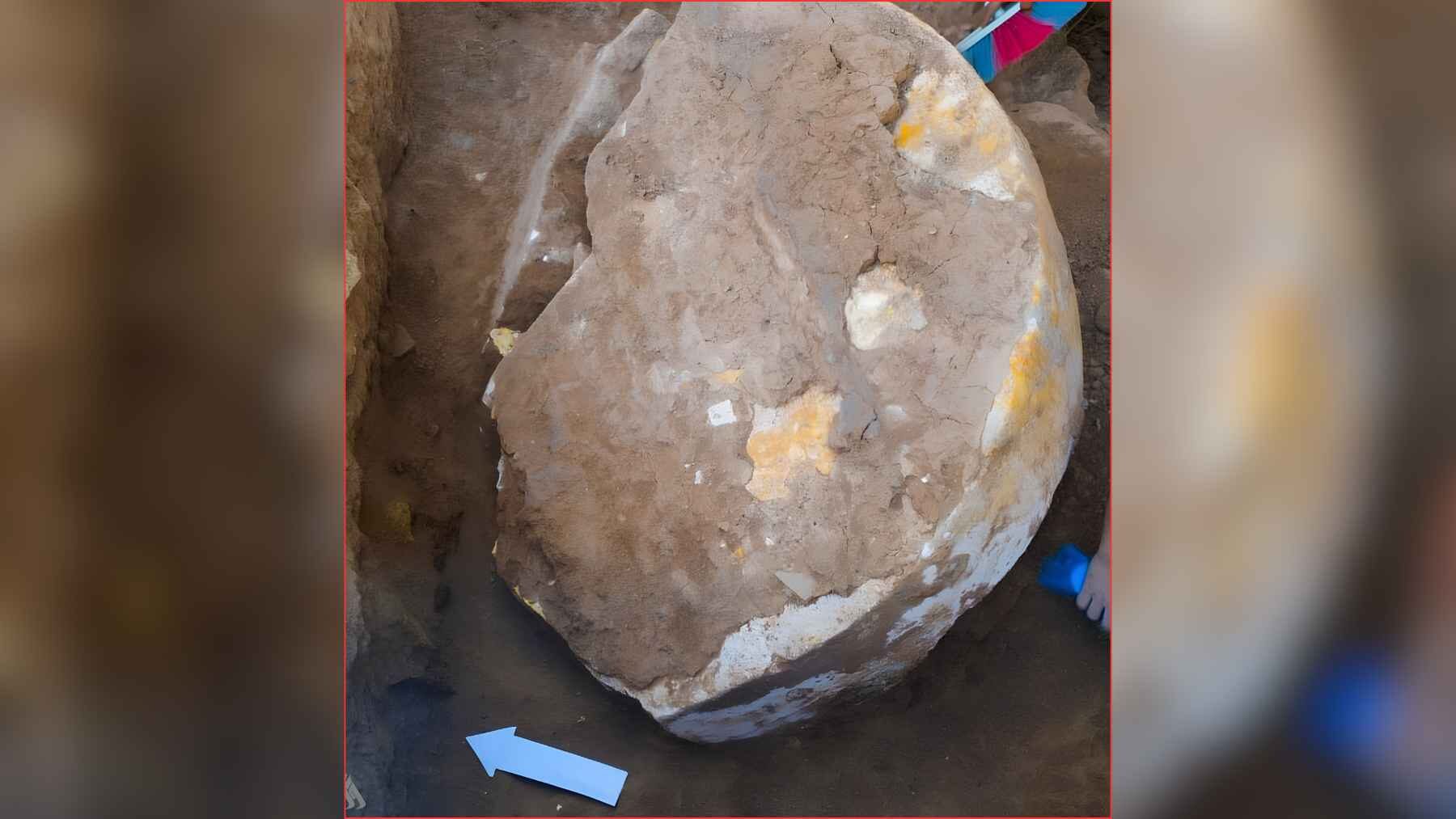
A carved monument tied to Assyrian King Ashurbanipal has been recovered at Bab Shamash, also known as the Sun Gate, in the ruins of ancient Nineveh near Mosul, Iraq. The stele was found on June 6, 2026, during work by a joint Iraqi-American archaeological mission and publicly announced by Iraqi authorities on June 24.
Standing 6.6 ft. high and 5.1 ft. wide, the fragmented stone bears a large royal image, smaller carved scenes, and lines of ancient writing. Initial readings suggest the inscription records construction projects in Nineveh and elsewhere in the Assyrian Empire, but a full translation has not yet been released. That unfinished text may be the most valuable part of the discovery.
A royal record in stone
A stele is an upright stone monument carved to preserve a message, honor a ruler, or mark an important event. Officials describe one face as dominated by Ashurbanipal in high relief, meaning the figure projects strongly from the stone, while the other side carries smaller royal scenes and an inscription. The monument was cut from Mosul limestone, a pale local stone widely used in Assyrian carvings.
The writing is cuneiform, a system named for the wedge-shaped marks used across ancient Mesopotamia. On a monument like this, those signs turned royal achievements into a durable public record, much like a modern plaque on a major building project, although with a far stronger political message. Essentially, the king was presenting construction as evidence of his authority and ability to transform the capital.
Why the Sun Gate matters
Why was the stele placed at a gate rather than hidden inside a palace? The Shamash Gate stood in Nineveh’s eastern defenses and opened toward the road from Erbil, making it one of the city’s main points of arrival. Travelers, officials, soldiers, and traders approaching the capital would have encountered architecture designed to project royal power before they entered.
The discovery also grew out of conservation rather than a stand-alone treasure hunt. The Shamash Gate project, led by the University of Chicago’s Institute for the Study of Ancient Cultures and Iraqi partners, has documented tunnels, smashed stone panels, unstable walls, and other damage following the Islamic State occupation of Mosul from 2014 to 2017. Restoration crews had to stabilize the site while excavating it, a slow process in which safety and preservation mattered as much as discovery.
The discovery has a longer story
The June announcement appears to mark the recovery and raising of the fragmented monument as a substantial object, rather than the first time any piece had been recognized. A project report covering fall 2024 and spring 2025 says conservators were already cleaning and stabilizing 11 fragments identified as part of an Ashurbanipal stele recovered from destruction debris above the gate floors.
Taken together with the Iraqi account, the records suggest teams gradually located, treated, and assembled pieces before the larger recovery was announced. This distinction matters because archaeology rarely happens in one dramatic moment. More often, the story emerges fragment by fragment, followed by months or years of conservation, translation, and comparison.
Ashurbanipal’s capital
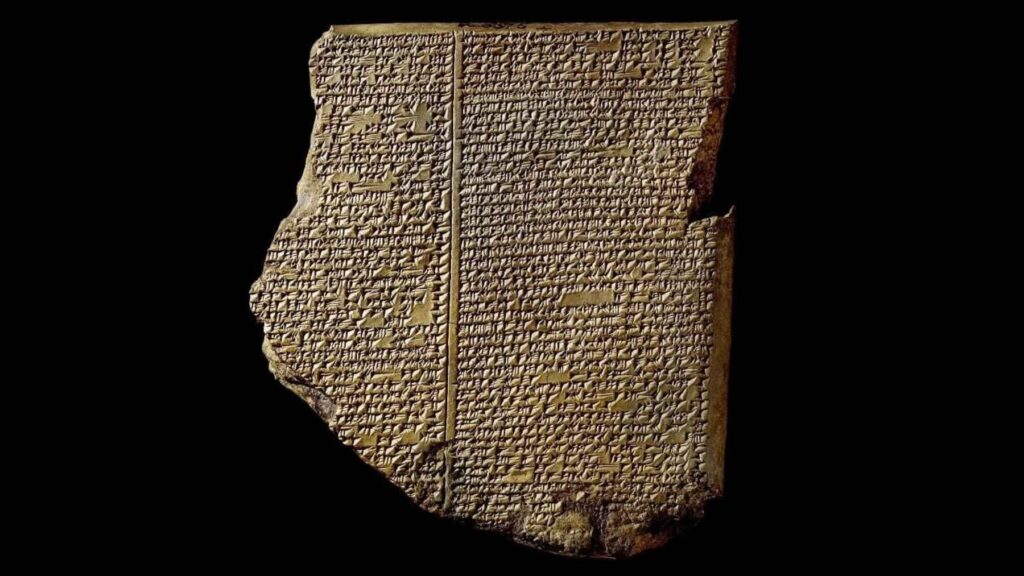
Ashurbanipal ruled from 668 to 627 BCE, when Nineveh served as the capital of the Neo-Assyrian Empire. He is remembered for military campaigns and monumental construction, but also for collecting knowledge on a scale that still shapes modern understanding of Mesopotamia. Estimates of the original holdings remain uncertain, but the surviving collection known as the Library of Ashurbanipal includes more than 30,000 clay tablets and fragments.
Those texts cover literature, medicine, rituals, royal correspondence, scholarly reference works, and versions of stories such as the Epic of Gilgamesh. The newly recovered stele provides a different kind of evidence. Instead of preserving knowledge gathered by scribes, it may reveal how the palace described public works and royal power to people moving through the city.
Conservation comes before conclusions
The stele has been transferred to the Nineveh antiquities inspectorate for initial maintenance, preservation, and specialized study. Conservators must remove dirt without damaging the surface, strengthen weakened stone, match fragments, and give specialists clear views of every surviving sign. Only then can researchers determine exactly which buildings or projects the inscription describes.
Nineveh antiquities inspector Ruwaid Muwaffaq called the find “a significant addition to Iraq’s cultural heritage.” Ali Obaid Shalgham, president of the Iraqi State Board of Antiquities and Heritage, said it reflects the depth of Nineveh’s history and the continuing effort to document Mesopotamian civilization. Officials are considering whether the monument should eventually return to the restored gate or enter the planned Mosul Civilization Museum.
Iraq is preserving more than Nineveh
The recovery comes as Iraq works to protect other vulnerable ancient landmarks. In May 2026, crews were carrying out a seventh major restoration campaign at the Ziggurat of Ur in southern Iraq, using locally produced bricks and traditional techniques on its first tier, three main stairways, damaged second level, and upper structure. A ziggurat is a massive stepped temple platform, and this one was built around 4,000 years ago for Nanna, the Mesopotamian moon god.
The threats differ from place to place, with Nineveh carrying damage from war, tunnels, and structural collapse while Ur also faces wind, rain, salt, dust, and erosion, but the lesson is largely the same: Iraq’s ancient monuments are not simply being uncovered, they must be stabilized before another chapter of evidence disappears.