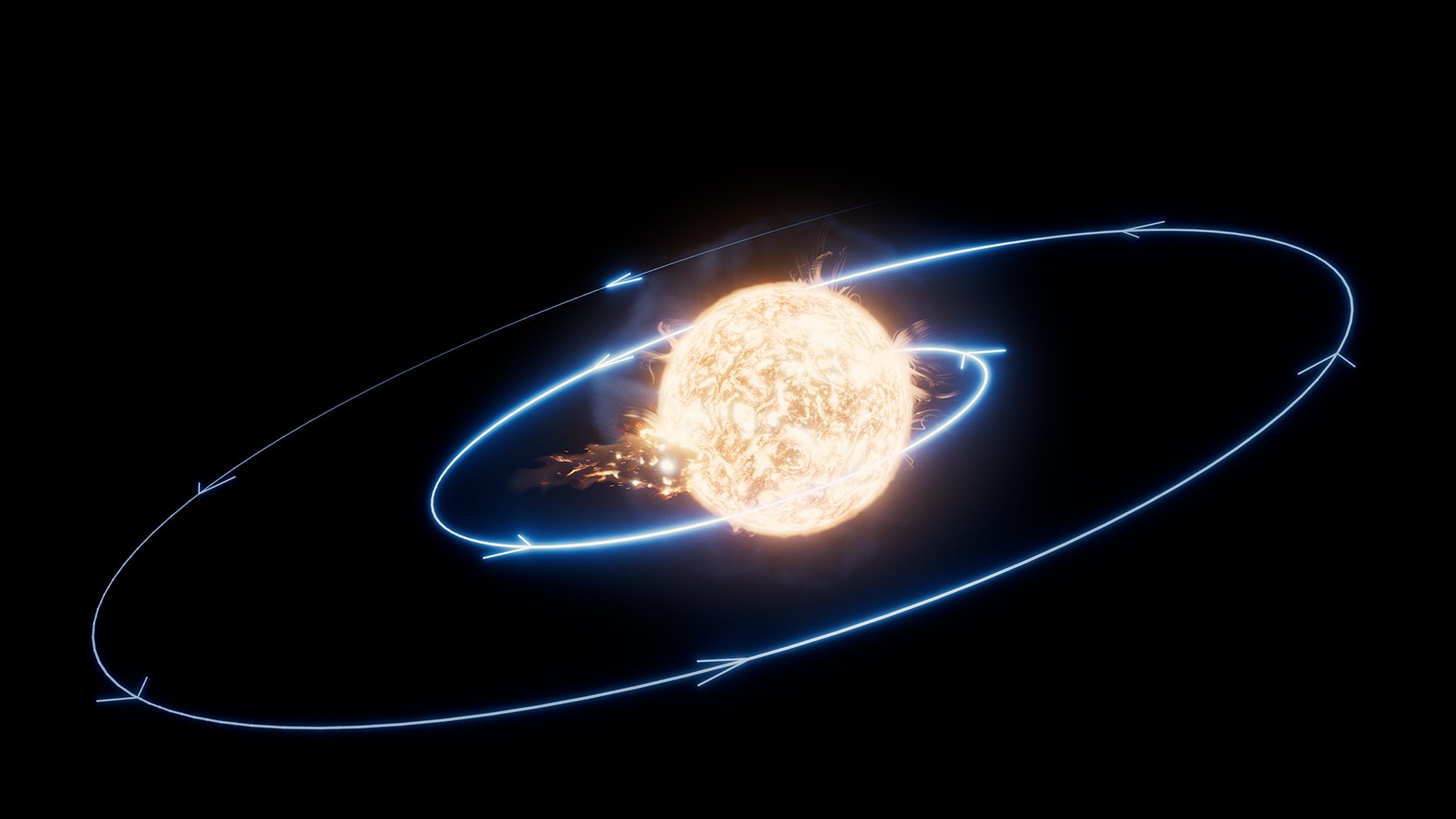
A star that should have behaved like a steady porch light started flickering instead. In archived observations, astronomers saw Gaia20ehk dim three separate times after 2016, then tumble into chaotic brightness changes around 2021.
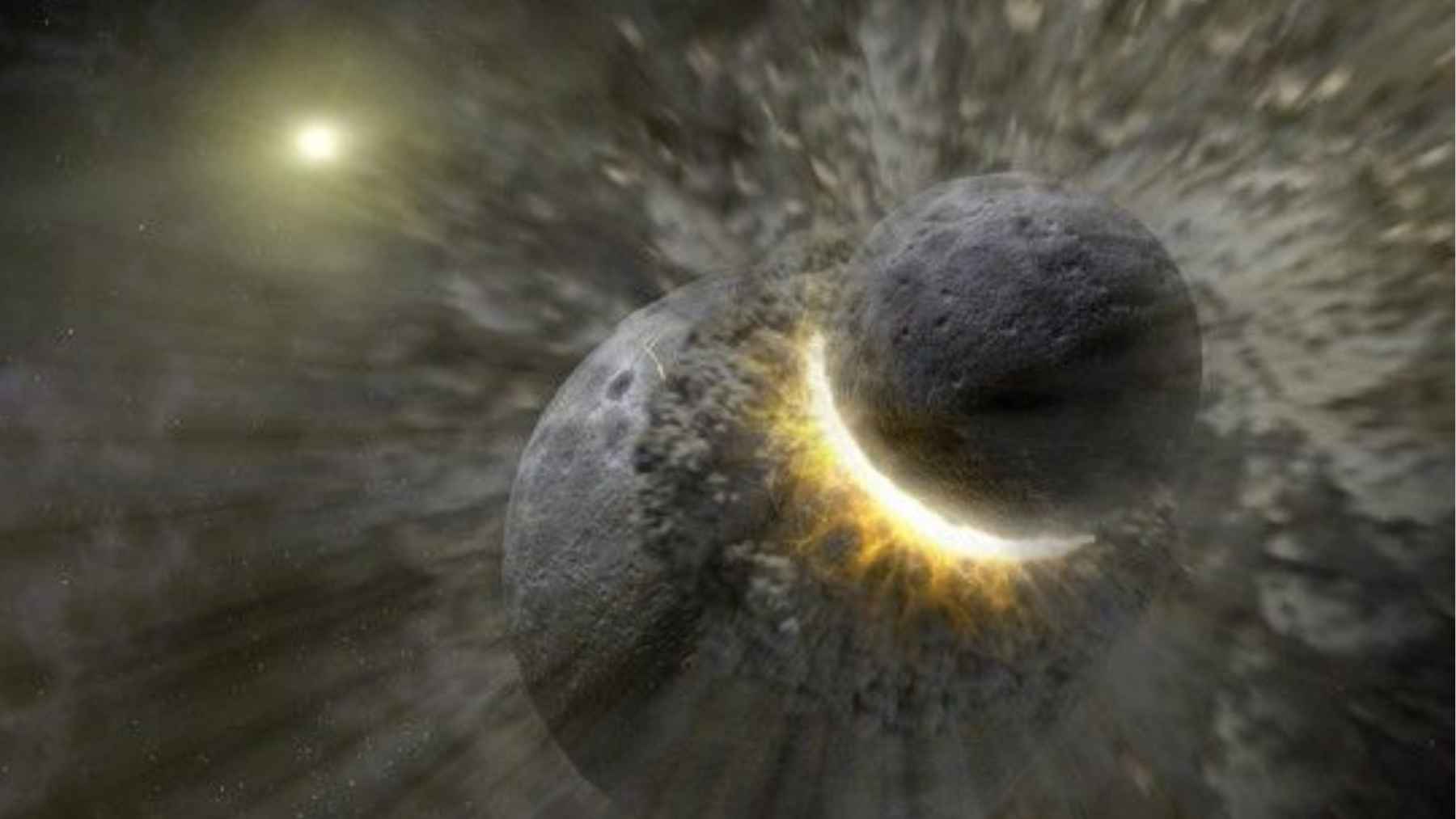
So what does a planet crash look like when you cannot see the planets at all? In this case, it may look like a moving veil of dust and rock, so hot it glows in infrared, orbiting a star about 11,000 light-years from Earth, or roughly 65 quadrillion miles away. The team reported the results on March 11, 2026, in The Astrophysical Journal Letters.
A calm star that suddenly misbehaved
Gaia20ehk sits near the constellation Puppis and appears to be a main-sequence star, the kind that usually shines with predictable steadiness. That is why the light curve stood out, because it showed a pattern of dips followed by years of messy, irregular fading.
The team, led by University of Washington doctoral candidate Anastasios “Andy” Tzanidakis, concluded the star itself was probably not changing. In their paper, they label the system Gaia-GIC-1 and describe it as a catastrophic planetesimal collision candidate, a careful way of framing a possible impact between planet-building bodies.
Seeing that kind of debris in the right alignment is rare. The orbit has to line up so the cloud passes between the star and Earth, and you also have to keep watching long enough for the story to unfold.
The infrared spike that gave it away
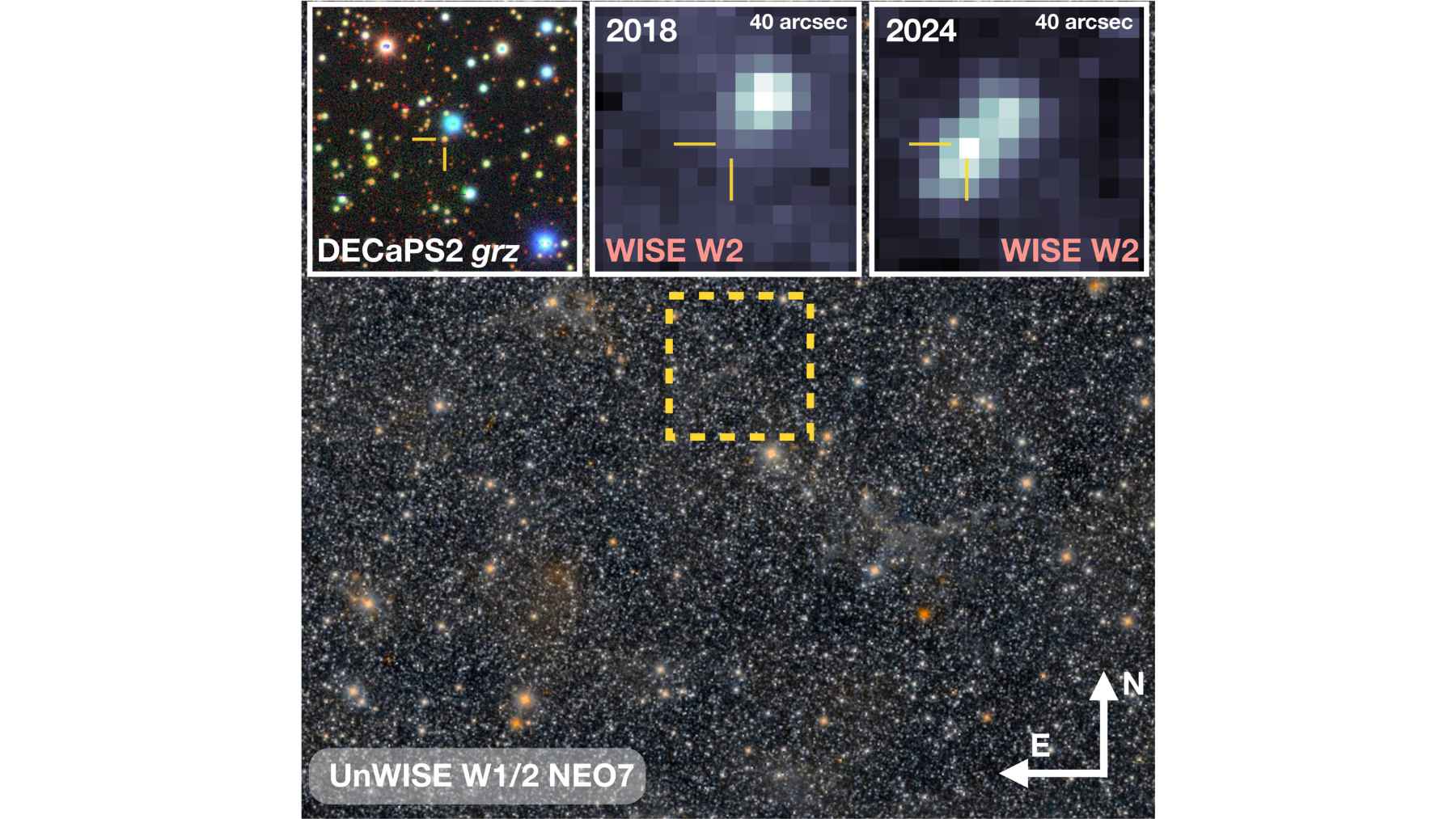
If this were only a dusty eclipse, you would expect visible light to drop and not much else to happen. But the researchers found the infrared behavior did the opposite, rising sharply as the star dimmed in visible light.
That mismatch is a key clue because warm dust emits infrared radiation. Tzanidakis put it bluntly, saying the debris looked “so hot that it’s glowing in the infrared,” which is hard to explain without a major release of energy.
In the paper, the authors estimate the dust temperature at about 900 Kelvin, around 1,160 degrees Fahrenheit, using WISE measurements. They also report the system has stayed infrared-bright for more than four years, suggesting an ongoing, evolving cloud rather than a brief puff of material.
A debris cloud near an Earth-like orbit
Location matters in planetary systems, and this one is striking. The dust appears to orbit at about one astronomical unit from the star, roughly 93 million miles, which is comparable to the distance between Earth and the Sun.
The study also reports a repeating signal of 380.5 days before the infrared brightening, consistent with an orbit around 1.1 astronomical units, about 102 million miles, if the star is roughly 1.3 times the Sun’s mass. That kind of timing helps researchers treat the debris like something with a trackable path, not random smoke.
What the debris becomes is still unknown. The team notes it could cool and clump into new bodies, perhaps even a planet and moon pairing, but that could take years or it could take millions of years.
A crash that echoes our Moon’s origin
Planet building is chaotic, and collisions are part of the process even if we rarely catch them in action. In practical terms, this system offers a fresh window into the same physics that shaped our own neighborhood long before life had a chance to get started.
NASA explains that one leading family of ideas for the Moon’s birth involves a high-energy impact about 4.5 billion years ago, when a Mars-sized body struck the young Earth and blasted molten debris into orbit. Over time, that debris cooled and assembled into the Moon we see today.
James Davenport, a coauthor on the Gaia20ehk study, argues that moons may be one of the “magical ingredients” that help make a planet life-friendly, partly through tides and long-term mixing of oceans and atmosphere. That is not a guarantee for every world, but it is why astrobiologists want to know how often moon-forming impacts actually happen.
Rubin Observatory and the next big test
Right now, Gaia20ehk stands out because the sample size is tiny. Davenport has suggested that the Vera C. Rubin Observatory could find around 100 similar impacts over the next 10 years by repeatedly surveying large swaths of sky and flagging unusual dimming events.
Rubin’s own description of its Legacy Survey of Space and Time says it will take hundreds of images of the Southern Hemisphere sky every night for ten years and generate about 10 terabytes of data nightly. That kind of relentless coverage is exactly what you need to catch slow-motion events that would be easy to miss in a single snapshot.
There is one important caveat for readers because the evidence is indirect, and the “collision” label rests on how well dust and heat fit the data. Even so, this is a rare chance to watch planetary recycling in progress.
The study was published on IOPscience.