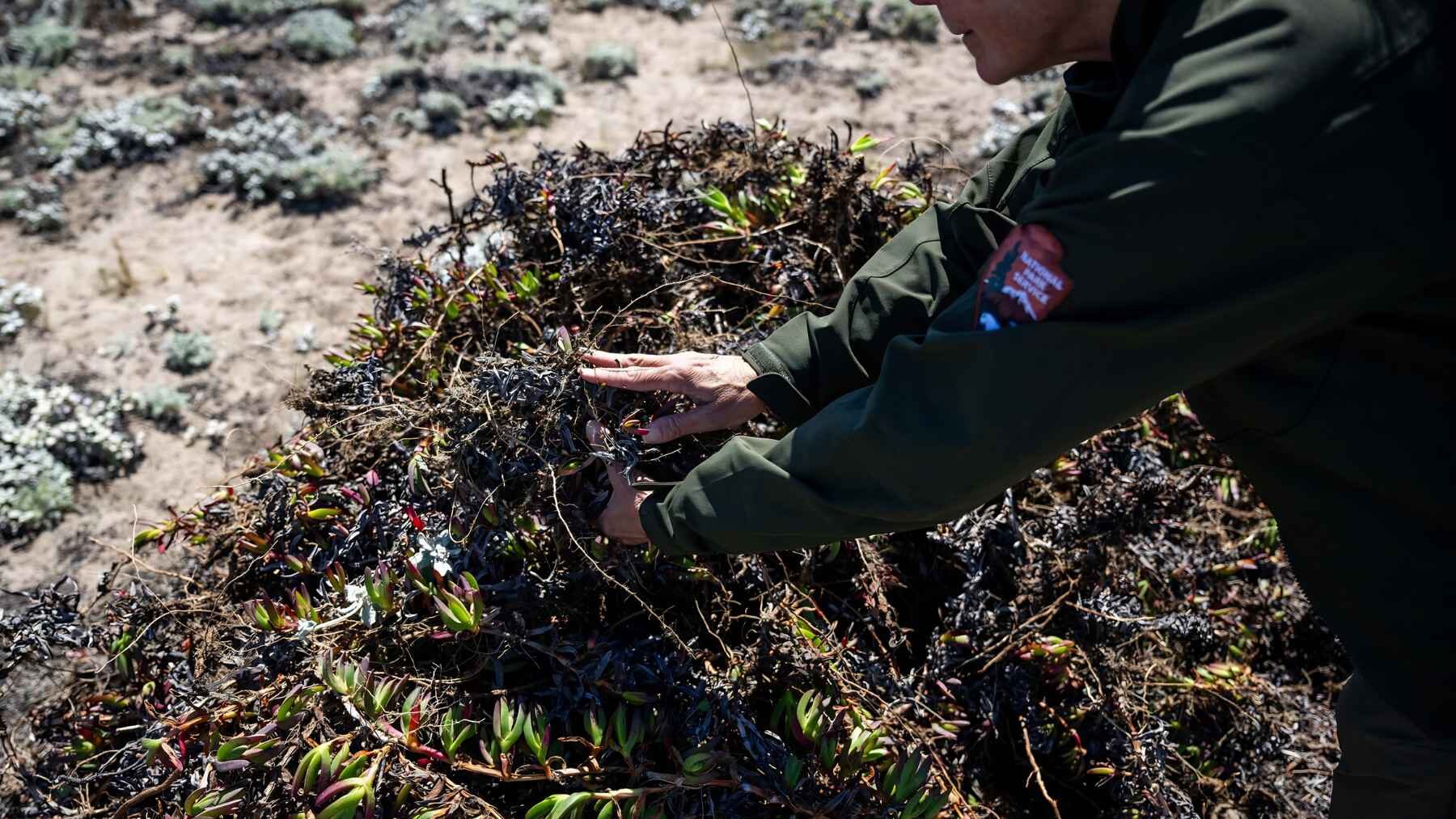
California once treated highway iceplant as a practical answer to loose soil. Brought from South Africa in the early 1900s to stabilize railroad tracks and later used by Caltrans, the succulent now occupies bluffs, dunes, beaches, scrub, and grasslands while individual plants can expand more than 3 feet in diameter in a single year.
Speed is not even the main issue with Carpobrotus edulis, which is its scientific name. The real problem is that it holds sand in place almost too well, pushes our native plants, and changes the soil itself. So even after you rip the plant out, the work of fixing a dune has really just begun
A solution built for still ground
At that time, the logic behind planting it made total sense. Here was a plant that could survive salty air, strong wind, and poor soil without any real upkeep, exactly what you would want on a railway line, a steep road shoulder, or any slope where the dirt kept washing away.
But coastal dunes are not failed hillsides waiting to be locked in place. Sandon on a dune is supposed to move, creating ridges, hollows, and open patches used by plants and animals adapted to a changing landscape. And iceplant can interrupt that cycle and alter dune structure.
How one shoot becomes a carpet
Highway iceplant spreads close to the ground, and any part of its stem that touches soil can grow roots. Even a tiny piece left behind can grow into a whole new plant, so a rushed cleanup can accidentally leave the next invasion sitting right there.
Seeds add another route. Each fruit can contain hundreds, and animals like deer, rabbits, and rodents often spread them around in their in droppings, especially into disturbed ground where new plants take root more easily.
Native plants lose the contest
Once nearby patches of iceplant grow into each other, they form a thick, solid mat that blocks sunlight and takes over the space. The California Invasive Plant Council, known as Cal-IPC, rates the plant “High,” their top category for plants that cause serious damage and spread aggressively.
The damage does not stop at the surface either. PlantRight reports that iceplant can raise salt levels in the soil and reduce organic matter, hold back some native plants from growing, and make the sand a more welcoming place for other invasive species that would not normally survive there.
The soil may remember
A 2013 study published in Biological Conservation found that soil once invaded by iceplant kept effects that made it harder for native plants to grow back, even after the iceplant was removed. That does not mean every site in California will react the same way, but it helps explain why bare sand does not always bounce back on its own.
National Park scientists at Point Reyes, have seen this too. They call it a “legacy effects”, where changes left behind in the soil’s chemistry can slow down native plants or leave an opening for new weeds to move in instead. In practical terms, getting rid of the green mat does not automatically restore the old ecosystem.
California has seen recovery work
There’s good news too. After crews removed iceplant from about 100 acres near the Point Reyes Lighthouse between 2002 and 2004, the National Park Service reported that former iceplant areas held nearly twice as many native plant species on average as they did before removal, although workers still had to keep an eye out for regrowth.
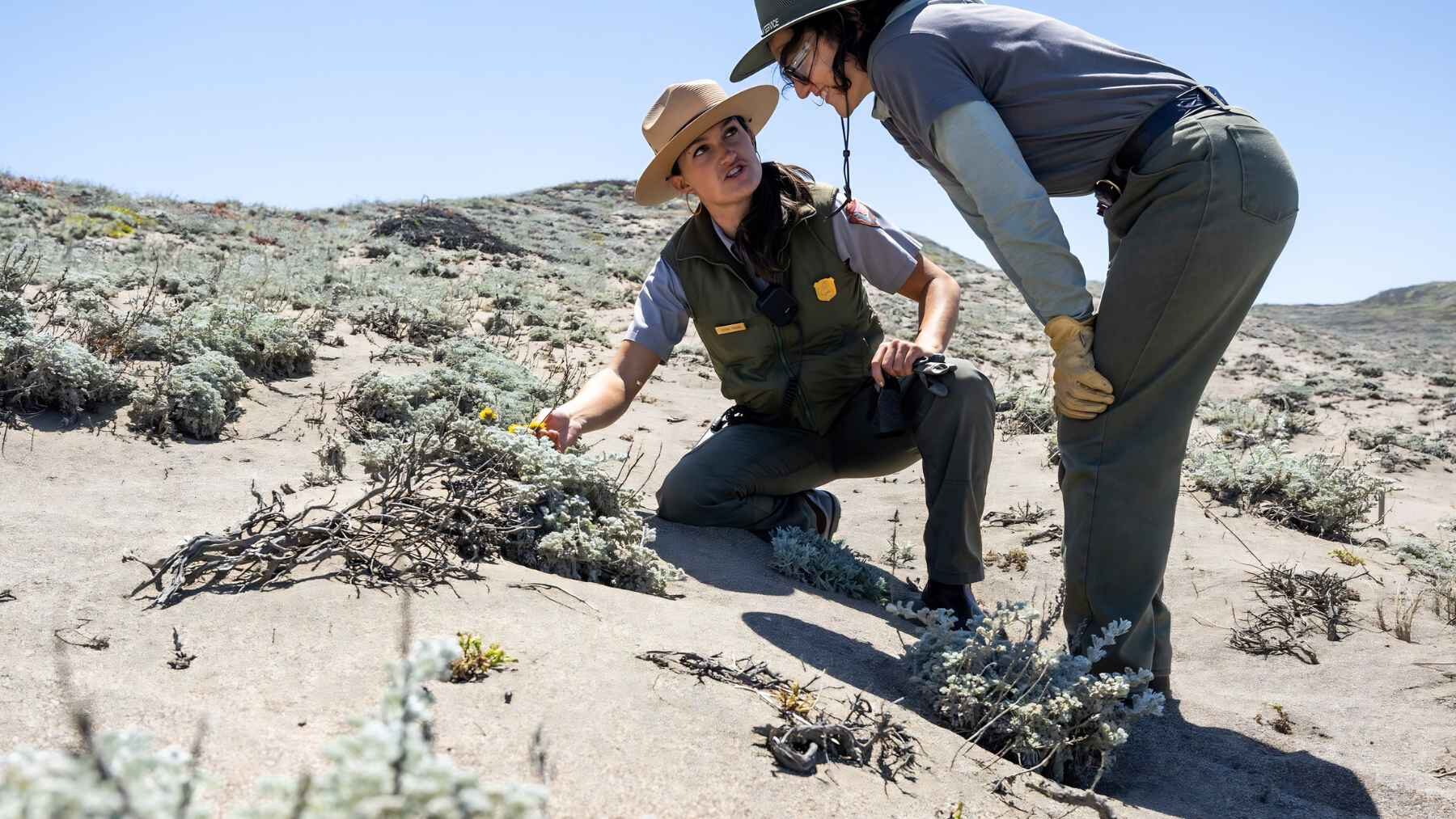
At Silver Strand State Beach, California State Parks says native dune plants emerged from seeds that had been sitting dormant under thick iceplants mats for years, once those mats were finally pulled in the early 2000s. One rare plant, Brand’s phacelia, showed up afterwards in a coastal area that is now being closely protected and watched.
Pulling is only step one
If you have iceplant on your own property, UC Agriculture and Natural Resources has two pieces of advice: don’t plant it in the first place, and if you’re removing it, make sure you pull every single live piece. Leave even a small chunk behind and it can take root all over again.
Bigger coastal areas need a more careful plan. Early results shared at the 2025 Cal-IPC Symposium from a 30-acre restoration project at the Jack and Laura Dangermond Preserve, suggest the right approach depends on the habitat. Scrub areas may need active reseeding, while some dune and wetland spots can recover on their own using existing plants and seeds already in the ground.
What California’s coast is teaching us
Iceplant has become a century long case study in how solving one visible problem can quietly create a much bigger one down the road. A plant selected to hold soil did exactly that, but in a dune system, movement is part of the habitat rather than a defect.
Real, lasting restoration takes more than just removing the invasive plant. It means giving native species room to come back, watching closely for leftover pieces and new weeds, and accepting that bringing a coastline back to life takes time. It is not something you can fix in a single day.
The official restoration summary was published on California Invasive Plant Council.