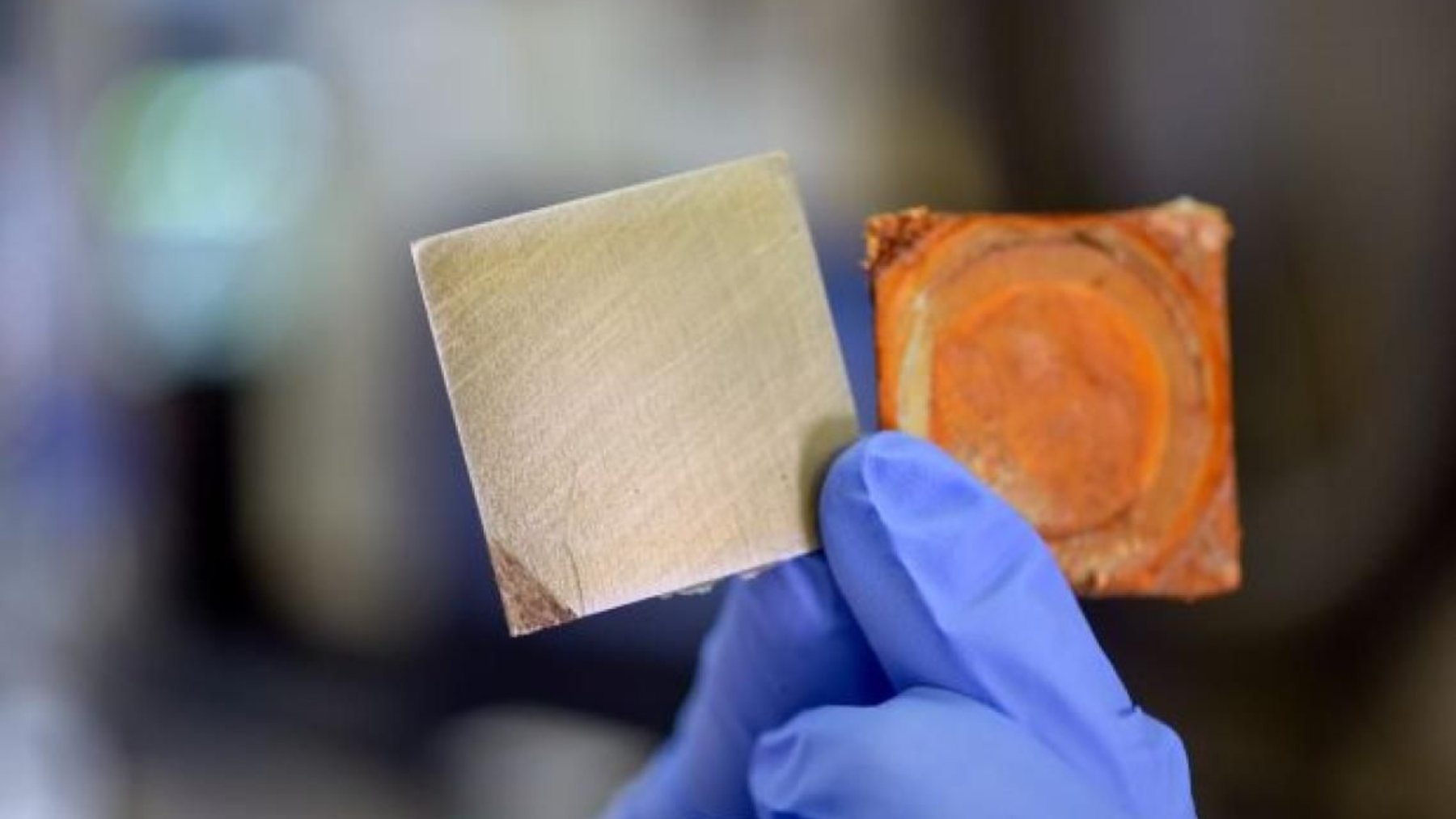
The industry is ready to leave behind metals, one of the most used materials in history, but also one of the most polluting. This is a sector that is not afraid of losing the most traditional methods – we saw it with the substitute that is going to do away with tiles forever – but now they have employed a resource that science fiction predicted and that we never thought we would see materialize.
The industry is doing away with metals for good: there is already a replacement
Carbon nanotubes are hollow cylindrical structures composed of carbon atoms arranged in a hexagonal network similar to graphite. They were discovered in 1991 by a Japanese scientist, who described them as “carbon needles”, which is an indication of how extremely small they are.
These nanotubes have a diameter of only a few nanometers (billionths of a meter) but can reach lengths of several millimeters. Due to their small size and unique structure, carbon nanotubes possess exceptional properties such as high electrical and thermal conductivity.
They also have high mechanical strength and elasticity, something that metal cannot achieve. In particular, carbon nanotubes are up to 100 times stronger than steel but only a fraction of its weight. They are also excellent thermal and electrical conductors, comparable or superior to copper.
Widespread optimism: promising advances with carbon nanotubes
Chinese researchers have achieved a major breakthrough in the manufacture of 7nm diameter carbon nanotubes. This represents a milestone, as carbon nanotubes at this nanometer scale have exceptional properties that are of interest to us from an environmental point of view.
The team at Tsinghua University in Beijing has managed to synthesize single-walled carbon nanotubes with an ultra-small diameter in a controlled manner using a new growth method called “vapor injection”.
The resulting nanotubes have a diameter of only 0.7 nm, approximately 50,000 times thinner than a human hair. At this scale, the nanotubes acquire unique mechanical and electrical properties, making them revolutionary materials for cutting-edge technological applications.
This finding represents a major step forward in realizing the potential of carbon nanotubes in next generations of electronic devices, ultra-strong lightweight materials, neural interfaces and other transformative innovations.
Applications of carbon nanotubes, the most spectacular
Carbon nanotubes have a wide range of applications in various industries due to their excellent mechanical, electrical and thermal properties. In any case, what interests us is how they will reduce the pollution associated with the production and handling of metals.
In the electronics industry, they are used to manufacture high-performance transistors, touch screens and solar cells. Nanotubes are good electrical conductors, making it possible to create more efficient and smaller electronic components.
In mechanical and aerospace engineering, nanotubes are added to composite materials such as carbon fiber, aluminum and titanium to make them stronger and lighter. This makes it possible to create more efficient and durable aircraft, cars and other vehicles that are compatible with hydrogen or electric motors.
In biomedicine, nanotubes are used to transport drugs inside the body and release them specifically into diseased cells. They are also used in bone implants and prostheses to improve their biological compatibility.
It is clear that carbon nanotubes are going to replace metals in industry, with a material that we have not seen until now. The truth is that it is not the only material that is going to disappear forever; in a very short time, bricks will also disappear in construction. The reason? They have become obsolete, they pollute too much and generate the heat island effect in cities, to top it off.