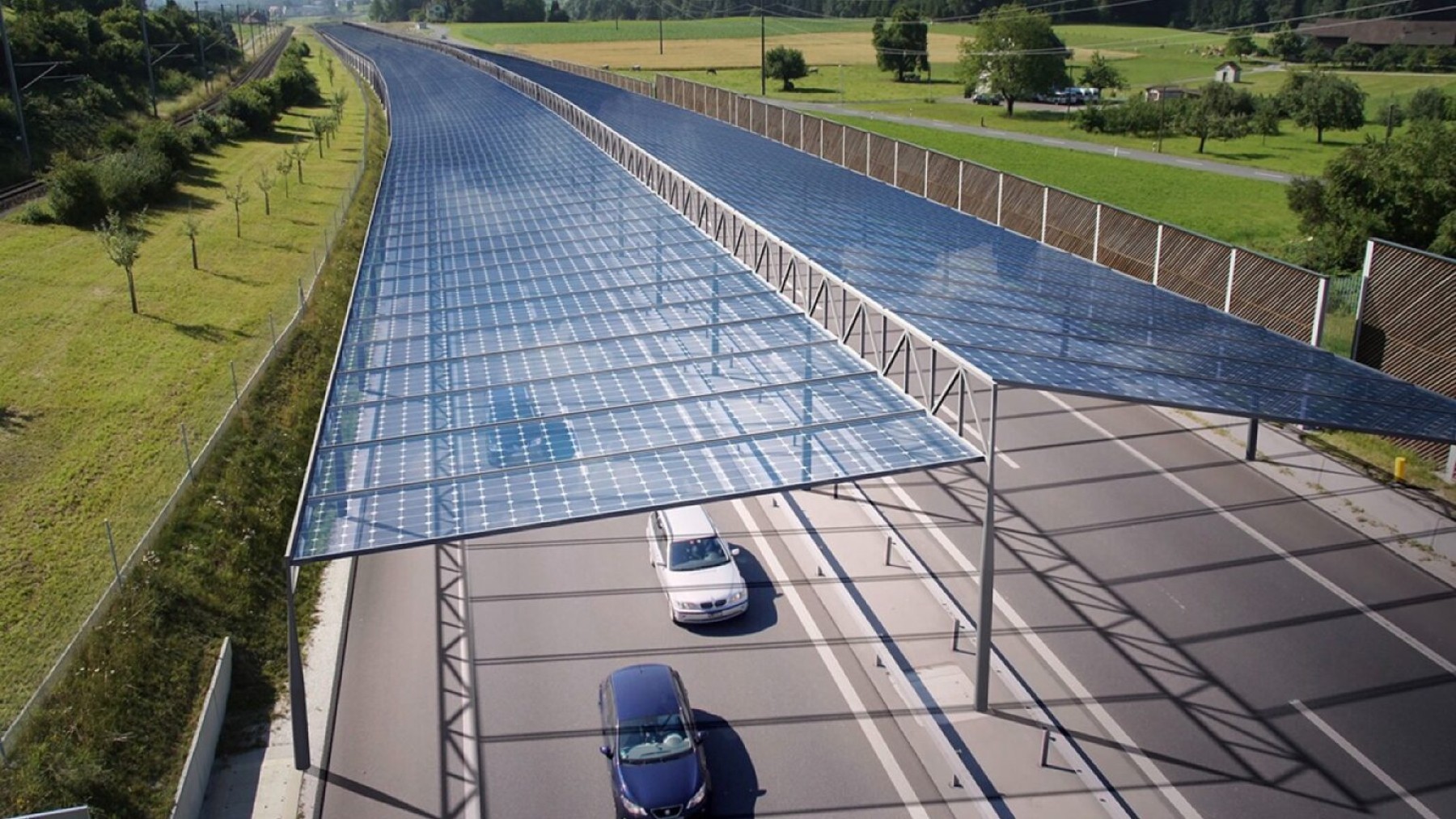
For a long time, the world of the energy and automotive industries has been striving to find a solution to the high carbon emissions coming from these sectors. To make this possible, different scientists and specialists have set to work and searched for a solution to help reduce or neutralize the carbon of these industries. Now, a megaproject has been launched to turn on more than 52 billion solar panels. It seems to be science-fictional, but now has been confirmed.
A promising project leaves the energy sector on tenterhooks
In this energy transition that is being experienced worldwide, one of the most frequented renewable energies was photovoltaic, being the most attractive option to implement in countless projects that seek to leave in oblivion the large carbon dioxide emissions, using renewables to self-supply large spaces and projects.
Well, this same renewable energy was chosen to merge with large highways in a truly innovative project that promises to contribute positively with large amounts of clean energy and gradually displacing the generation of energy from highly polluting fossil fuels.
We are talking about the innovative study published in the magazine Earth’s Future, which evaluates the great advantages that would have the application of a large number of solar panels along the most frequented highways and main roads of certain cities. In this way, a positive contribution would be made to the generation of clean energy and traffic losses.
Get to know all the details of its great energetic potential
According to the aforementioned study, it was concluded that, by covering with solar panels, more than four times the energy production per year of the United States could be obtained, even offsetting 28.78% of the carbon dioxide emissions that are currently emitted annually, contributing significantly to the neutralization of this delicate and harmful greenhouse gas.
This significant advance in the energy and automotive industry could represent the future of these sectors mentioned above, as it would represent a breakthrough in the mitigation of carbon dioxide, by turning to renewable sources of energy and not the traditional method that requires fossil fuels.
In addition, the implementation of these panels could encourage innovation in directly related technologies and motivate more industries to opt for sustainable and sustainable alternatives that benefit the environment by neutralizing carbon dioxide.
Some challenges present in this project
We are talking about the production costs of this amount of solar panels, which would represent an obvious problem since we are talking about 3.2 million kilometers of highways throughout the world. Not to mention the large structures needed to place these solar panels several meters above the ground.
Even the maintenance of these solar panels would represent a complex conflict as they are located several meters above ground through large structures. This situation is further complicated by the need for specialized equipment and trained personnel to perform maintenance tasks, which could further increase costs.
Although this study represents little feasibility in practice, several countries around the world are beginning to develop projects of this type, occupying spaces already built to benefit from photovoltaic energy and leaving fertile land areas to other types of projects.
The integration of solar panels on highways and roads throughout the world could represent a crucial step towards reducing carbon dioxide emissions, offering a significant source of clean, renewable energy to meet the energy demands of the population.