China continues to be confused about whether to lead the space race or the renewable energy race. Their latest project demonstrates this, as it amounts to some sort of bizarre fusion that has the world in suspense. They want to (and are willing to) launch this into space to generate an almost infinite amount of energy, even if it means covering the Earth and leaving America, among hundreds of other countries, almost in the dark for days on end. It sounds like a parody, right? Well, it is the reality, and now we are going to explain it.
China has developed its most ambitious project in history: 1 GW of power far away from the Earth
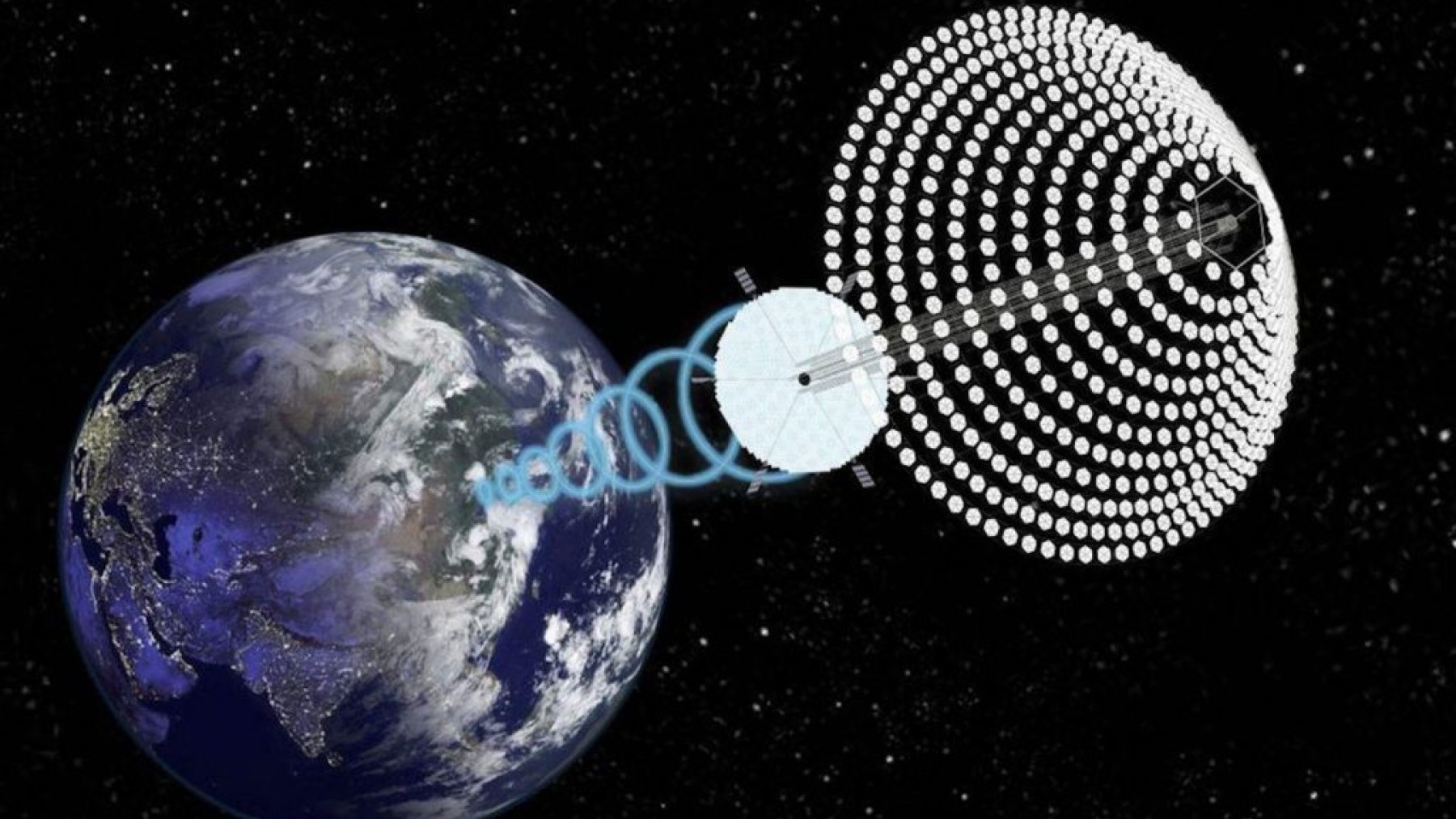
Chinese are progressing in a variety of ways in the development of a space-based solar power plant, which can revolutionize the future of energy services. This seems to be among the biggest projects, with the agenda of tapping solar energy that is constant and uninterrupted in space and transmitting it back to earth to produce electricity sustainably without polluting.
Based on the recent information, China is aiming to construct the first experimental SSPS by 2025, which is two years prior to the set timeline. CAST/CSA also called the China Academy of Space Technology, and the Chinese Society of Astronautics have undertaken the project, and now even NASA and ESA (European Space Agengy) are warned.
The first stage of the project entails sending a satellite into a Low Earth Orbit; with an altitude of around 400 kilometers. This means that this satellite will only have the task of transforming the collected solar energy into microwaves or laser beams that will beam the information wirelessly back to earth.
From 10 kW to 1 GW of renewable energy, but covering the Earth: This colossus will be placed 36,000 km away
To kick-start the project, the initial satellite is projected to emit a limited power of 10 kilowatts, which is barely the capacity of a few homes. But even more important is the plan for multiplying the scale of the project. Two years after the launch in 2028, a more powerful satellite would further be put in the geosynchronous orbit, which is about 36,000 km from the Earth.
This particular satellite should be able to produce 10 megawatts of energy that can possibly be distributed to military and civilian utilities. According to the output forecast of the space-based solar power station by the researchers, the output could go up as high as 2 GW by the year 2050, and that is comparable to that of India’s largest nuclear power plant, known as Kudankulam.
The world wants to stop China: This project could provoke serious damage to the Earth (and America)
This is followed by the lack of disturbances such as Earth’s atmosphere, weather, or day-night cycle since the solar power plant will be in space. Solar panels located in space can produce as much as 2000 gigawatts of power, which is forty times as much energy as one solar panel on the Earth can produce in a year.
Also, space-based solar power is environmentally friendly since it emits no greenhouse gases while generating electricity. That makes it a very suitable plan for the ongoing global process of phasing out fossil fuels and preventing climate change. But this is not to suggest that the project is without some form of challenge that hits it in the course of its implementation.
Solving the technical problem of developing high-performance and low-cost components like Solar Panels, Power Conversion systems, and Wireless power transmission systems with acceptable size and weight is a major technical challenge. However, it remains to be seen how it would fit into an increasingly crowded space of satellites (and not just Elon Musk’s constellation).
What could be a Chinese solar space station would give rise, who knows, to similar projects that even NASA (which managed to teleport photovoltaic energy recently) has among its plans. In fact, there has been a lot of talk about finding life in space by looking for a hypothetical Dyson sphere. What if we end up being the ones to install it? That remains to be seen and is in the very long term, but in any case, it is another matter.