Thousands of New York City subway cars that once carried packed rush-hour crowds now rest on the Atlantic seabed. Between August 2001 and April 2010, MTA New York City Transit deployed more than 2,500 retired train cars at underwater sites off the U.S. East Coast, where their cleaned metal shells became artificial reef habitat.
The story has resurfaced in 2026 as a dramatic environmental success, but it is not a newly completed experiment. The official record points to a long-running recycling project with real ecological benefits, along with an important lesson. The strongest results depend on clean, stable, durable material placed in the right location.
From rush hour to the ocean floor
The first major deployments featured the red-painted cars known as “Redbirds.” Later shipments included stainless-steel models, among them the “Brightliners,” giving train bodies that had spent decades under New York City a very different final stop.
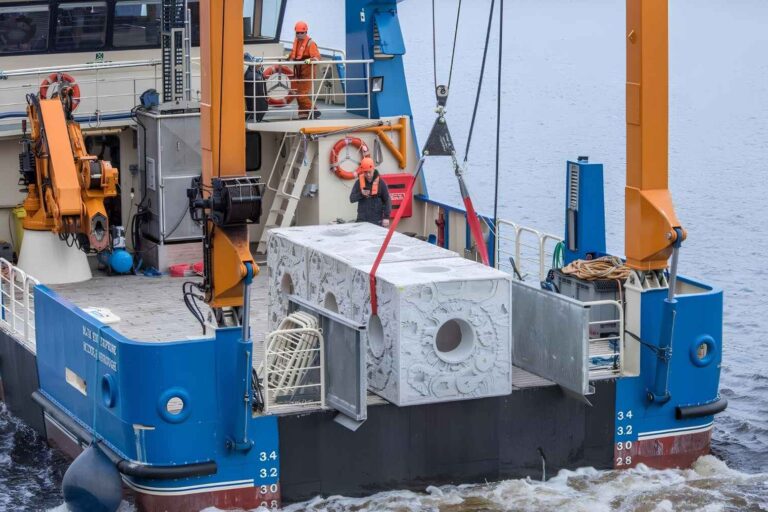
Before deployment, crews removed windows, plastic seats, copper wiring, motors, wheels, brake assemblies, and other loose components. Oils, lubricants, and hydraulic fluids were cleaned away, leaving the metal body, and floating cranes placed the shells into water roughly 65 to 130 ft. deep.
That preparation matters. Federal reef guidance says materials must be environmentally safe, physically stable, and inspected before deployment. Effectively, an abandoned vehicle cannot simply be pushed into the sea and called conservation.
Why train cars can become reefs
Much of the nearshore Mid-Atlantic seabed is flat sand or mud, with few natural rocky outcrops. Shifting sediment makes it difficult for attached organisms to find a steady surface, so a subway shell can work like an apartment block placed on an empty lot.
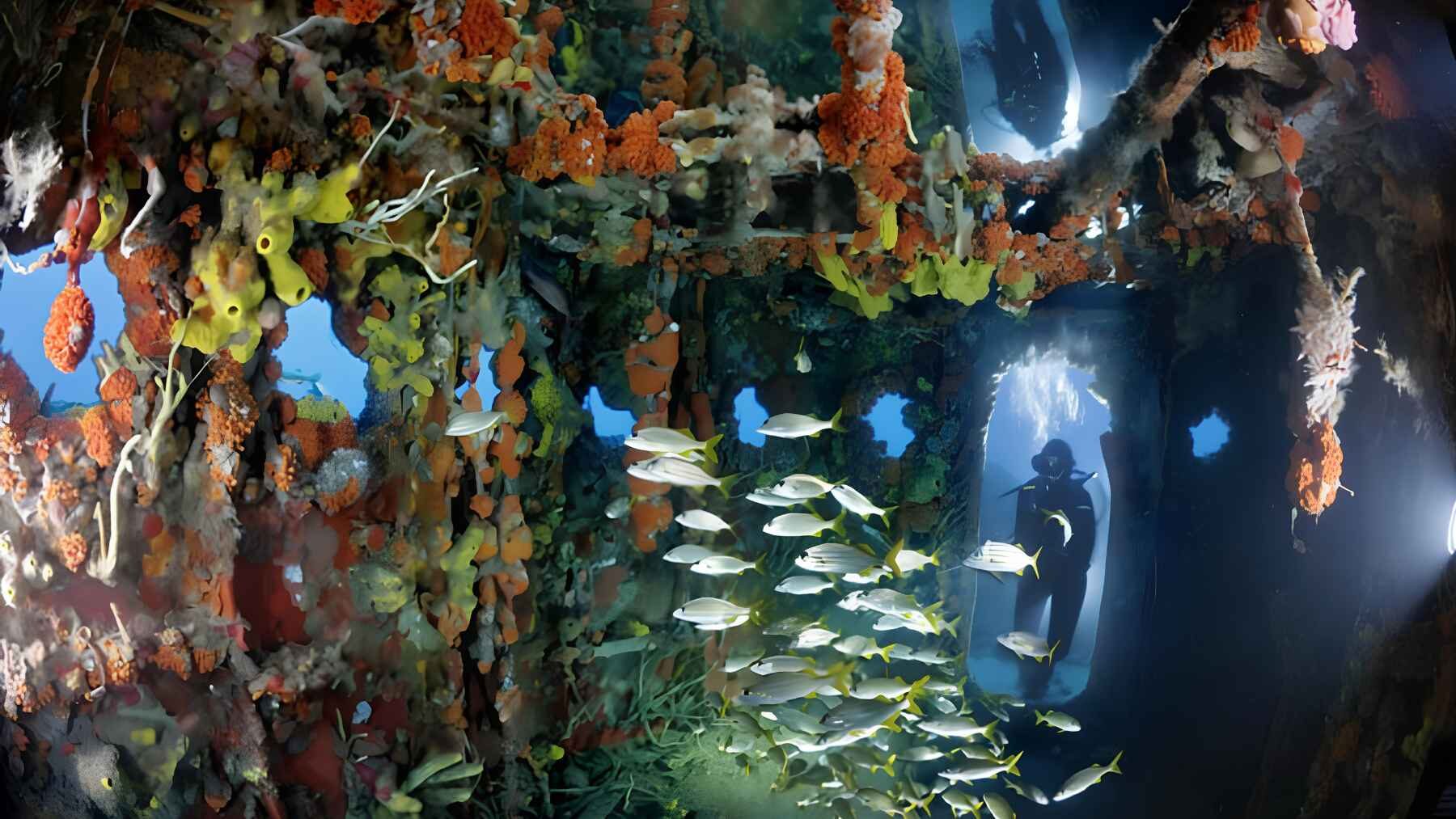
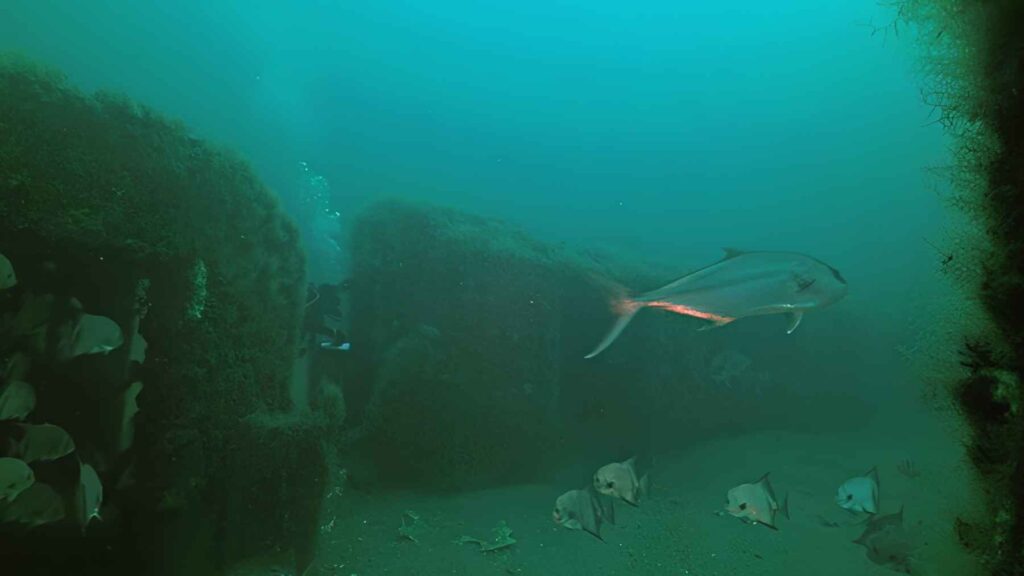
Mussels, sponges, corals, and other encrusting life can settle on the roof, walls, and floor. Open doors and windows create hiding places for smaller fish, while the raised structure adds feeding and spawning space that the surrounding bottom may not provide. Georgia marine biologist Cameron Brinton said such organisms can begin forming on suitable railcars “within a few months to a year.”
Delaware’s environmental agency says durable, stable, nontoxic reef material can develop a rich invertebrate community that feeds and protects fish such as tautog, sea bass, scup, and triggerfish. Predators then follow the smaller animals gathering around the structure. More than 600 subway cars measuring about 51 ft. long were donated for Delaware’s well-known Redbird Reef.
Marine life moved in
The New York Transit Museum describes the cleaned cars as new habitat in sections of ocean floor that had once been almost barren. Over time, the straight lines of a train become harder to recognize beneath marine growth. A doorway turns into a cave, and a roof becomes a feeding ledge.
Still, these sites are not replacements for natural coral reefs. They are human-made hard-bottom habitats built on a soft seafloor, and their value depends on local conditions. They can add shelter and surface area, but they should not be confused with full restoration of a damaged natural ecosystem or with a solution to ocean warming and pollution.
There is another wrinkle. Artificial reefs can gather fish from a wide area, which is useful for divers and anglers, but that concentration can also make vulnerable populations easier to catch. National Oceanic and Atmospheric Administration (NOAA) experts warn that poorly managed reefs may increase fishing pressure rather than create more fish.
Not every subway car performed equally
The later stainless-steel cars exposed a major durability problem. Updated marine reef material guidelines report that almost all states using the stainless-steel subway cars deployed in 2008 observed near-complete collapse within a year. Collapsed cars still leave material on the bottom, but much of the vertical shelter is gone.
That mixed result is one of the most important parts of the story. Seeing fish around an object does not automatically prove that it increased the total fish population. Reef performance depends on the structure, location, target species, durability, and the way fishing is managed around it.
So, was the program effective? To a large extent, yes. It converted thousands of carefully prepared cars into habitat and recreational reef sites, but the evidence does not support treating every deployment or every railcar design as an equal success.
What this project teaches today
The lesson is not that every old train belongs in the ocean. It is that selected secondary materials can support marine habitat when public agencies clean them, test them, place them under permit, and monitor what happens next. Without that work, reuse can quickly become underwater waste.
At the end of the day, the project turned a large urban disposal challenge into a remarkable coastal experiment. The cars stopped carrying commuters, but many began carrying a different kind of traffic, from tiny attached organisms to schools of fish passing through open doors.
That is the real legacy of the subway reef program.
The official program overview was published on the New York Transit Museum’s website.
Most read
- US scientists poured 16,500 gallons of lye into the Gulf of Maine and dyed the water bright pink to track it, the first federally approved try at reversing ocean acidity
- Soviet scientists released giant red king crabs into the Barents Sea in the 1960s to build a fishery, but decades later those invaders are still changing the seafloor
- New Orleans is collecting thousands of used Christmas trees and dropping them from helicopters to slow the loss of land, which has already exceeded 5,000 square kilometers
- Britain is dropping 20 concrete reef cubes and 44 tons of scallop shells into the sea, and the goal is to bring back oysters down more than 95% since the 1800s
- The U.S. will pay up to $65 million to leave Colorado River water in Lake Mead, and Hoover Dam explains why